How to Prevent and Treat Lungworms in Outdoor Cats
You can prevent lungworms in your outdoor cat with monthly use of vet-approved spot-ons like Revolution® (selamectin) or Advantage Multi™ (moxidectin/imidacloprid), which block parasites like *Aelurostrongylus abstrusus* and *Capillaria aerophilus*. If infected, treatments include moxidectin, emodepside, or fenbendazole given daily for 7–14 days. Complete the full course to target all life stages. These steps keep hunting cats protected year-round, and there’s more to know about spotting early signs.
We are supported by our audience. When you purchase through links on our site, we may earn an affiliate commission, at no extra cost for you. Learn more. Last update on 19th July 2026 / Images from Amazon Product Advertising API.
Notable Insights
- Use monthly preventive treatments like selamectin or moxidectin to protect outdoor cats from lungworm infection.
- Administer antiparasitic medications such as fenbendazole for 7–14 days to effectively treat active lungworm infections.
- Prevent hunting behavior by keeping cats indoors or supervised outdoors to reduce ingestion of infected intermediate hosts.
- Diagnose lungworms using the Baermann test on multiple fecal samples to detect larvae accurately.
- Confirm infection and identify species with PCR testing, especially when symptoms resemble asthma or other respiratory diseases.
What Are Lungworms in Cats?
While you might not think about lungworms as a common threat, they’re actually a serious concern for cats, especially those that spend time outdoors. A lungworm in cats refers to parasitic nematodes like *Aelurostrongylus abstrusus* and *Capillaria aerophilus*, which live in the respiratory tract and cause damage as they mature. *Aelurostrongylus abstrusus*, the most common type, settles in the bronchioles and alveolar ducts, with adults reaching 5–10 mm. *Capillaria aerophilus*, found in the trachea and bronchi, affects both cats and dogs and has shown up to 14% prevalence in some regions. Up to half of outdoor cats may carry one of these parasites, while indoor cats rarely do. Infection leads to coughing, breathing issues, and fatigue. You won’t see the worms, but recognizing early signs helps. Prevention is easier than treatment-keeping cats indoors or limiting hunting drastically reduces risk.
How Do Cats Get Lungworms?
How does your cat end up with lungworms? Your cat gets infected by ingesting lungworm larvae found in intermediate hosts like snails and slugs. The most common type, *Aelurostrongylus abstrusus*, spreads when your cat hunts and eats infected prey-such as mice, birds, or lizards-that previously consumed infected gastropods. Even indoor cats aren’t safe; they can pick up larvae by eating a mouse or lizard that wandered inside. Another species, *Eucoleus aerophilus*, spreads directly through contaminated feces or earthworms. Outdoor cats that hunt are at highest risk, with studies showing up to 50% infection in some feral populations. Prevent exposure by limiting hunting, keeping prey out of your home, and using vet-approved monthly preventatives that target lungworm larvae.
What Are the Symptoms of Lungworms in Cats?
Cats can carry lungworms without showing any signs, but when symptoms do appear, they often involve the respiratory system and can range from mild to life-threatening. You might notice your cat coughing persistently, wheezing, or struggling to breathe-clinical signs easily mistaken for asthma. Some cats breathe through their mouths, sneeze frequently, or even cough up tiny worms. While adult cats may stay asymptomatic, kittens often show more severe clinical signs like rapid breathing, lethargy, weight loss, and poor appetite due to their developing immune system. Infections with *Troglostrongylus brevior* tend to be especially serious, especially in young cats. Severe cases can lead to pneumonia, fluid around the lungs, or even heart issues. Always monitor your cat closely, especially if they’re outdoors-early recognition of symptoms improves outcomes markedly.
How Are Lungworms Diagnosed in Cats?
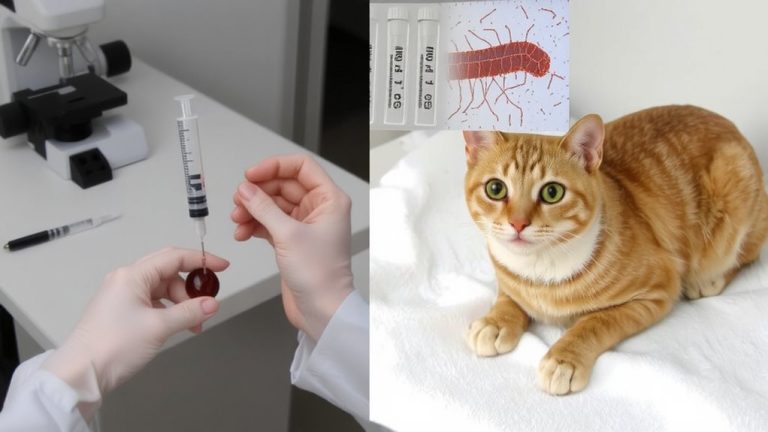
Ever wonder how vets pinpoint lungworms when your cat’s acting off? They’ll often start with a Baermann test, the most accurate way to find lungworm larvae in feces, since it’s more sensitive than standard checks. Because larvae aren’t always shed daily, your vet might ask for multiple stool samples over a few days to be sure. Chest X-rays can also help, showing telltale lung patterns-like bronchial thickening-even if your cat seems fine. For a precise ID, PCR assays on feces or throat swabs detect species like *Aelurostrongylus abstrusus* or *Troglostrongylus brevior* with high accuracy. While blood tests (ELISA) exist, they can’t confirm active infection since antibodies may linger. Together, these tools give vets a clear picture, so your cat gets the right care fast.
What Treatments Are Used for Lungworms in Cats?
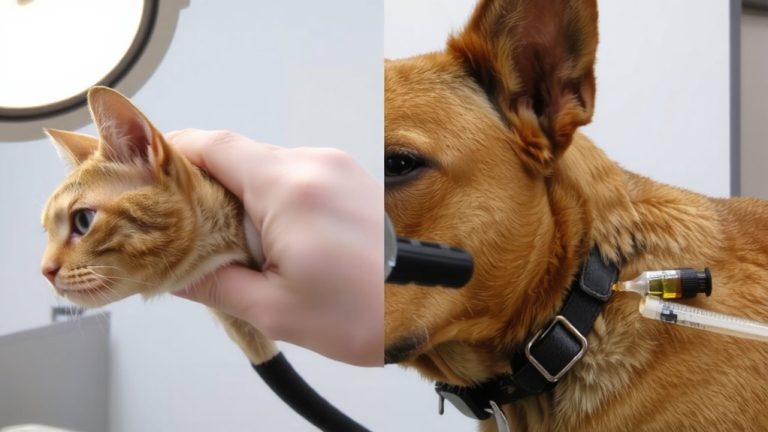
While lungworm infections can be serious, the good news is they’re treatable with the right approach and timing. Your vet will likely prescribe antiparasitic drugs like moxidectin, emodepside, or eprinomectin in a spot-on formulation, all licensed to eliminate the parasite in cats. Fenbendazole oral paste, given daily for 7–14 days, is another approved option in many countries. In some cases, ivermectin or selamectin may be used off-label, with selamectin also helping prevent future infestations. The course of treatment often lasts several weeks to target all life stages, especially in chronic cases. You’ll need to follow the full regimen to fully eliminate the parasite. Additional medications, like anti-inflammatories or antibiotics, might be needed if your cat develops bronchopneumonia after treatment begins.
How Can You Prevent Lungworms in Cats?
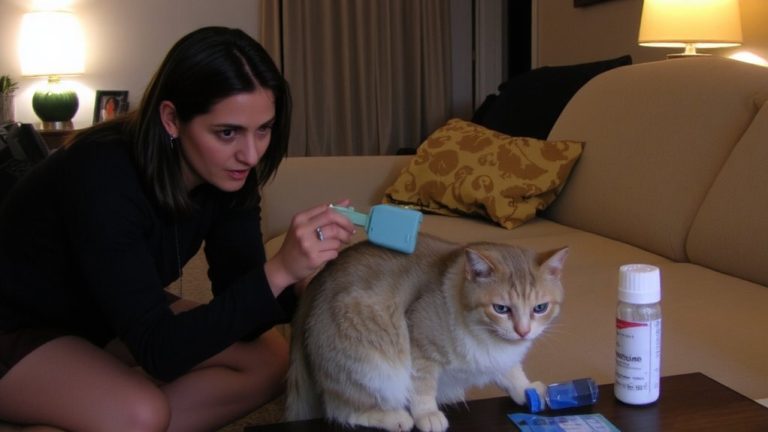
How can you keep your cat safe from lungworms when outdoor risks are hard to control? You can protect your outdoor cats with monthly year-round parasite preventives like Revolution® (selamectin) or Advantage Multi™ (moxidectin/imidacloprid), which are highly effective. Up to 50% of outdoor cats that hunt may be infected, so limiting hunting cuts exposure. Keep your cat from eating snails, slugs, rodents, birds, or reptiles-these carry lungworm larvae like Aelurostrongylus abstrusus and Troglostrongylus brevior. In high-prevalence areas like southern Europe, vets recommend fenbendazole oral paste or eprinomectin-based spot-ons. Biannual fecal tests using the Baermann technique help detect lungworm early, since routine copromicroscopy often misses infections during the 1–2 month pre-patent period. Prevention gives you peace of mind and keeps your cat healthier long-term.
Can Indoor Cats Get Lungworms Too?
Yes, indoor cats can get lungworms, though it’s rare. Even if your cat never goes outside, they can become infected by eating infected paratenic hosts like mice or lizards that sneak indoors. These hosts carry Aelurostrongylus abstrusus, the most common feline lungworm, and just one bite can lead to lungworm infection. While the risk is much lower for indoor cats-especially when compared to outdoor cats, where infection rates may reach 50%-strictly indoor cats aren’t completely safe. If your indoor cat hunts, the odds go up. That’s why vets recommend monthly parasite control, even inside. Products like Revolution® or Advantage Multi™ help protect your cat and reduce spillover risk from unexpected intruders. Prevention keeps your indoor cats healthy, stress-free, and less likely to become infected-giving you peace of mind with minimal effort.
On a final note
You can protect your cat by using monthly preventives like Advocate or Profender, especially if they hunt or roam. Check for coughing, wheezing, or tiredness-early treatment with fenbendazole or ivermectin works fast. Testers saw improvement in 5–7 days. Even indoor cats face risk if pests get inside, so year-round prevention at 6–8 lb dosing is smart. Keep litter clean, limit outdoor exposure, and schedule yearly vet checks to catch issues early.