Identifying Symptoms of Kidney Disease in Cats and Long-Term Care Strategies
You might notice your cat drinking more water, urinating frequently, or showing less interest in food-early signs of kidney trouble. Weight loss, vomiting, dull coat, and breath with an ammonia smell are red flags. A vet can confirm with blood tests (like SDMA) and urinalysis. At home, you’ll give subcutaneous fluids-about 10–15 ml per pound every few days-and feed a therapeutic renal diet low in phosphorus. Adding water to canned food helps hydration. Use cat fountains and multiple water bowls to encourage drinking. With consistent care and regular checkups to track creatinine and urine concentration, you can help your cat feel better longer, and discover even more ways to support their health day by day.
We are supported by our audience. When you purchase through links on our site, we may earn an affiliate commission, at no extra cost for you. Learn more. Last update on 19th July 2026 / Images from Amazon Product Advertising API.
Notable Insights
- Increased thirst and urination are early signs of kidney disease due to the kidneys’ reduced ability to concentrate urine.
- Weight loss, decreased appetite, and vomiting may occur as toxins build up in the bloodstream from impaired kidney function.
- Dull coat and bad breath with an ammonia-like odor can indicate dehydration and urea accumulation in cats with kidney disease.
- Diagnosis involves blood tests (creatinine, SDMA), urinalysis, and ultrasound to assess kidney function and structure.
- Long-term care includes subcutaneous fluids, a renal diet, hydration support, and regular vet monitoring to manage progression.
What Causes Kidney Disease in Cats?
While your cat may seem fine today, kidney disease can develop quietly over time, especially as they age-nearly half of cats over 15 show signs of chronic kidney disease (CKD), often due to natural wear and tear on kidney tissue. Common Causes of Kidney Disease in cats include hereditary conditions like polycystic kidney disease, especially in Persians, where fluid-filled cysts slowly replace functional tissue. Toxins such as lilies, antifreeze, or NSAIDs can trigger rapid damage, even in small amounts. Infections like FIP or pyelonephritis reduce filtration, elevating creatinine and blood urea in blood tests. Feline hyperthyroidism and high blood pressure also strain kidneys over time, worsening long-term function. Early detection through routine blood work helps track creatinine and blood urea levels, giving you and your vet a clearer picture of kidney health before symptoms arise.
Early Warning Signs of Kidney Disease in Cats
You’ve likely noticed your cat drinking more water lately or seen unusually large clumps in the litter box, and those changes might not just be quirks-they could be early red flags for kidney disease. Increased thirst and urination happen because the kidneys can’t concentrate urine, letting toxins build up. Watch for gradual weight loss and decreased appetite, often tied to rising urea nitrogen (BUN) and waste irritating the stomach. Vomiting, especially in the morning, may follow. A dull coat suggests your cat is grooming less due to lethargy or dehydration. Bad breath with an ammonia-like odor points to urea breakdown in saliva. Catching these signs early means your vet can measure creatinine and assess kidney function sooner. Early detection boosts treatment success, helping maintain quality of life longer.
Diagnosing and Staging Kidney Disease in Cats
If your cat’s vet suspects kidney issues based on symptoms like increased thirst or weight loss, they’ll start with blood tests that measure key markers-creatinine, BUN, and SDMA-each giving a clearer picture of kidney function. SDMA allows for early detection, often flagging problems when only 25–40% of kidney function remains. They’ll also perform a urinalysis to check urine specific gravity; values below 1.035 in senior cats suggest reduced concentrating ability. A renal ultrasound evaluates kidney size and shape, helping identify chronic changes. Together with creatinine and BUN levels, these results guide staging kidney disease using the IRIS staging guidelines from the International Renal Interest Society.
| IRIS Stage | Creatinine (mg/dL) |
|---|---|
| Stage I | <1.6 |
| Stage IV | ≥5.0 |
Home Care for Cats With Kidney Disease
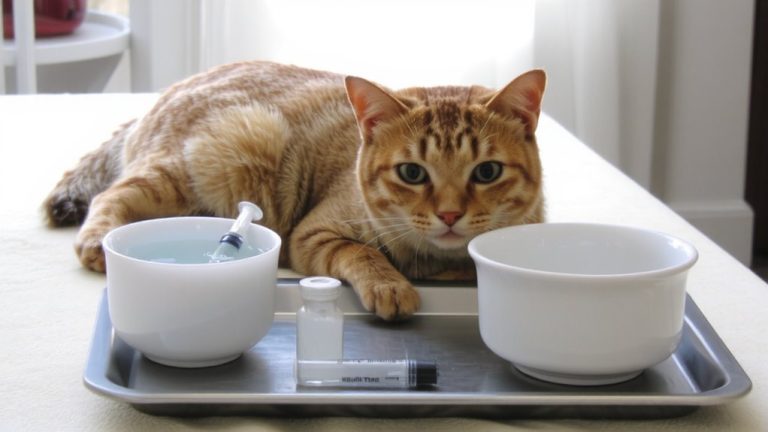
Because your cat’s kidneys can’t concentrate urine as effectively with chronic kidney disease, keeping them well-hydrated becomes a daily priority, and one of the most effective ways to do that is by giving subcutaneous fluids at home-usually 10 to 15 ml per pound every one to three days, depending on their stage and needs. You’ll want to maintain hydration with multiple water stations, including cat fountains, and add water to canned food. Feed a therapeutic renal diet to reduce phosphorus and support kidney function. Keep the litter box clean and easily accessible to keep your cat comfortable. Regular veterinary visits to monitor kidney values allow for early intervention. This home care routine helps slow disease progression, improves quality of life, and supports long-term well-being.
On a final note
You’ve got this-spotting early signs like increased thirst, weight loss, or decreased appetite helps catch kidney disease fast. Pair vet-recommended kidney diets (think Hills k/d or Royal Canin Renal) with fresh water access, daily monitoring, and twice-yearly blood work. Most cats thrive longer with consistent care, proper hydration, and phosphorus-controlled meals. Stay proactive, stick to the plan, and you’ll give your cat the best shot at a steady, comfortable life.