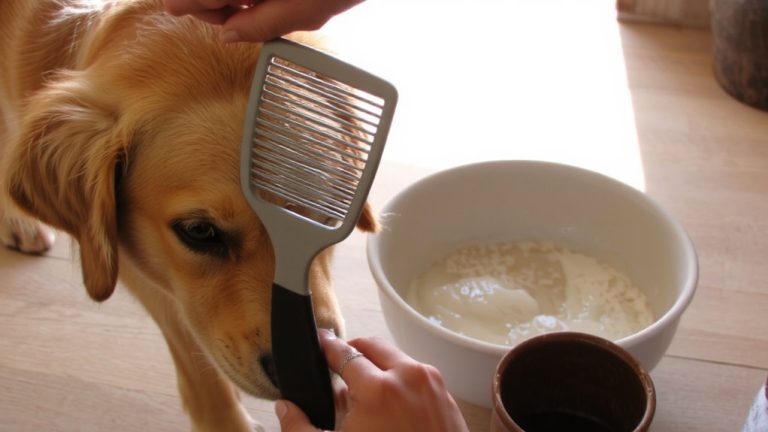
How to Use a Comb to Detect Fleas in a Long-Haired Dachshund’s Undercoat
Use a metal flea comb with flat tines spaced less than 0.3 mm apart to comb through your long-haired Dachshund’s dense undercoat, starting at the base of the tail, then behind the ears, armpits, and groin. Section the fur to guarantee the comb reaches skin level, checking after each stroke for red-brown fleas or black specks. Confirm flea dirt by rubbing debris on a damp paper towel-if it leaves a reddish-brown smear, it’s digested blood. Spotting these signs early means you’re already ahead in protecting your dog’s health and comfort.
We are supported by our audience. When you purchase through links on our site, we may earn an affiliate commission, at no extra cost for you. Learn more. Last update on 19th July 2026 / Images from Amazon Product Advertising API.
Notable Insights
- Use a metal flea comb with flat tines spaced under 0.3 mm to reach deep into the undercoat near the skin.
- Section the fur to lift dense areas, ensuring the comb makes direct contact with the skin.
- Focus combing on flea hotspots: base of tail, groin, armpits, and behind ears.
- Check the comb after each stroke for live fleas or black specks of flea dirt.
- Confirm flea dirt by rubbing debris on a damp paper towel, looking for a reddish-brown smear.
Why Your Long-Haired Dachshund Needs a Flea Comb
Your long-haired Dachshund’s lush undercoat might look sleek, but it’s also the perfect hiding spot for fleas and their telltale dirt-tiny black specks that turn red when damp, revealing digested blood. That’s why a flea comb with narrow, flat tines is essential-it reaches deep into the dense undercoat where live fleas and flea dirt hide near the skin. These pests love warm zones like the base of the tail, groin, and leg folds, and without combing, you might miss signs until skin problems flare. Visual checks aren’t enough; a metal flea comb captures what eyes can’t see. Vets stress routine combing because one female flea lays up to 50 eggs daily. Catching flea dirt early with a proper comb means catching infestations before they spread-protecting your pup’s comfort and health.
How to Use a Flea Comb on Thick Undercoat
While thick undercoats can hide fleas and flea dirt from plain sight, using a metal flea comb with closely spaced, flat tines makes it possible to detect pests at skin level in a single, firm stroke. You should section the thick undercoat carefully, lifting small portions of fur to let the flea comb reach the skin where fleas and flea dirt hide. Focus on warm zones like the base of the tail, groin, and behind the ears-fleas thrive there. After each stroke, check the comb for red-brown fleas or tiny black specks of flea dirt. If you find black residue, rub it onto a damp paper towel. A reddish-brown smear means digested blood, confirming flea activity. This method is fast, reliable, and essential for early detection in long-haired Dachshunds.
Spot Fleas and Flea Dirt With These Tips
A metal flea comb with fine, flat tines spaced less than 0.3 mm apart is your best tool for uncovering hidden pests in your Dachshund’s long, dense coat, since it’s designed to glide close to the skin where fleas and flea dirt lodge. Start at the base of the tail, then move behind the ears, armpits, and groin-common hotspots where adult fleas and even Tick hide. As you comb through pets hair, check the teeth for red-brown fleas or tiny black specks. Suspect flea dirt? Test it: place debris on a damp paper towel-the digested blood will smear reddish-brown. Section the fur to guarantee full contact with skin and coat, so nothing’s missed. This method is proven for early detection, especially under thick undercoats where Flea and Tick problems can escalate fast. Be thorough-your Dachshund’s health depends on it.
Take These Steps After Finding Fleas
Once you’ve spotted fleas or confirmed flea dirt using the damp paper towel test-where black specks leave reddish-brown streaks from digested blood-act fast, because even a few fleas can spark an infestation in your Dachshund’s thick undercoat. Immediately drop any live fleas into soapy water to kill them-this stops escape and breaks the lifecycle. As pet parents, you’ve got to treat all pets in the home with vet-approved flea control; external parasites spread fast, even indoors. Contact your vet to discuss year-round prevention tailored to small, long-haired breeds for best pet health. Start washing bedding in hot water and apply flea-killing treatments to carpets and furniture. Keep an eye out for signs of broken skin or irritation. Regularly use your comb to look for fleas weekly, even after the threat seems gone, to guarantee long-term protection and peace of mind.
On a final note
You’ve got this. Using a fine-tooth flea comb daily helps catch fleas early, especially in your dachshund’s dense undercoat. Start at the skin, work in small sections, and check for bugs or pepper-like flea dirt. After each stroke, dip the comb in soapy water to kill fleas. Pair combing with vet-approved preventives, like oral chews or spot-ons, for full protection. Consistent grooming, even year-round, keeps your dog comfortable and flea-free.