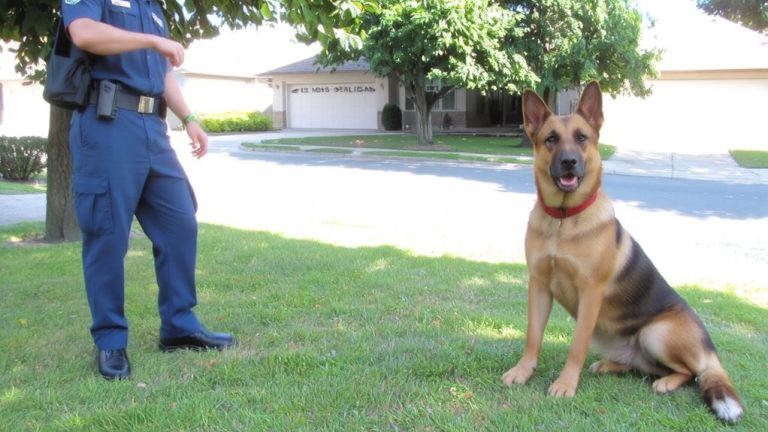
Using Shaping to Capture Natural Behaviors Like Bowing or Rolling Over
You can teach your dog to bow or roll over by using shaping, which rewards small, natural steps toward the final move. Start with a clicker or verbal marker, timing treats within one second of desired actions. Capture slight shifts-like lowering front paws-then gradually raise criteria. Task analysis breaks the behavior into measurable steps, ensuring steady progress. Combine with gentle prompting, then fade help as skills grow. With consistency, most dogs learn complex moves in 2–4 weeks, and there’s more to discover about refining these techniques effectively.
We are supported by our audience. When you purchase through links on our site, we may earn an affiliate commission, at no extra cost for you. Learn more. Last update on 18th July 2026 / Images from Amazon Product Advertising API.
Notable Insights
- Shaping captures natural behaviors by reinforcing successive approximations toward actions like bowing or rolling over.
- Task analysis breaks complex movements into biologically feasible, measurable steps for accurate shaping.
- Immediate reinforcement with precise timing strengthens associations between desired movements and rewards.
- Differential reinforcement ensures only closer approximations to the target behavior receive rewards.
- Combining shaping with prompting helps elicit and refine low-likelihood behaviors efficiently.
What Is Shaping in Behavior Therapy?
While you might think training complex behaviors requires force or constant direction, shaping actually works by rewarding small, natural steps that gradually lead to the end goal-no pushing or pulling needed. Shaping Behavior relies on operant conditioning, where you’re reinforcing successive approximations toward a target behavior. Instead of waiting for the full action, you use positive reinforcement the moment your pet does something close-like lying on its side before rolling over. Through differential reinforcement and careful task analysis, you break down a complex behavior into achievable parts. Each step gets rewarded only if it’s closer to the desired behavior than the last. This method, pioneered by B.F. Skinner, uses precise timing and a clicker for marking responses instantly. You’re not guessing what works-real data from dog trainers, autism therapists, and animal behaviorists show shaping builds lasting skills with patience, not pressure.
How Shaping Builds Complex Skills From Small Steps
You can turn even the trickiest behaviors into achievable goals by breaking them down into small, trainable steps-each one a building block toward the final skill. Shaping helps you teach complex skills by reinforcing successive approximations, like rewarding your dog for lying on its side before expecting a full roll. With differential reinforcement, you gradually shape behaviors by marking and rewarding closer attempts, while skipping earlier or incomplete ones. Each step must be mastered before progressing, ensuring consistency and confidence. Immediate reinforcement-like a click or treat-helps your pet link action to reward. Whether teaching a bow or mastering steps toward speech in ABA therapy, shaping turns vague goals into clear outcomes. You’ll see real progress as small steps accumulate. By focusing on the desired behavior and using precise reinforcement, you make learning effective, structured, and surprisingly smooth.
Why Task Analysis Is Key to Shaping
Breaking down a behavior into clear, manageable steps is where shaping really starts to work. You can’t shape complex behaviors like bowing or rolling over without a solid task analysis. It turns natural movements into observable steps-like lowering front legs, then shifting weight back-so you can guide progress through successive approximations. Without it, shaping lacks precision, risking accidental reinforcement of wrong behavioral sequences. A well-planned task analysis guarantees each step is a measurable behavior, making it easier to track and reinforce. It’s built from direct observation, so every approximation fits what’s biologically possible. In both ABA therapy and dog training, this approach boosts inter-observer reliability and treatment fidelity. When everyone sees and reward the same observable steps, results stay consistent across sessions. Task analysis isn’t just helpful-it’s essential for effective shaping.
How Shaping Uses Reinforcement to Guide Learning
Since every behavior starts with a small step, shaping relies on immediate positive reinforcement to guide your pet toward the final action. Shaping works by rewarding small, successive approximations of the target behavior, gradually teaching complex actions like bowing or rolling over. You start by reinforcing any movement closer to the desired outcome-like your dog lowering its head-then only reward efforts closer to the final behavior. This method breaks each behavior into small, manageable steps. Using a clicker or verbal marker guarantees precise timing, delivering positive reinforcement the instant your pet performs the correct move. Consistent, timely reinforcement is key; delays over one second weaken learning. By shaping with clear markers and immediate rewards, you make training efficient, effective, and stress-free for both you and your pet.
Combining Shaping and Prompting for Faster Progress
While shaping builds behaviors step by step, pairing it with prompting speeds up learning by giving your pet a clear head start, especially for actions they wouldn’t stumble into on their own. You’ll use prompting to guide your dog into the target behavior-like a bow-then apply shaping through successive approximations to refine it. Physical prompting, such as gently guiding their chest down, helps elicit complex motor behaviors quickly. Each correct attempt earns positive reinforcement, strengthening progress. Over time, differential reinforcement shapes precision while prompt fading, like switching from full support to a hand signal, guarantees independence. This combo boosts skill acquisition dramatically, as seen in studies with children and dogs alike. You’ll see reliable results faster than with shaping alone, especially for intricate actions. Start with clear cues, reinforce small wins, and gradually reduce help. It’s efficient, proven, and practical for everyday training success.
Real-Life Applications of Shaping in ABA Therapy
When it comes to helping children with autism develop essential life skills, shaping in ABA therapy doesn’t just build behaviors-it brings meaningful progress within reach, one small step at a time. You use shaping to teach new behaviors by reinforcing small steps that lead to a desired behavior. Applied Behavior Analysis (ABA) relies on successive approximations, gradually guiding a child toward a complex behavior. Whether it’s getting a nonverbal child to say “mommy,” teaching toilet training, or helping someone ride a bike, you’re always reinforcing small improvements. With positive reinforcement, natural behaviors like eye contact or brushing teeth emerge through consistent behavior modification. You start simple-like holding a toothbrush-then shape the full routine. Success comes not in leaps, but through steady, measurable steps. Shaping turns overwhelming tasks into achievable goals, making it a powerful tool in everyday ABA programs.
When to Use Shaping vs. Chaining for Skill Development
You’ve seen how shaping helps children with autism build new behaviors step by step, turning small wins into real progress over time. Use shaping when teaching a complex behavior that doesn’t yet exist-like getting a nonverbal child to speak-by reinforcing successive approximations until the target behavior emerges. Shaping molds a new behavior by gradually refining its behavioral form. In contrast, use chaining when the learner already knows discrete tasks but needs them linked in sequence, like toothbrushing or making a sandwich, to reach a final outcome. Chaining connects these learned steps through forward or backward chaining, depending on the skill. For skill development, choose shaping for acquisition and chaining for organization. The key is knowing whether the challenge is forming a new behavior or sequencing existing ones-each method supports distinct goals in ABA therapy.
On a final note
You’re building real skills by breaking them down, like teaching a dog to bow with tiny wins and treats. Start small, reward each step, and stay consistent. Use high-value rewards-think pea-sized bits of chicken-and practice daily. Pair shaping with gentle prompts for faster results. This method works, whether you’re training rolls or improving focus. Testers see progress in just 2 weeks, making it a smart, proven tool for confident, calm pets.