Why Professional Groomers Use Thinning Shears on Certain Dog Breeds
You use thinning shears on breeds like Golden Retrievers and German Shepherds to remove dense undercoat bulk without shortening the topcoat, preventing matting and improving airflow. They blend coat lengths seamlessly, especially at leg and tail junctions, using teeth on one or both blades for natural texture. Curved, double-sided models follow body contours, avoiding harsh lines. With proper care-cleaning, oiling, and professional sharpening every 6–12 months-they deliver precision results most groomers rely on daily. There’s more to mastering your technique than just the cut.
We are supported by our audience. When you purchase through links on our site, we may earn an affiliate commission, at no extra cost for you. Learn more. Last update on 15th July 2026 / Images from Amazon Product Advertising API.
Notable Insights
- Thinning shears remove excess bulk from thick or double coats without changing hair length.
- They prevent matting in high-friction areas on long-haired breeds like Maltese and Shih Tzus.
- Groomers use them to create seamless coat transitions and eliminate harsh clipper lines.
- Double-sided thinning shears provide precise texturizing for curly or wavy coats like Poodles and Cocker Spaniels.
- Regular maintenance ensures optimal performance and prolongs the life of professional thinning shears.
What Makes Thinning Shears Essential for Dog Grooming?
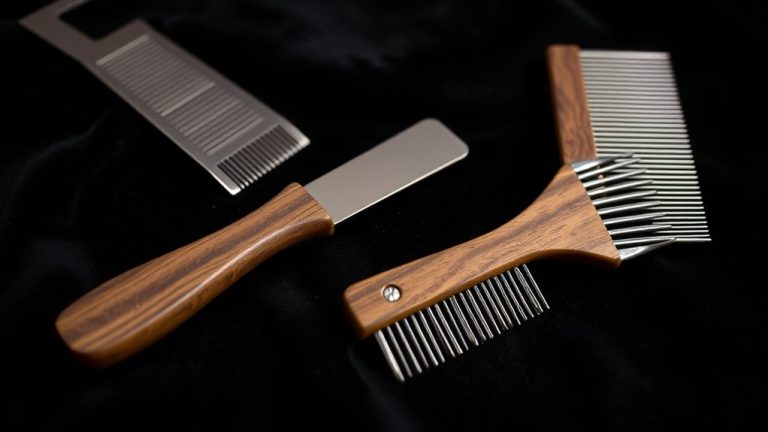
You’ll want a solid pair of thinning shears if you’re tackling thick or double coats, since they cut through bulk without changing the coat’s length-perfect for breeds like Golden Retrievers and German Shepherds. Thinning shears are essential dog grooming tools, allowing you to remove excess hair without disrupting the coat’s natural flow. With teeth on one or both blades, like the Kanpeki 6.5” 45T curved shears, they enable selective thinning for a softer, natural appearance. Professional groomers use them daily to prevent matting, especially in high-friction zones on long-haired breeds such as Maltese or Shih Tzus. They’re ideal for blending textures across coat types and smoothing harsh lines from clippers. High-quality thinning shears, priced $150–$350, are a career-long investment, delivering precision in finishing work and maintaining coat health.
How Thinning Shears Create Seamless Coat Transitions
Ever wonder how groomers make coat shifts so smooth they seem to disappear? Thinning shears are the secret, creating seamless coat shifts by removing bulk without harsh lines. When you’re blending the shift between different coat lengths-like from the body to legs or tail-tools like the Kanpeki 7” 36 Tooth deliver a smooth shift with precision. Curved thinning shears, such as the 6.5” 45 Tooth model, follow your dog’s natural contours, guaranteeing even layering. Double-sided thinning scissors, also called blending shears, evenly distribute hair for a textured finish that looks natural. They’re perfect for eliminating clipper marks and achieving a natural blended finish. Whether you’re cleaning up scissor lines or shaping dense fur, these tools guarantee invisible graduation. With the right thinning shears, you’re not just cutting-you’re crafting a polished, professional look.
Dog Breeds That Need Thinning Shears Most
Certain breeds benefit more from thinning shears due to their coat type and grooming needs, and knowing which ones helps you choose the right tool for the job. You’ll want thinning shears to manage dense fur, prevent matting, and create a natural-looking, textured coat. Breeds like Golden Retrievers and German Shepherds have a double coat that traps undercoat bulk, making shears essential for airflow. Poodles need precise texturising for their curly coats, while Cocker Spaniels require seamless blending. Shih Tzus rely on feathering to maintain volume without tangles.
| Breed | Coat Type | Recommended Shear Use |
|---|---|---|
| Golden Retrievers | Double coat | Reduce bulk, prevent matting |
| German Shepherds | Dense fur | Manage shedding, support airflow |
| Poodles | Curly coat | Sculpt and blend for textured look |
| Cocker Spaniels | Thick wavy coat | Smooth body-to-leg shifts |
| Shih Tzus | Long silky hair | Feathering to prevent matting |
Single vs Double Sided Thinning Shears: What’s the Difference?
Thinning shears become even more effective when you match the right style to the coat, and now it’s time to break down the difference between single and double-sided models. You’ll use single-sided thinning shears for bulk removal on dense coats, like on a Schnauzer or Newfoundland-these remove more hair fast, making them ideal when you need heavy thinning. The Kanpeki 6.5” Curved 45T is perfect for this. Double-sided thinning shears, like the Clipit 6” 32T, offer precise thinning and texturising with teeth on both blades, helping create smooth shifts. They’re better for fine blending and delicate finishing on coat types that demand subtlety, such as Poodles or Cocker Spaniels-the Kanpeki 7” 36T excels here. Your choice impacts the grooming outcome: single-sided for power, double-sided for control. Pick based on coat type and desired result.
Blending Coat Lengths and Adding Texture With Thinning Shears
When you’re shaping a dog’s coat, achieving smooth shifts between lengths is key to a polished look, and that’s where thinning shears like the Kanpeki 7” 36 Tooth model really shine-they blend body-to-leg and body-to-tail seams effortlessly, removing just enough hair to eliminate harsh lines without sacrificing overall length. For seamless shifts, groomers rely on blending techniques using curved thinning shears to follow the dog’s natural contours, ensuring a smooth, natural-looking finish. Double-sided thinning scissors, or blenders, excel at texturising, especially in dense or curly coats like Poodles or Cocker Spaniels. Using a feathering technique with tools like the Kanpeki 6.5” 36T Herringbone Thinner adds soft texture to long-haired breeds such as Shih Tzus and Collies. Whether you’re adjusting coat lengths or enhancing movement, thinning shears deliver precise control and professional results.
5 Mistakes That Ruin Your Thinning Shear Results (And How to Avoid Them)
You’ve seen how blending coat lengths with tools like the Kanpeki 7” 36 Tooth or the 6.5” 45T curved thinner creates smooth, natural finishes on breeds from Poodles to Shih Tzus, but even the best technique falls apart if mistakes creep in during execution. Using blunt shears or skipping shears maintenance leads to frayed ends and uneven dog coat texture. If you use thinning scissors with improper technique-like sawing or pressing too hard-you’ll over-thin, especially on thick coats like a Golden Retriever’s. Over-thinning ruins coat thinning results, causing patchiness a professional groomer would never accept. Always clean your thinning shears after each use to prevent debris buildup and irritation. And don’t try to self-sharpen high-end models-doing so ruins alignment. Avoid mistakes by prioritizing proper care and technique. Smart shears maintenance and mindful use thinning scissors keep results crisp, clean, and natural-looking every time.
How to Keep Your Thinning Shears Sharp and Working Well
While your thinning shears like the Kanpeki 7” 36 Tooth or 6.5” 45T curved thinner are built to last with durable Japanese stainless steel blades, they won’t stay sharp or run smoothly without a little daily care. You should clean after use with a soft cloth and sanitize with Clipit Ice Care spray to remove hair and debris. Apply a few drops of scissor oil weekly to maintain smooth action and protect the stainless steel from moisture. Check the tension screw often-it should be snug, not loose or too tight-to guarantee proper blade alignment. Never attempt DIY sharpening; it can ruin the precision teeth. Instead, trust professional sharpening every 6–12 months. Always store your thinning shears in a protective case away from humidity. That way, you’ll preserve their performance, extend lifespan, and keep them cutting cleanly with every pass.
On a final note
You’ll get smoother blends and healthier-looking coats when you use thinning shears correctly on breeds like Poodles, Spaniels, and Terriers. Hold them at a 45-degree angle, skip the first 1/2 inch from the skin, and make short, controlled cuts. Thinning shears with 30–40 teeth work best for medium fur, while wider gaps handle thicker coats. Regular honing keeps edges sharp-dull blades tug, stress skin, and ruin texture.