How to Identify and Treat Feline Acne and Secondary Infections
You’ll notice feline acne as stubborn black specks on your cat’s chin that look like dirt but won’t wipe off, often from plastic bowls or poor grooming. Start treatment with vet-approved benzoyl peroxide wipes twice weekly, switch to stainless steel or ceramic dishes, and clean them daily. If you see red bumps, pustules, or swelling, your cat may have a secondary infection needing vet-prescribed antibiotics or antifungals. Keep the chin dry and consider omega-3 supplements for skin health-there’s more to optimizing your cat’s care effectively.
We are supported by our audience. When you purchase through links on our site, we may earn an affiliate commission, at no extra cost for you. Learn more. Last update on 19th July 2026 / Images from Amazon Product Advertising API.
Notable Insights
- Feline acne appears as blackheads on the chin, often mistaken for dirt, due to clogged hair follicles from excess keratin and sebum.
- Progression to red bumps, pustules, swelling, or crusting may indicate secondary bacterial infection requiring veterinary treatment.
- Rule out mites, ringworm, or fungal infections using skin scraping, cytology, or fungal culture for accurate diagnosis.
- Treat mild cases with benzoyl peroxide or chlorhexidine cleansers, and replace plastic food bowls with stainless steel, glass, or ceramic.
- Prevent recurrence by cleaning feeding dishes daily and wiping the cat’s chin after meals with antiseptic wipes.
What Is Feline Acne?
Blackheads on your cat’s chin? That’s feline acne, a common skin condition caused by follicular keratinization-basically, an overproduction of keratin in the hair follicles. You’ll notice black spots that look like dirt stuck to the chin, but it’s actually a buildup in the pores. If left unchecked, it can lead to red bumps, pustules, and even chin swelling. While the exact cause isn’t always clear, poor grooming, plastic food bowls, and excess sebum can contribute. Unlike human acne, this isn’t hormonal-any cat, at any age, can develop it. The cat’s chin is especially prone due to its unique skin structure. It’s not just grime; it’s a real skin issue that needs attention. Early care, like switching to stainless steel bowls and gentle cleansing, helps prevent worsening. Spot-check weekly-it’s a quick habit with big upside.
How to Recognize Cat Chin Acne
Your cat’s chin may look like it’s just dirty, but those stubborn black spots are likely blackheads-a hallmark sign of feline acne. Cat chin acne often starts with tiny black specks on the chin where keratin becomes trapped in hair follicles. You might notice red bumps or pustules, especially if bacteria infect the skin. In mild cases, it’s just blackheads, but severe feline acne can lead to swelling, crusting, and hair loss. Since other issues like fungal infections or mites mimic this, your vet may perform a skin scraping to confirm. Don’t assume it’s dirt-if the chin stays dark despite cleaning, it’s likely acne. Watch for changes in texture or your cat pawing at their face. Catching it early helps prevent painful lesions and keeps your cat comfortable.
When to Call the Vet for Feline Acne
While most cases of feline acne start off mild and manageable at home, it’s time to call the vet if you notice swollen, oozing, or tender spots on your cat’s chin-these are red flags for moderate to severe infection that won’t clear up with wiping alone. If blackheads progress to pustules, crusts, or furunculosis, your cat may have a secondary infection needing medical care. Swollen lesions that feel warm or painful suggest deeper inflammation. When you see hair loss, bleeding, or ulcers on the chin, or if your cat stops eating or seems lethargic, call the vet right away. Untreated cases can require a bacterial culture to guide treatment, especially if systemic antibiotics are needed. Don’t wait weeks if there’s no improvement-early intervention keeps feline acne from worsening and protects your cat’s comfort and health.
How Vets Diagnose Cat Chin Acne
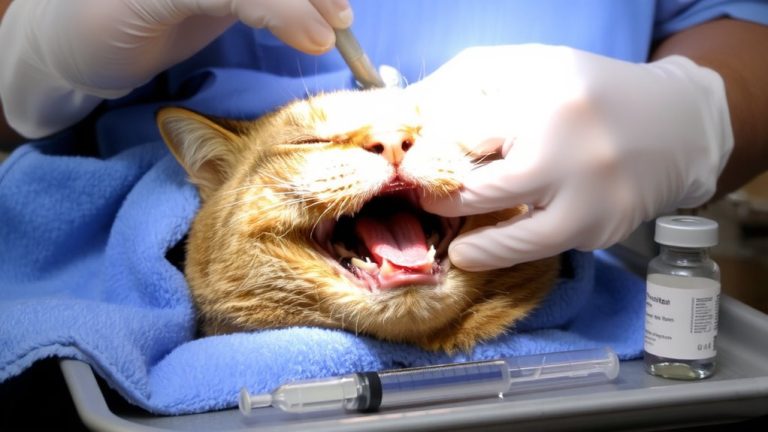
If your cat’s chin shows persistent blackheads or signs of infection like swelling and crusting, it’s time to get a professional opinion-and getting an accurate diagnosis is the first step toward effective treatment. Vets diagnose cat chin acne using a physical examination and your cat’s medical history, checking for telltale signs like clogged hair follicles and inflammation. To rule out look-alikes, they may perform a skin scraping to check for Demodex mites or use cytology to spot bacterial or yeast secondary infections, like Staphylococcus or Malassezia. A fungal culture or trichogram helps exclude ringworm, especially if the case seems odd or won’t heal. For severe or stubborn acne, a skin biopsy might be needed to differentiate cat chin acne from other conditions like eosinophilic granuloma. These steps guarantee your vet pinpoints the cause-and the right fix.
Treating Mild Feline Acne at Home
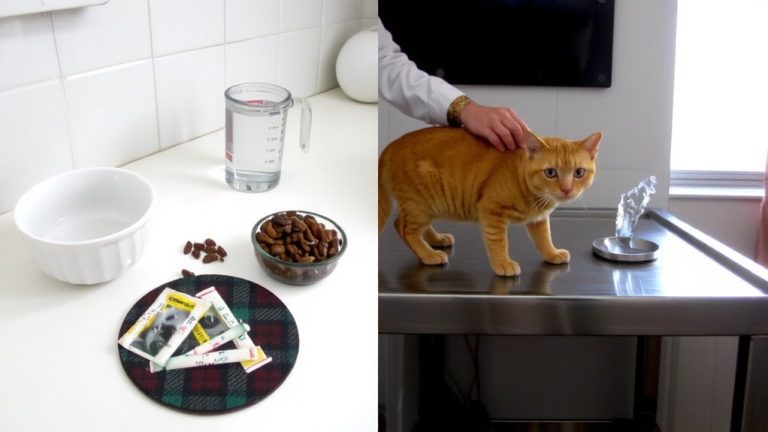
Since mild feline acne often responds well to consistent at-home care, starting with gentle daily cleaning can make a real difference in clearing clogged follicles and preventing flare-ups. When treating mild feline acne, focus on regular cleaning using vet-approved benzoyl peroxide or chlorhexidine wipes-these help reduce bacteria without irritating your cat’s chin. Avoid human products, which can be toxic. Instead, stick to antiseptic wipes made specifically for cats. Replace plastic cat food and water bowls with stainless steel bowls to cut down on bacterial buildup. Make cleaning your cat’s chin a habit, especially after meals-use a warm, damp washcloth to wipe away oils and food residue. This home treatment, combined with ongoing hygiene and switching to non-porous bowls, supports faster recovery. Consistent, simple steps like these can resolve feline acne over several weeks with no need for medication.
Treating Severe or Infected Cat Acne
When feline acne progresses beyond occasional blackheads and becomes red, swollen, or starts oozing pus, it’s time to step up from daily wipes and stainless steel bowls. For severe cases with furunculosis or deep infection, systemic antibiotics are essential. Your vet may prescribe antibiotic therapy using cephalexin or amoxicillin-clavulanic acid, ideally guided by a bacterial culture to target the specific pathogen. Treatment typically lasts four to six weeks. Topical antibiotic ointments, especially mupirocin, help manage localized infections and are useful if MRSA is suspected. Cytology or biopsy might be needed to confirm secondary bacterial folliculitis. Never start oral glucocorticoids like prednisolone until infection is under control-you could worsen the outbreak. Treating the root cause early prevents recurrence and keeps your cat comfortable, healthy, and itching-free.
Prevent Feline Acne With These Daily Habits
While feline acne might seem like a minor issue at first, sticking to a few key daily habits can make all the difference in keeping your cat’s chin clear and healthy. To prevent cat acne, switch to stainless steel, glass, or ceramic food and water bowls-plastic ones harbor bacteria and can trigger allergic reactions. Clean these dishes daily with hot water and mild soap to disrupt biofilm and pathogen buildup. Make it a habit to wipe your cat’s chin with a damp cloth or vet-approved wipe after meals, removing food particles and excess sebum (oil) that clog pores. For long hair cats, trim fur around the chin to reduce excess keratin buildup. Pair good grooming habits with a diet rich in omega-3s to support skin health. These small, consistent steps go a long way in managing feline acne.
On a final note
Keep your cat’s chin clean with daily gentle wiping using a soft cloth and warm water, or try a benzoyl peroxide wipe designed for cats-like Beaphar Anti-Acne Wipes, used twice weekly. Opt for stainless steel or glass food bowls to prevent bacterial buildup. Most cases improve within 1–2 weeks with consistent hygiene. If you see swelling, pus, or hair loss, call your vet; oral antibiotics or medicated ointments may be needed.