How to Prevent and Treat Bladder Stones in Dogs and Cats
Keep your dog or cat hydrated with 50–60 ml of water per kg daily using fountains or wet food, and feed veterinary diets like Royal Canin Urinary SO to dissolve struvite stones or control calcium oxalate. Monitor urine pH around 7.0, avoid high-magnesium, high-phosphorus foods, and schedule ultrasounds or X-rays if straining or bloody urine occurs. Always analyze removed stones to tailor prevention. There’s more to keeping your pet stone-free with the right long-term plan.
We are supported by our audience. When you purchase through links on our site, we may earn an affiliate commission, at no extra cost for you. Learn more. Last update on 19th July 2026 / Images from Amazon Product Advertising API.
Notable Insights
- Ensure dogs and cats drink 50–60 ml of water per kg body weight daily to prevent concentrated urine and crystal formation.
- Feed veterinary-prescribed urinary diets that dissolve struvite stones or inhibit calcium oxalate formation.
- Schedule regular urinalysis every 3–6 months to monitor urine pH, crystals, and infection.
- Promptly treat urinary tract infections to reduce struvite stone development linked to alkaline urine.
- Analyze removed stones to determine composition and guide targeted prevention and dietary strategies.
What Are Bladder Stones in Dogs?
Think of bladder stones as pebble-like deposits that form in your dog’s bladder when minerals in the urine crystallize and clump together. Bladder stones in dogs are solid mineral formations, called uroliths, that develop in the urinary bladder due to imbalances in urine pH, diet, hydration, or underlying disease. These mineral deposits often arise when crystals-like struvite stones, linked to urinary tract infection, or calcium oxalate stones, tied to acidic, supersaturated urine-bind with mucus in your dog’s urinary system. While some stones stay hidden, they can grow and damage the bladder lining over time. Diagnosis requires X-rays or ultrasounds, since some stones aren’t visible on standard radiographs. Knowing the type helps guide treatment, whether dietary changes, medical dissolution, or surgery. Monitoring your dog’s water intake, diet, and urinary health supports prevention and long-term wellness.
Signs Your Dog Has Bladder Stones
Painful urination, blood in the urine, or frequent trips outside with little to show-these aren’t just signs of a urinary tract infection. These are common symptoms of bladder stones. You might notice your dog straining to urinate, showing abdominal pain, or having increased urination frequency due to irritation. Bloody urine is a key sign, caused by stones scraping the bladder wall. Excessive licking of the urinary opening is another clue. Watch closely-male dogs are at higher risk for urinary blockage, a life-threatening condition. Inability to urinate means immediate vet care is essential.
| Common Signs | What to Watch For |
|---|---|
| Bloody urine | Pink, red, or cloudy urine |
| Straining to urinate | Prolonged squatting, vocalizing |
| Urinary blockage | No urine, distress, vomiting |
Why Do Dogs Develop Bladder Stones?
What’s really behind those stubborn bladder stones forming in your dog’s urinary tract? Dogs develop bladder stones due to multiple risk factors combining in just the wrong way. Urinary tract infections are a big culprit-they alter urine pH, creating the perfect environment for struvite stones to form. Diet plays a key role too; excess magnesium, phosphorus, and protein increase mineral concentration in urine. If your dog isn’t drinking enough water, dehydration leads to concentrated urine, making crystal aggregation easier. Some dogs also have a genetic predisposition-breeds like Dalmatians and Miniature Schnauzers are prone to specific stones like urates or cystine. Underlying conditions like Cushing’s disease further disrupt urine pH and mineral balance. Together, these factors turn your dog’s bladder into a breeding ground for stones over weeks or months.
How Bladder Stones Are Diagnosed in Dogs
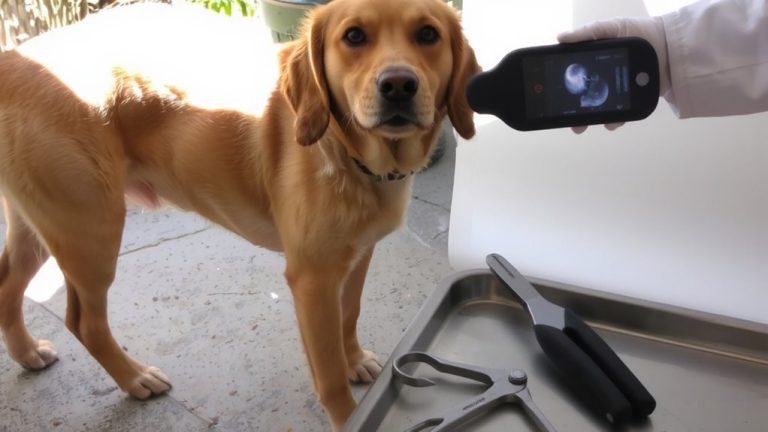
How do you know if your dog’s symptoms point to something serious like bladder stones? If your dog shows hematuria, straining to urinate, or frequent licking, your vet will likely recommend X-rays or an ultrasound. Most bladder stones appear as white, dense objects on X-rays, but some-like cystine or urate stones-are radiolucent and won’t show up, so ultrasound is needed. A urinalysis checks for crystals, abnormal pH, bacteria, and signs of urinary tract infections, all of which support the diagnosis. While larger stones may be felt during a physical, smaller ones often aren’t detectable by touch. After removal or natural passage, stone composition analysis identifies the exact type-essential for long-term prevention. This step guides everything from diet changes to medication, helping keep your dog stone-free.
Treatment Options Based on Stone Type
Once your vet confirms the type of bladder stone through analysis, treatment shifts from diagnosis to action, tailored specifically to the mineral makeup of the stones. If your pet has struvite and calcium oxalate stones, the approach differs: struvite stones often respond to Royal Canin Urinary SO and antibiotics after urine cultures guide therapy, while calcium oxalate stones usually need surgery or non-surgical removal like laser lithotripsy. Urate stones dissolve with a special diet low in purines and meds like allopurinol. Cystine stones require prescription diets low in methionine and cystine, plus drugs such as 2-mercaptoethionine. Bladder stone treatment hinges on precise identification-never guess. Each stone type demands a targeted plan, and your vet will match it with the right diet, medication, or procedure.
Prevent Bladder Stones With Diet and Water
A single change in your pet’s daily routine-adding more water to their diet-can make a big difference in preventing bladder stones, especially when combined with a targeted nutritional plan. To prevent bladder stones, guarantee your pet drinks enough water-aim for 50–60 ml per kg of body weight daily-so they don’t develop concentrated urine. Add fresh water to dry food, or use a pet water fountain, which can boost intake by up to 25%. Diluted urine helps maintain balanced mineral levels and ideal urinary pH. Choose a vet-recommended urinary diet like Royal Canin Urinary SO, designed to dissolve struvite stones and control calcium oxalate formation. Avoid high-magnesium, high-phosphorus, and high-purine foods-opt instead for a low purine, controlled-protein dog’s diet that supports long-term urinary health.
Reducing Bladder Stone Recurrence in Dogs
If your dog’s already faced bladder stones, you’ll want to take every step possible to keep them from coming back, and staying ahead means combining consistent veterinary care with precise at-home management. To prevent recurrence, stick to a prescribed therapeutic diet like Royal Canin Urinary SO, tailored to your dog’s specific stone type. Monitor urine pH regularly-aim for around 7.0-to discourage crystal formation. Keep fresh water available at all times and add water to food to boost hydration and dilute minerals. Schedule urinalysis every 3–6 months to catch early signs of trouble. Always have removed stones analyzed so prevention matches the stone type.
| Factor | Goal | How to Achieve |
|---|---|---|
| urine pH | ~7.0 | therapeutic diet, occasional apple cider vinegar (1 tsp for dogs ≤15 lbs) |
| hydration | dilute urine | water-rich food, constant fresh water access |
| veterinary care | prevent recurrence | regular urinalysis, urine culture, stone type analysis |
On a final note
You can prevent and treat bladder stones in dogs by feeding a vet-approved diet like Hill’s Science Diet c/d or Royal Canin SO, which helps dissolve struvite stones and restricts minerals that form calcium oxalate stones. Always provide fresh water-aim for 1 ounce per pound of body weight daily. Monitor urine pH, schedule regular checkups, and follow feeding guidelines precisely. With consistent care, 85% of dogs avoid recurrence, staying active, comfortable, and healthy.