Symptoms and Management of Feline Hepatic Lipidosis (Fatty Liver Disease)
If your cat stops eating for 3–4 days, especially if overweight, fatty liver disease could develop fast. Watch for lethargy, jaundice, vomiting, and hiding. Treatment starts with a feeding tube-often an esophagostomy-to deliver 25% of calorie needs at first, then ramping up over four days. Feed prescription recovery diets 3–5 times daily, 1 ml/cc per second, warmed and mixed with water. Flush the tube with 5–10 ml/cc water after each use. With consistent nutrition and supplements like L-carnitine and B vitamins, liver function often improves in weeks-there’s more to how this recovery works.
We are supported by our audience. When you purchase through links on our site, we may earn an affiliate commission, at no extra cost for you. Learn more. Last update on 19th July 2026 / Images from Amazon Product Advertising API.
Notable Insights
- Prolonged anorexia of 3–4 days in cats, especially obese ones, is a major risk factor for developing hepatic lipidosis.
- Excess fat accumulates in liver cells due to anorexia, impairing liver function and leading to fatty liver disease.
- Common symptoms include anorexia, lethargy, jaundice, vomiting, weight loss, and an enlarged liver on examination.
- Feeding tubes are essential for treatment, providing consistent nutrition to normalize liver enzymes and prevent refeeding syndrome.
- Home care involves feeding a recovery diet via tube, proper flushing, supplementation, and monitoring for complications.
What Causes Fatty Liver Disease in Cats?
While your cat’s body is built to handle short breaks from eating, going without food for just 3–4 days can kick off a dangerous chain reaction, especially if they’re overweight. In cats, prolonged anorexia triggers rapid fat mobilization, overwhelming the liver’s ability to process triglycerides. This excess fat builds up in liver cells, leading to Hepatic Lipidosis-also known as fatty liver disease. Obese cats are at highest risk due to larger fat stores. Over 90% of cases stem from underlying conditions like diabetes mellitus, pancreatitis, or inflammatory bowel disease, which reduce appetite. When no cause is found, it’s called idiopathic hepatic lipidosis. Catching anorexia early is critical, because once fat infiltrates liver cells, function declines fast. You’ve got to monitor food intake daily, especially in overweight cats, and seek vet care immediately if your cat stops eating.
What Are the Signs of Hepatic Lipidosis in Cats?
If your cat hasn’t eaten in a few days and you’ve noticed changes in behavior or appearance, it’s time to pay close attention-these could be early red flags for hepatic lipidosis. Hepatic Lipidosis in Cats often starts with anorexia lasting 3–4 days, usually after rapid weight loss of 25% or more. You might see lethargy, weakness, or your cat hiding more than usual. Jaundice is a key sign, showing as yellow gums or ear skin due to high bilirubin. Vomiting or diarrhea, drooling from nausea, and weight loss are common clinical signs. During a physical examination, vets may detect an enlarged liver. Dark urine or bruising can also point to liver issues. Spotting these symptoms early improves outcomes, so don’t wait-seek vet care immediately if you notice these changes.
How Do Feeding Tubes Treat Hepatic Lipidosis?
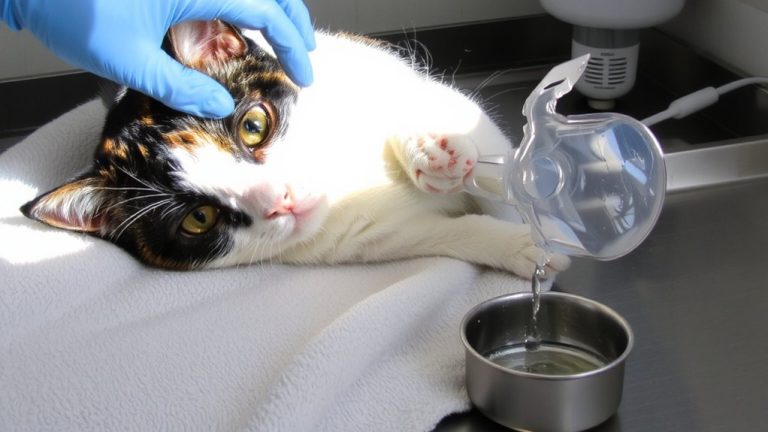
A feeding tube isn’t just a temporary fix-it’s often the cornerstone of recovery for cats with hepatic lipidosis, especially since most stop eating for several days before diagnosis. Feeding tubes guarantee consistent nutritional support, critical because poor food intake worsens liver damage. An esophagostomy tube lets you deliver a prescription recovery diet as a slurry 3–5 times daily at home. You’ll start slow-just 25% of needed calories, ramping up over four days-to prevent refeeding syndrome. This steady intake helps normalize liver enzymes and restores B vitamins lost during fasting. Each feeding is followed by 5–10 ml/cc of water to keep the tube clear. With reliable food intake, cats with hepatic lipidosis begin healing fast. Once your cat eats well on their own for 3–4 days, the tube can be removed.
How Can You Care for a Cat With Fatty Liver at Home?
You’ve likely just had a feeding tube placed for your cat, and now the real work begins at home-supporting their recovery from hepatic lipidosis with consistent, round-the-clock care. Proper home care means delivering prescribed recovery diets through the feeding tube 3–5 times daily, using exact measurements. Always mix food with water and warm it to body temperature-your cat tolerates warmed food better, and it flows easier. Feed slowly (about 1 ml/cc per second) while keeping your cat in an elevated feeding position to reduce regurgitation risk. Do tube flushing with 5–10 ml/cc of water after each meal to prevent clogs. Store unused portions as refrigerated food and toss anything older than 48 hours. You’ll also give supplements like S-adenosylmethionine, L-carnitine, and vitamins B and K as directed-each supports liver repair and energy metabolism.
On a final note
You’ve got this-catching hepatic lipidosis early and starting force-feeding via a syringe or feeding tube can boost recovery to over 85% success. Stick to liquid recovery diets like Hill’s a/d or Royal Canin Recovery, offering 4–6 small meals daily, 40–60 kcal/kg. Keep your vet in the loop, monitor gum color, and track daily weights. With consistent care, most cats regain normal liver function in 6–8 weeks.