Understanding Canine Hemorrhagic Gastroenteritis (HGE): Emergency Care
If your dog suddenly has bloody, raspberry jam–like diarrhea and vomiting, it could be hemorrhagic gastroenteritis (HGE), especially if they’re a small breed. Look for lethargy, dehydration, and pale gums-critical signs requiring immediate care. A packed cell volume (PCV) over 60% with low protein confirms it. Hospitalization with IV fluids, Cerenia for nausea, and monitoring typically leads to improvement in 24–48 hours. With prompt treatment, survival is around 96%. Recurrence happens in 10–15%, often linked to stress or inconsistent feeding, so consistent routine and close observation make all the difference.
We are supported by our audience. When you purchase through links on our site, we may earn an affiliate commission, at no extra cost for you. Learn more. Last update on 19th July 2026 / Images from Amazon Product Advertising API.
Notable Insights
- Canine HGE is a medical emergency marked by sudden bloody diarrhea, vomiting, and rapid dehydration.
- A packed cell volume (PCV) over 60% with low protein levels strongly indicates HGE.
- Immediate hospitalization and IV fluid therapy are critical to correct dehydration and stabilize circulation.
- Anti-nausea drugs like maropitant help control vomiting and support patient comfort during treatment.
- Most dogs recover within 24–48 hours with prompt care, but recurrence is possible without dietary and stress management.
What Are the Symptoms of HGE in Dogs?
What should you watch for if your dog suddenly seems off? Symptoms of HGE come on fast-watch for vomiting and bloody diarrhea, often resembling raspberry jam, a key sign of acute hemorrhagic diarrhea syndrome (AHDS). Your dog may become lethargic, refuse food-loss of appetite is common-and stop drinking, worsening dehydration. Check the gums: pale mucous membranes mean trouble, possibly from damaged red blood cells and high packed cell volume (PCV). Dehydration shows as tacky gums, sunken eyes, or skin that tents when pinched. Vomiting hits over half of cases, often before diarrhea, speeding up fluid loss. In severe cases, dogs weaken rapidly and may collapse due to hypovolemic shock from blood and fluid loss. Acting fast matters-these symptoms escalate quickly. You need vet care immediately, but noticing them early gives your dog the best shot.
How Is HGE Diagnosed and Differentiated From Other Conditions?
How do vets pinpoint HGE when your dog’s showing sudden bloody diarrhea and crashing energy? They start with diagnostic tests, focusing on a packed cell volume (PCV) test-Hemorrhagic gastroenteritis (HGE), also called Acute Hemorrhagic Diarrhea Syndrome (AHDS), is likely if PCV exceeds 60% with low or normal total protein. A complete blood count (CBC) helps rule out infections or anemia. Your vet will check for Clostridium perfringens via fecal testing, though PCR results take time. Coagulation tests are critical to exclude life-threatening conditions like disseminated intravascular coagulation (DIC). Abdominal ultrasound and radiographs help differentiate HGE from obstructions, tumors, or pancreatitis. Fecal exams also screen for parasites like hookworms or whipworms, and testing can confirm parvovirus. These steps guarantee your dog gets the right diagnosis fast.
What Is the Treatment for HGE in Dogs?
Once your vet rules out conditions like parvovirus, pancreatitis, or intestinal blockages and confirms hemorrhagic gastroenteritis (HGE) through a PCV reading above 60% alongside normal or low total protein, treatment shifts fast into supportive care mode. Hospitalization is essential for dogs with HGE, and aggressive intravenous fluid therapy helps reverse dehydration and prevent shock. Your dog likely had a complete blood count (CBC) showing high packed cell volume (PCV) and low blood protein levels, guiding the fluid plan. Anti-nausea medications like maropitant (Cerenia) reduce vomiting and improve comfort. Supportive care continues until symptoms stabilize.
| Treatment Component | Purpose |
|---|---|
| Intravenous fluid therapy | Correct dehydration, balance PCV |
| Hospitalization | Monitor HGE progression closely |
| Anti-nausea medications | Control vomiting in hemorrhagic gastroenteritis in dogs |
| Supportive care | Address symptoms, aid recovery |
How Long Is Recovery From HGE in Dogs?
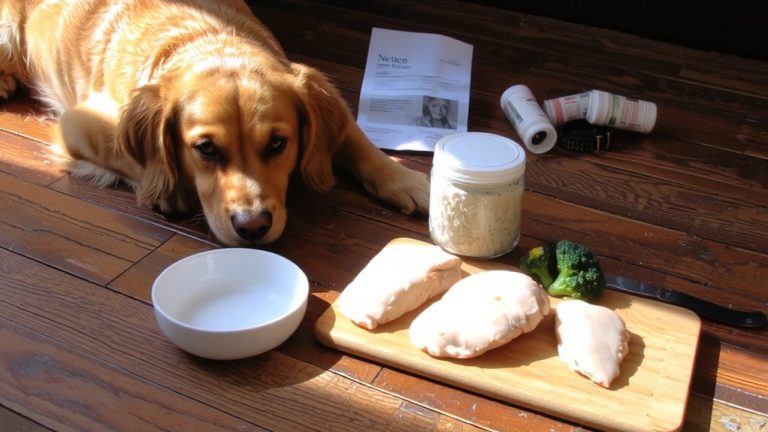
So, just how quickly can your dog bounce back after a diagnosis of hemorrhagic gastroenteritis? With prompt intravenous fluid therapy, most dogs show major improvement within 24 to 48 hours. Hospitalization usually lasts one to three days, especially for small dogs who dehydrate quickly. Your vet will monitor packed cell volume (PCV) and perform a complete blood count (CBC) to track recovery from HGE in dogs. Once stable, your dog can make a full recovery within days after discharge. A bland diet of boiled chicken and rice starts the reintroduction of food, gradually shifting back to normal. Though the survival rate is high-about 96% with treatment-recurrence of HGE happens in 10–15% of cases. Watch for stress triggers and maintain consistency in diet to reduce the risk.
On a final note
You’ll need fast action if your dog shows HGE symptoms like sudden bloody diarrhea, vomiting, or lethargy. Vets diagnose through blood tests, packed cell volume (PCV over 60% is a key sign), and ruling out parasites or parvovirus. Treatment means IV fluids, antibiotics like ampicillin, and strict rest. With care, most dogs recover in 2–3 days. Feed a bland diet-boiled chicken and rice-for 24–48 hours, then shift slowly to regular food.