Recognizing and Treating Canine Demodicosis (Red Mange)
You’ll notice bald spots around your dog’s eyes or face, but no itching-that’s typical of red mange, caused by Demodex mites overgrowing due to weak immunity. Puppies under 18 months are prone, but adults with diabetes or on prednisone can develop it too. Vets diagnose with deep skin scrapings or trichograms, spotting cigar-shaped *Demodex canis* mites (180–210 µm) under the microscope. Treatment includes oral fluralaner (Bravecto) at 25 mg/kg every 12 weeks or off-label ivermectin (600 µg/kg daily) in non-sensitive breeds, continuing 1–2 months past two negative scrapings; spaying intact females helps prevent relapse-key steps for lasting control.
We are supported by our audience. When you purchase through links on our site, we may earn an affiliate commission, at no extra cost for you. Learn more. Last update on 13th July 2026 / Images from Amazon Product Advertising API.
Notable Insights
- Red mange is caused by an overgrowth of Demodex mites, usually due to immune immaturity in puppies or underlying illness in adults.
- Transmission occurs only through direct contact, typically from mother to puppy shortly after birth, not via casual dog interactions.
- Key signs include non-itchy hair loss, often around the face, with possible secondary infections causing redness, crusting, or odor.
- Diagnosis relies on deep skin scrapings to detect cigar-shaped mites, with trichograms or tape impressions used if needed.
- Generalized cases require oral treatments like fluralaner or ivermectin, continuing 1–2 months after two negative scrapings.
Causes of Red Mange in Dogs
Red mange in dogs stems from an overgrowth of Demodex mites-mostly *Demodex canis*, but sometimes *D. injai* or *Demodex* sp. “cornei”-that live deep in hair follicles and sebaceous glands, where they’re usually kept in check by a healthy immune system. When your dog’s immune system fails, microscopic mites multiply rapidly, leading to mite infestations in dogs. *Demodex canis*, cigar-shaped and 180–210 µm long, normally lives harmlessly in small numbers. Infestations become problematic when a weakened immune system can’t control their spread. Puppies under 18 months often develop localized or generalized forms due to genetic immune immaturity. Adult dogs usually have an underlying systemic issue like diabetes, cancer, or are on immunosuppressive meds. Transmission occurs only via direct contact-typically from mother to puppies within 72 hours of birth-never through casual dog-to-dog exposure.
Signs Your Dog Has Red Mange
Have you noticed bald spots around your dog’s eyes or on their face? This could be red mange, a condition marked by hair loss and patches around eyes, often in puppies under 18 months. The culprit is Demodex canis, a mite living in hair follicles. Unlike other skin issues, it usually causes non-itchy alopecia, meaning your dog won’t scratch much. However, if secondary bacterial infections set in, you might see redness, crusting, or odor. In mild cases, hair loss stays localized, but generalized demodicosis spreads to multiple body areas, with scaling and inflammation. Though not contagious, it signals possible immune challenges. Red mange won’t show up on regular exams-vets rely on deep skin scrapings and microscopic examination to confirm mites. Early detection helps prevent progression and supports faster recovery.
How Vets Diagnose Demodex Mites?
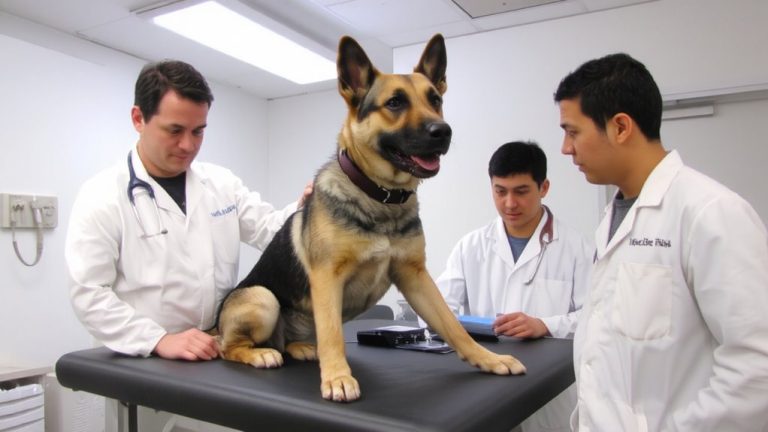
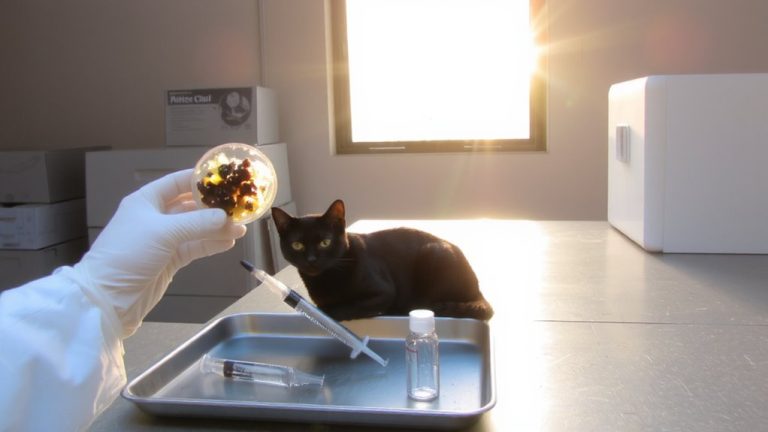
How do vets actually find these tiny mites hiding in your dog’s skin? They use deep skin scrapings, collecting material with a scalpel blade (#10 or #20) and mineral oil to check for Demodex mites under the microscope. Seeing cigar-shaped mites confirms it-Demodex canis is 180–210 µm long and lives deep in hair follicles. If scrapings come up empty, a trichogram helps; plucking hairs and examining them in oil can reveal mites inside follicles, especially in tender areas. For shorter mites like Demodex “cornei” (90–140 µm), which live in the stratum corneum, vets prefer a superficial tape impression. Fecal flotation might occasionally detect mites from grooming, but negative results don’t rule out infestation-mite numbers in stool are often too low.
Treating Red Mange in Dogs
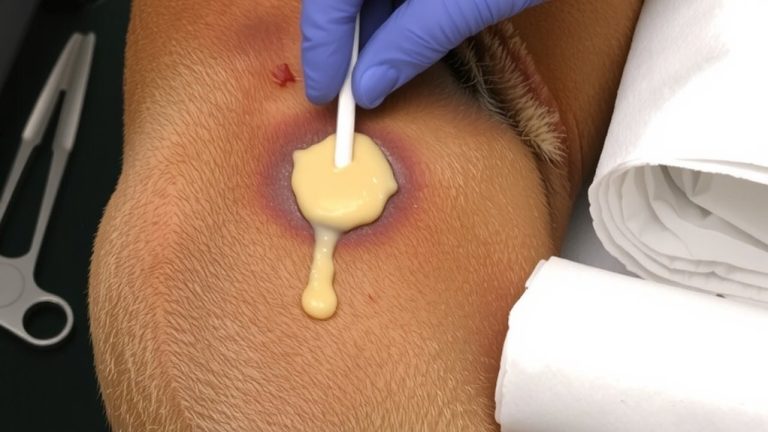
Once your vet confirms demodex mites through skin scrapings or trichograms, the focus shifts to treatment-especially important if your dog shows widespread lesions, hair loss, or secondary infections typical of generalized demodicosis. For localized demodicotic mange, topical medications like rotenone-based Goodwinol may help, though most cases resolve without intervention. Generalized demodicosis needs aggressive mite control using oral medication such as fluralaner (Bravecto) at 25 mg/kg every 12 weeks or off-label ivermectin up to 600 µg/kg daily in non-sensitive breeds. Milbemycin oxime is another option, especially if ivermectin isn’t safe. In MDR1-negative dogs, doramectin at 600 µg/kg weekly works well. Continue treatment 1–2 months after two negative skin scrapings. Spaying intact females during therapy helps prevent relapse, since hormonal changes can worsen Demodectic flare-ups. Moxidectin/imidacloprid every two weeks is effective where approved, like in Europe.
On a final note
You’ve got this-red mange is treatable with prompt care. Use vet-recommended, FDA-approved topical treatments like 10% imidacloprid + 1% moxidectin, applied monthly. Combine with medicated shampoos containing benzoyl peroxide, used weekly. Follow dosage by weight: 0.5 mL per 10 lbs. Most dogs show improvement in 4–6 weeks. Stick to the full course, even after symptoms fade, to prevent relapse. Proper nutrition and stress reduction support recovery-your dog’s health stays in your hands.