Symptoms and Management of Canine Immune-Mediated Polyarthritis
If your dog has a stiff, eggshell-like gait, shifting lameness, joint swelling, or unexplained fever, immune-mediated polyarthritis (IMPA) could be the cause. Diagnosis relies on synovial fluid analysis from at least three joints, showing high neutrophils and protein. Treat with prednisone at 0.5–1 mg/kg daily, taper slowly by 20%–30% every 3–4 weeks, and consider doxycycline for tick-borne triggers. Monitor CRP levels and joint taps to guide therapy-many dogs regain full mobility with consistent care, especially when you know what comes next.
We are supported by our audience. When you purchase through links on our site, we may earn an affiliate commission, at no extra cost for you. Learn more. Last update on 19th July 2026 / Images from Amazon Product Advertising API.
Notable Insights
- Dogs with IMPA often show a stilted “eggshell” gait, shifting lameness, joint swelling, and systemic signs like fever or lethargy.
- Diagnosis requires synovial fluid analysis from multiple joints showing neutrophilic inflammation and ruling out infection via culture.
- Treatment starts with high-dose prednisone (0.5–1 mg/kg daily), with gradual tapering over 3–4 weeks once remission is achieved.
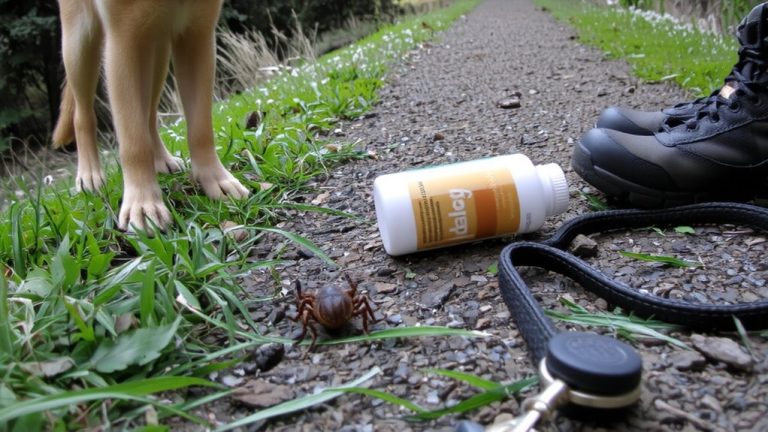
- Underlying causes like infections or cancer must be addressed; doxycycline is trialed if vector-borne disease is suspected.
- Prognosis is generally good; monitor with CRP or arthrocentesis, and taper slowly to prevent relapse.
What Is Immune-Mediated Polyarthritis in Dogs?
Visualize your dog moving stiffly, like they’re tiptoeing on hot pavement or walking on eggshells-that’s often the first hint of immune-mediated polyarthritis (IMPA). Immune-mediated polyarthritis in dogs is a nonseptic polyarthropathy where immune complexes accumulate in joint spaces, sparking joint inflammation across multiple joints. This autoimmune response means your dog’s immune system mistakenly attacks its own tissues. IMPA comes in two forms: primary IMPA in dogs, which has no known trigger and accounts for 50–65% of cases, and secondary IMPA, linked to infections, cancer, or gut issues. Often underdiagnosed, IMPA causes shifting lameness, stiffness, and systemic signs like lethargy-even without obvious joint pain. Though only 40% show detectable discomfort, up to 80% struggle with mobility. This condition also appears in 8% to 40% of dogs with unexplained fevers.
Key Symptoms of Canine IMPA to Watch For
While your dog might not always show obvious signs of discomfort, immune-mediated polyarthritis (IMPA) often reveals itself through subtle but consistent changes in movement and behavior. Dogs commonly develop a stilted gait, appearing to walk on eggshells due to joint pain and stiffness. You may notice lameness in multiple limbs that shifts over time, along with swollen joints and palpable joint inflammation. Systemic signs like fever of unknown origin, lethargy, or vomiting can occur, even without visible swelling. Some dogs also exhibit spinal pain from facet joint inflammation. Early recognition is key.
| Symptom | Common Presentation | Frequency in Dogs with IMPA |
|---|---|---|
| Stilted gait | Walking on eggshells | Up to 80% |
| Lameness | Shifting limb involvement | Typical |
| Fever | Unexplained temperature rise | 8–40% of cases |
How IMPA Is Diagnosed in Dogs
Spotting the signs of immune-mediated polyarthritis (IMPA) in your dog is just the first step-now it’s time to confirm what’s going on inside the joints. Your vet will perform joint fluid analysis by collecting synovial fluid from at least three joints, often the carpus or tarsus, to check for neutrophilic inflammation. In IMPA, the fluid typically shows high white blood cells, mostly neutrophils, and increased protein-clear signs of immune-driven inflammation in multiple joints. One sample should be cultured to rule out septic arthritis, even though infections aren’t always caught. Since IMPA mimics other joint disease, your vet will also run blood tests, urinalysis, imaging, and screen for tick-borne illnesses. These help uncover underlying causes and differentiate primary from secondary Polyarthritis. Synovial fluid analysis remains the cornerstone-without it, accurate diagnosis of joint inflammation can’t be confirmed.
Treating Canine IMPA: Medications and Protocols
Once your dog’s vet confirms immune-mediated polyarthritis (IMPA), treatment usually starts right away with high-dose corticosteroids like prednisone, typically dosed at 0.5 to 1 mg/kg orally once daily to quickly suppress the overactive immune response. This immunosuppressive therapy aims for clinical remission, with steroids tapered by 20%–30% every 3–4 weeks based on your dog’s progress and a normalizing complete blood count. If an underlying disease like infection or neoplasia is found, it must be treated directly. For suspected vector-borne causes, a doxycycline trial at 10 mg/kg once daily for 28 days is recommended. NSAIDs may help with pain but aren’t substitutes for immunosuppressive doses. If prednisone alone fails, adding cyclosporine can be effective-just remember to taper only one drug at a time.
Prognosis, Monitoring, and Long-Term Care
Your dog’s journey with immune-mediated polyarthritis (IMPA) doesn’t end once treatment starts-it shifts into a phase where keeping things under control long-term really matters. The prognosis is generally good, especially if an underlying cause like infection is found and treated. Monitoring is key: C-reactive protein (CRP) helps track inflammation, but repeat arthrocentesis remains the gold standard for confirming remission. Dogs with primary IMPA usually need immunosuppressive therapy for 4–6 months, with slow steroid tapering-20%–30% every 3–4 weeks-to reduce relapse risk. Always adjust one drug at a time. Relapse is common if tapering’s too fast, so return to the last effective dose if symptoms return. Long-term care may involve lifelong therapy in refractory cases, aiming for the lowest dose that maintains remission.
On a final note
You’ve got this-catching IMPA early means starting meds like prednisone quickly, usually at 1 mg/kg daily, then tapering under vet guidance, while monitoring appetite, energy, and joint mobility. Pair treatment with a balanced, omega-3–rich diet (look for at least 1,000 mg DHA/EPA per 10 lbs) to support joint health. Keep follow-up bloodwork on schedule, adjust meds as needed, and stick to low-impact exercise. Most dogs stabilize within weeks and live well with consistent care.