Symptoms and Care for Dogs With Dilated Cardiomyopathy (DCM)
Your dog may show early signs like lethargy, coughing, or a resting breathing rate over 30–35 bpm, later progressing to labored breathing, weakness, or fainting. Vets diagnose DCM with echocardiograms, chest X-rays, and tests for ProBNP. Treatment includes pimobendan, furosemide, ACE inhibitors, and taurine (250–500 mg/kg/day) if deficient. Switching from grain-free BEG diets-especially those with peas or lentils-can help. You’ll want to know how diet changes and monitoring impact long-term heart function.
We are supported by our audience. When you purchase through links on our site, we may earn an affiliate commission, at no extra cost for you. Learn more. Last update on 19th July 2026 / Images from Amazon Product Advertising API.
Notable Insights
- DCM causes enlarged heart chambers and weak contractions, leading to congestive heart failure in dogs, especially large breeds.
- Early signs include lethargy, reduced exercise tolerance, and resting breathing rate over 30–35 breaths per minute.
- Late symptoms involve coughing, labored breathing, fainting, cyanosis, and abdominal swelling due to fluid buildup.
- Diagnosis involves physical exams, X-rays, echocardiograms, ECGs, and blood tests like ProBNP to detect heart damage.
- Treatment includes pimobendan, diuretics, ACE inhibitors, arrhythmia management, taurine supplementation, and switching from grain-free diets.
What Is DCM in Dogs?
While you might not notice it at first, dilated cardiomyopathy (DCM) slowly weakens your dog’s heart by enlarging the chambers and thinning the heart muscle, especially in the left ventricle, which means less blood gets pumped out with each beat. In dogs, this condition impairs the heart’s ability to pump blood effectively, often leading to congestive heart failure. DCM primarily affects large breeds like Dobermans, Great Danes, and Boxers, with strong ties to genetics and, increasingly, taurine deficiency linked to grain-free diets. These boutique, legume-rich diets may lack essential nutrients, contributing to DCM even in breeds not traditionally at risk. Though enlarged heart chambers are a hallmark sign, early detection through vet screening can help. Understanding your dog’s breed risks, diet quality, and nutrient balance supports long-term heart health and keeps their pulse strong.
DCM Symptoms: Early and Late Signs to Watch
Since dilated cardiomyopathy often progresses silently, it’s essential to recognize the subtle changes your dog may show before serious issues arise, and staying alert to even small shifts in behavior can make a big difference. In the early stages of dilated cardiomyopathy (DCM), symptoms of dilated cardiomyopathy may be mild or absent, but watch for slight lethargy, reduced exercise tolerance, and a resting breathing rate above 30–35 breaths per minute. As DCM advances, late-stage symptoms emerge, including rapid, labored breathing, coughing from pulmonary edema, weakness, and fainting due to arrhythmias. Cyanosis-a bluish tint to the gums-signals poor oxygen levels, while abdominal swelling from ascites indicates fluid buildup. Sudden congestive heart failure can develop quickly, sometimes within hours. Monitoring your dog’s breathing rate nightly can catch early warning signs and help guide timely care decisions.
How DCM Is Diagnosed in Dogs
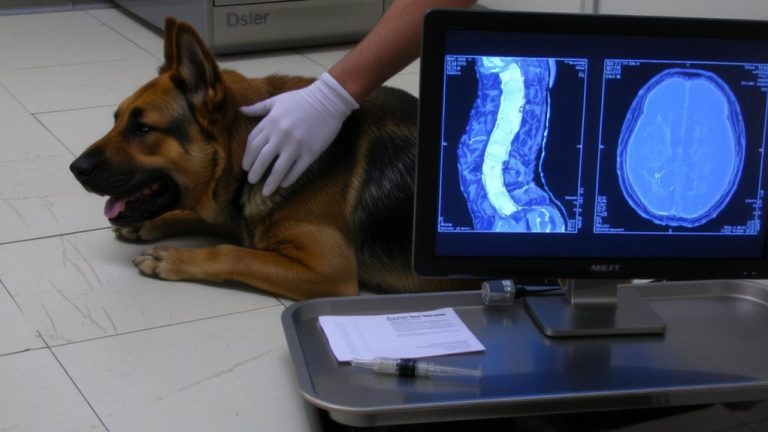
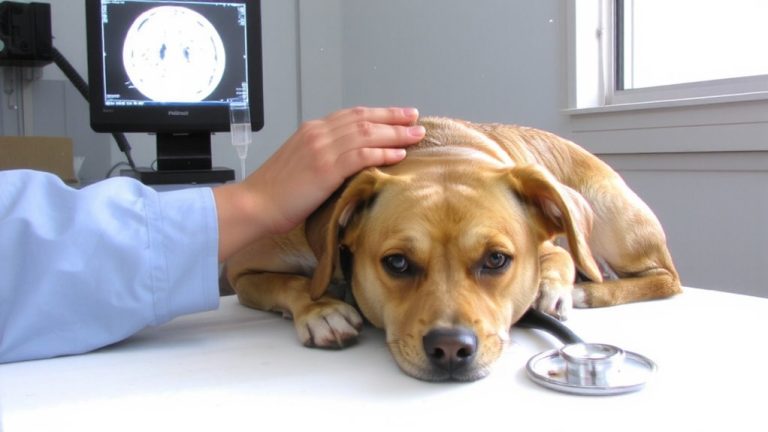
When your dog starts showing signs like tiredness after light play or breathing faster than usual at rest-especially if they’re a breed prone to heart issues like a Doberman or Boxer-it’s time to get them checked, because diagnosing dilated cardiomyopathy (DCM) hinges on catching these clues early and confirming them with the right tests. Your vet will begin with a physical examination, using auscultation to listen for murmurs, muffled sounds, or irregular rhythms. They’ll likely follow up with chest X-rays to check for heart enlargement and lung fluid. An echocardiogram is key-it measures left ventricle dilation and reduced contractility. Electrocardiograms (ECG) and 24-hour Holter monitoring detect arrhythmias like ventricular tachycardia. Blood tests for cardiac biomarkers such as ProBNP and Troponin I help confirm heart muscle damage, supporting the diagnosis when combined with imaging.
Can Grain-Free Diets Cause DCM in Dogs?
Could the food you’re feeding be putting your dog at risk for heart disease? The FDA has linked grain-free diets to increased cases of dilated cardiomyopathy (DCM), especially in breeds not genetically prone to DCM in dogs. Over 90% of diet-induced DCM cases reported involved dogs eating BEG diets with peas, lentils, or legumes as main ingredients. While taurine deficiency was a suspect, some dogs had normal levels, pointing to other nutritional gaps affecting heart muscle strength. These dietary changes may impair cardiac function even without classic symptoms of DCM. Early research shows taurine supplementation and switching from grain-free diets can improve outcomes. If your dog’s food is grain-free or plant-based, consider consulting your vet about reformulating their diet to support long-term heart health and proper cardiac function.
Treating DCM: Medications and Support Options
If your dog’s been diagnosed with dilated cardiomyopathy, you’ve probably already made changes to their diet, especially if they were on a grain-free or legume-heavy formula linked to heart issues. Now, treatment focuses on pimobendan to strengthen heart contractions, ACE inhibitors like enalapril to ease blood pressure, and diuretics such as furosemide to reduce dangerous fluid buildup. Beta-blockers or calcium channel blockers help manage arrhythmias, especially in breeds like Dobermans. If taurine deficiency is present, supplements (250–500 mg/kg/day) and L-carnitine (2–3 g/day) can restore heart function. Stick to sodium-restricted diets and schedule regular echocardiographic monitoring to track progress.
| What You See | What It Means | What You Can Do |
|---|---|---|
| Coughing, fatigue | Fluid in lungs | Furosemide helps fast |
| Irregular heartbeat | Arrhythmia risk | Beta-blockers stabilize |
| Weakness at home | Poor output | Pimobendan boosts strength |
DCM Prognosis: Life Expectancy and Daily Care
Most dogs diagnosed with DCM live anywhere from a few months to over two years, depending on when treatment starts and how the disease progresses. Your dog’s prognosis for dogs with dilated cardiomyopathy (DCM) hinges on early detection-dogs caught before symptoms often live 1–2 years or more. If congestive heart failure is present at diagnosis, survival time shortens to weeks or months. Doberman Pinschers face a tougher outlook, averaging just 3 months, while Cocker Spaniels may live 6 months to 2 years. Early detection improves quality of life and extends life expectancy considerably. For cases tied to taurine deficiency, supplementation and diet correction can boost heart function and survival time. Daily care includes heart-healthy nutrition, consistent meds, and monitoring breathing and activity. You’ll help your dog best by staying proactive and working closely with your vet.
On a final note
You’ve got this. Catching DCM early means better outcomes, so watch for coughing, lethargy, or trouble breathing. Your vet might recommend an echocardiogram and blood tests to confirm. If diet’s a factor, switching from grain-free kibble-especially those with peas, lentils, or potatoes as top ingredients-can help. Medications like pimobendan, furosemide, and beta-blockers manage symptoms. With consistent care, many dogs live 6–12 months, sometimes longer. Feed a balanced, AAFCO-approved diet, monitor energy levels, and stick to follow-ups.