How to Identify and Treat Feline Lymphadenopathy
Check your cat’s submandibular, prescapular, axillary, and popliteal nodes-you’re looking for firm swellings over 1.5 cm or visible bulges, especially under the jaw. Causes range from bacterial infections treated with Clavamox to lymphoma requiring chemo like vincristine. Your vet may run FeLV tests, do an ultrasound, or take a fine needle aspirate. Warm, painful nodes or generalized swelling with weight loss need fast action. Find out what specific signs mean for long-term care and outcomes.
We are supported by our audience. When you purchase through links on our site, we may earn an affiliate commission, at no extra cost for you. Learn more. Last update on 19th July 2026 / Images from Amazon Product Advertising API.
Notable Insights
- Swollen lymph nodes in cats are commonly caused by infections, feline leukemia virus, or lymphoma, especially in unvaccinated outdoor cats.
- Check submandibular, prescapular, axillary, and popliteal nodes for symmetry, size over 1.5 cm, and firmness to identify enlargement.
- Enlarged submandibular or prescapular nodes, generalized swelling with weight loss, or painful nodes after a tick bite require urgent veterinary care.
- Veterinarians diagnose lymphadenopathy using physical exam, fine needle aspirate, blood tests, and abdominal ultrasound to detect underlying causes.
- Treatment depends on cause: antibiotics for bacterial infections, antifungals, antiparasitics, chemotherapy for lymphoma, or prednisolone for idiopathic inflammation.
What Causes Swollen Lymph Nodes in Cats?
What’s causing those lumps you’ve noticed in your cat’s neck or behind the jaw? Swollen lymph nodes often signal lymphadenopathy in cats, usually due to infections like bacterial, fungal, or parasitic infections. The feline leukemia virus is a common viral culprit, especially in unvaccinated outdoor cats. Tick-borne diseases, such as ehrlichiosis, also contribute, particularly in endemic areas. Chronic inflammation from inflammatory bowel disease can trigger reactive enlargement, mimicking alimentary lymphoma. In fact, lymphoma in cats-especially alimentary lymphoma-accounts for 33%–50% of cases with mesenteric lymphadenopathy on ultrasound. While some swelling resolves after treating the underlying cause, persistent enlargement needs vet evaluation. Always consider both infectious and neoplastic causes, since early diagnosis improves outcomes. Keeping your cat indoors, using tick prevention, and staying up-to-date on wellness exams reduces risks markedly.
How to Check for Lymph Node Swelling at Home
You’ve likely heard that swollen lymph nodes in cats can be a sign of underlying illness, from infections like feline leukemia to conditions such as lymphoma. You can spot early signs of lymph node swelling by doing a simple physical examination at home. Focus on peripheral lymph nodes like the submandibular nodes under the jaw, prescapular nodes near the shoulders, axillary nodes in the armpits, and popliteal nodes behind the knees. Normal nodes are pea-sized, but enlarged lymph nodes may feel like firm lumps over 1.5 cm. Check both sides for symmetry-swelling often shows on one side first. Look for visible bulges, especially under the jaw.
| Site | Normal Size |
|---|---|
| Submandibular nodes | <1 cm |
| Prescapular nodes | Pea-sized |
| Axillary nodes | Small, flat |
| Popliteal nodes | <1 cm |
What Happens During a Vet Visit for Lymphadenopathy
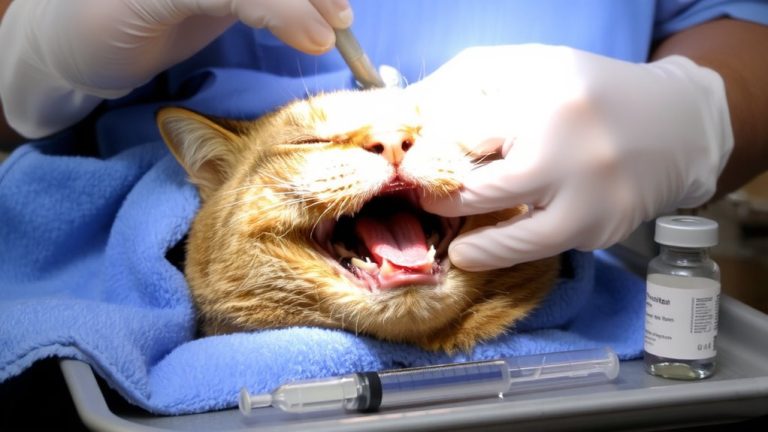
A vet visit for feline lymphadenopathy starts with a thorough hands-on exam, where your cat’s lymph nodes-like the submandibular under the jaw, prescapular near the shoulders, axillary in the armpits, inguinal in the groin, and popliteal behind the knees-are carefully palpated to check for abnormal size, shape, or texture. You’ll need to know that swollen lymph nodes in cats can signal an infectious disease or more serious condition. The vet may perform a fine needle aspirate of the enlarged lymph node to examine cells under a microscope, checking for lymphoblastic lymphoma or reactive changes. They’ll likely test for feline leukemia virus and feline immunodeficiency virus. Bloodwork and urinalysis help assess overall health. An abdominal ultrasound can reveal hidden mesenteric or regional lymph node involvement, especially if internal nodes aren’t accessible through touch.
Common Treatments for Swollen Lymph Nodes in Cats
While the right treatment for your cat’s swollen lymph nodes depends on the underlying cause, your vet will likely start with targeted therapy based on diagnostic results. If bacterial infections are the cause, antibiotics like Clavamox are commonly prescribed for 2–4 weeks to reduce node swelling. For fungal infections such as *Histoplasma capsulatum*, antifungals like itraconazole may be needed for several months. Antiparasitics such as clindamycin help when *Toxoplasma gondii* is the culprit, especially in cats with elevated IgM titers. If lymphoma is diagnosed-a common neoplastic cause of feline Lymphadenopathy-chemotherapy with vincristine, cyclophosphamide, and prednisone is standard, particularly for cats with alimentary lymphoma. Corticosteroids like prednisolone can also manage inflammation when no clear infectious or cancerous cause is found. Management of Lymphadenopathy hinges on identifying the underlying cause to guide effective, lasting relief for your cat’s cats lymph nodes.
When Should You Worry About Your Cat’s Swollen Nodes?
When should you start worrying about those lumps you’ve noticed near your cat’s jaw or shoulder? Swollen lymph nodes aren’t always a red flag, but when they’re enlarged, persistent, or paired with symptoms like weight loss or fever, it’s time to act. Feline lymph nodes are always part of the lymphatic system, but abnormal growth-especially in submandibular or prescapular areas-can signal serious issues. In kittens, abdominal lymphadenopathy with fever may point to FIP. In seniors, it could be a form of cancer like lymphoma. Internal lymph nodes often require a CT scan for evaluation. Immediate vet care is essential with tick exposure or pain.
| Symptom | Concern Level |
|---|---|
| Enlarged submandibular nodes | High |
| Prescapular swelling in seniors | High |
| Generalized lymphadenopathy + weight loss | Urgent |
| Warm, painful nodes post-tick bite | Emergency |
| Lymph nodes 1.5x normal size | Monitor closely |
On a final note
You’ve got this: check your cat’s lymph nodes weekly, behind the jaw and near the shoulders, for pea-sized swellings. If they’re larger, hard, or your cat seems off, call your vet fast. Most cases improve with antibiotics like clavamox or anti-inflammatories, but tests-like bloodwork or fine-needle aspirates-guide real answers. Pair vet care with immune support, like Purina Pro Plan Bright Mind kibble, and keep hydration up with a Catit water fountain. Early action means better outcomes, every time.