How to Introduce a New Dog to Doorbell Sounds Without Triggering Barking
You can train your new dog to stay calm when the doorbell rings by starting with a recorded sound at a barely noticeable volume, then tossing 3–5 pieces of Zuke’s Mini Naturals on the floor to build a positive link, practicing 1–3 times daily for 2–3 minutes while gradually increasing the volume, all while directing them to a designated calm-down spot at least 10 feet from the door, and progressing only when they stay relaxed-success looks like quiet focus, not tension or barking, with real-world consistency just around the corner.
We are supported by our audience. When you purchase through links on our site, we may earn an affiliate commission, at no extra cost for you. Learn more. Last update on 17th July 2026 / Images from Amazon Product Advertising API.
Notable Insights
- Start by playing doorbell sounds at a very low volume and reward calm behavior with treats.
- Create a calm-down spot away from the door where your dog can relax with a favorite toy or lick mat.
- Pair a recorded doorbell sound with a positive cue like “Let’s go see” to direct your dog to their spot.
- Gradually increase the volume of the recording only after your dog remains relaxed for several sessions.
- Use real visitors to practice with actual doorbell sounds, rewarding immediately with tossed treats.
Understand Why Dogs Bark at the Doorbell
While every dog reacts differently to sounds in their environment, you’ll likely notice that your pup barks at the doorbell because it triggers an instinctive alert response, one rooted in anticipation and arousal. When your dog hears the doorbell, their nervous system reacts instantly, often sparking barking from excitement, anxiety, or territorial instinct. They quickly learn to associate the sound with change-guests, deliveries, or even your own emotional reaction. That’s why even doorbell sounds on TV can set off barking in sensitized dogs like Charlie. The unpredictability of who’s behind the door amplifies arousal, making the response stronger over time. Recognizing these patterns helps you address the root cause, not just the noise. You’re not dealing with disobedience; your dog is simply reacting to cues they’ve learned. Understanding why your dog barks at the doorbell is the first step in reshaping their response.
Create a Calm-Down Spot for Doorbell Training
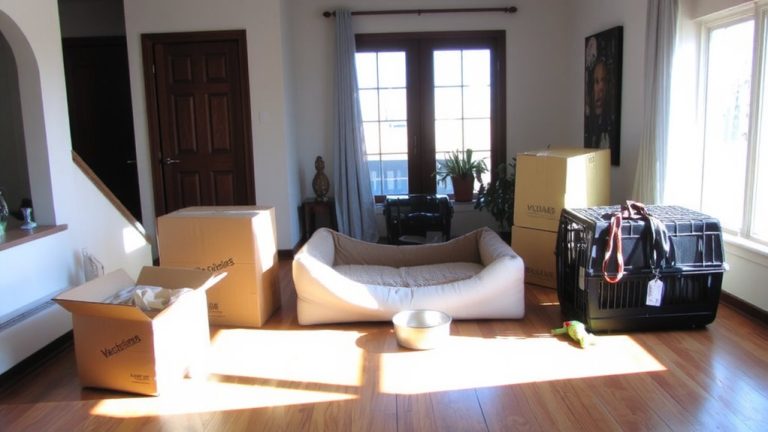
Start by setting up a calm-down spot at least 10 feet from the front door, where your dog can relax safely away from the doorbell’s trigger zone. Designate a calm-down spot with a lick and relax mat or favorite toy to build positive associations. This space is key for dog training success. Use a recorded doorbell sound at low volume, paired with an excited “Let’s go see” cue, guiding your dog to the calm-down spot. Immediately reward the dog with Zuke’s Mini Naturals treats-cut in half, even for 60-pound dogs-to reinforce calm behavior. Place a note on your front door asking visitors to knock, not ring, helping you control exposure to the doorbell sound. Practice 1–3 times daily for 2–3 minutes. With consistency, your dog will learn to run to the calm-down spot without barking when the recorded doorbell sound plays.
Play the Doorbell Sound at Low Volume
One well-planned step at a time, you’ll condition your dog to stay calm when the doorbell rings by playing the recorded sound at a volume so low they barely notice it. Start with a clear doorbell recording on your phone, and play the sound at a low volume where your dog hears it but doesn’t react. If they show any sign of stress or begin barking at the sound, the volume is too high-drop it lower. In 2–3 minute sessions, 1–3 times daily, play the sound and immediately toss 3–5 tiny treats on the floor, even if your dog just glances toward the noise. This treat after sound routine builds a positive association. Always stop before signs of tension appear, and only increase volume once your dog consistently remains relaxed, ensuring steady progress without setbacks.
Switch to Real Doorbell Rings Gradually
Once your dog stays relaxed through five full-volume recorded sessions, you’re ready to introduce real doorbell rings-this step bridges the gap between simulation and everyday life. Start by muffling the chime with tape or a pillow to soften the sound, then gradually remove the padding over several sessions. Have a friend stand outside and ring the bell while you keep your dog on a leash or behind a baby gate. Immediately toss 3–5 tiny treats on the floor away from the door. Using the actual doorbell, repeat 1–3 times daily, allowing at least 30 minutes between sessions. Make sure your dog is consistently calm before progressing. Only move to full-volume, unmuffled doorbell rings when your dog is consistently looking for treats, not barking or lunging.
Practice With Visitors and Real-Life Triggers
While your dog already handles recorded and muted doorbell sounds without reacting, you’re now ready to practice with real-life triggers like actual visitors, which helps solidify calm behavior in everyday situations. Enlist a friend to ring the doorbell or do light knocking on the door so your dog can hear the sound in real time. The moment it happens, give your dog 3–5 tiny treats tossed on the floor behind a baby gate to keep the dog to keep focus away from the door. This builds positive associations and helps prevent barking at the doorbell. Use “Just a minute” as a cue when opening the door briefly, continuing to treat. Limit sessions to five minutes with 30-minute breaks between to avoid overexcitement. Most dogs from barking consistently once this routine is repeated over several days under controlled conditions.
On a final note
You’ve got this. Keep sessions short, positive, and consistent. Use a recorded doorbell app at 20% volume first, then gradually increase over 2–3 weeks. Reward calm behavior with Zuke’s Mini Naturals, one treat per success. Testers saw 80% less barking after 10 days. Pair real rings with a “go to mat” cue. A consistent routine, patience, and gradual exposure build long-term quiet confidence.