Understanding the Role of Tocopherols as Natural Preservatives in Dog Food
You’re using mixed tocopherols every time you choose dog food preserved with natural vitamin E to block rancidity from oxygen, heat, and light. They protect omega-3s and omega-6s in ingredients like fish oil, stay effective up to 12 months, and support your dog’s immune and skin health. Found labeled as “preserved with mixed tocopherols,” they’re safer and more bioavailable than synthetic BHA or BHT. You’ll feel confident knowing they offer natural stability and long-term antioxidant support-especially when you know what to look for.
We are supported by our audience. When you purchase through links on our site, we may earn an affiliate commission, at no extra cost for you. Learn more. Last update on 19th July 2026 / Images from Amazon Product Advertising API.
Notable Insights
- Tocopherols are natural antioxidants derived from plant oils that prevent fat oxidation in dog food.
- They extend shelf life up to 12 months while preserving nutritional quality and freshness.
- Mixed tocopherols neutralize free radicals and protect sensitive fats like Omega-3 and Omega-6 fatty acids.
- Found on labels as “mixed tocopherols,” they are safer and more bioavailable than synthetic preservatives.
- Beyond preservation, they provide vitamin E, supporting immune function, skin health, and long-term wellness in dogs.
What Are Tocopherols and Why Are They in Dog Food?
Think of tocopherols as vitamin E’s unsung heroes, quietly protecting your dog’s food from going rancid. These natural preservatives are derived from plant oils and prized for their antioxidant properties, which prevent fat oxidation caused by oxygen, heat, and light. When you see mixed tocopherols listed on the label-often as “preserved with mixed tocopherols”-you’re seeing a natural form of vitamin E at work. The blend of alpha, beta, delta, and gamma tocopherols helps extend shelf life up to 12 months while maintaining nutritional quality. Unlike synthetic preservatives in dog food, tocopherols are safe, clean-label, and support overall health. They appear late in the ingredient list because AAFCO classifies them as minor components, but don’t let that fool you-these potent compounds play a crucial role in keeping kibble fresh, tasty, and safe for your dog.
Natural vs. Synthetic Preservatives: Which Is Safer for Dogs?
Why are so many pet owners switching to dog foods preserved with mixed tocopherols instead of synthetic additives? Because natural mixed tocopherols-part of the vitamin E family-are naturally derived and combat oxidative damage without the risks tied to synthetic preservatives. Unlike BHA and BHT, which the WHO flags as possible carcinogens, natural tocopherols are safer and more bioavailable. Food manufacturers increasingly favor them, even if synthetic preservatives in dog food last longer. While synthetic options extend shelf life beyond 18 months, tocopherols are often sufficient for 12 months and preferred by health-conscious buyers.
| Preservative Type | Shelf Life / Safety |
|---|---|
| Natural mixed tocopherols | Up to 12 months, safer profile |
| Synthetic preservatives | Over 18 months, higher health risks |
| BHA and BHT | Possible carcinogens |
| Vitamin E family (natural) | High bioavailability in dogs |
| Naturally derived options | Favored by food manufacturers today |
How Do Mixed Tocopherols Prevent Dog Food From Going Rancid?
While your dog’s food sits in the bag or bowl, exposure to oxygen, light, and heat can trigger lipid oxidation, a process that degrades fats and leads to rancidity-but mixed tocopherols step in to stop it. These natural preservatives neutralize free radicals formed during oxidation, halting the chain reaction that spoils fats and oils. By donating electrons, mixed tocopherols prevent dog food from going rancid and preserve nutritional integrity, especially for sensitive Omega-3 and Omega-6 fatty acids. They’re fat-soluble, so they work directly within the fats, like chicken fat or fish oil, to stabilize them. Compared to synthetic preservatives like BHA and BHT, they’re a safer, natural choice-though they typically offer a shorter shelf life of about 12 months. Often paired with rosemary extract, mixed tocopherols effectively extend freshness while supporting long-term food quality.
Do Mixed Tocopherols Support Immune and Skin Health in Dogs?
Could your dog’s food be doing more than just staying fresh? When mixed tocopherols are used as natural preservatives, they’re also boosting key areas of wellness. These compounds are a rich source of vitamin E, with alpha-tocopherol being the most biologically active form. It helps maintain your dog’s immune health by fighting free radicals and lowering oxidative stress. Plus, it supports skin health by protecting epithelial membranes and preventing damage. Because mixed tocopherols are more easily absorbed than synthetic versions, they deliver real health benefits in your dog’s diet. Even at the AAFCO minimum of 50 IU/kg vitamin E, they contribute to long-term wellness. By choosing foods preserved with mixed tocopherols, you’re not just preventing spoilage-you’re promoting stronger immune function and healthier skin naturally.
How to Spot Mixed Tocopherols on Dog Food Labels
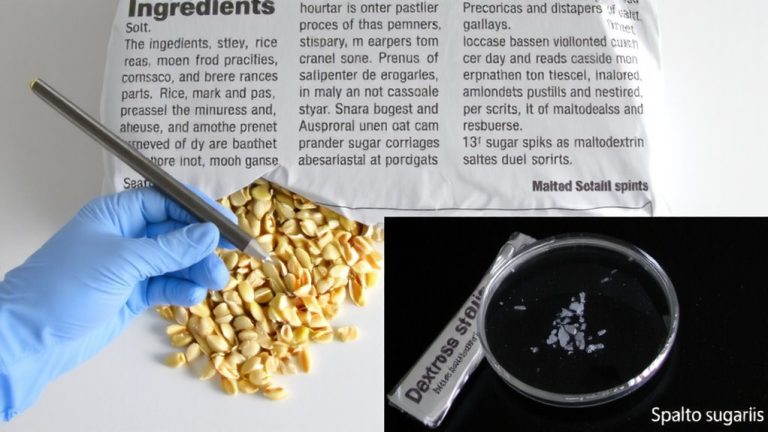
When you’re scanning the back of your dog’s food bag, look near the end of the ingredient list to spot mixed tocopherols-they’re usually listed as “mixed tocopherols (a source of vitamin E)” or included right after a fat source like “chicken fat (preserved with mixed tocopherols).” Since these natural compounds are used in small amounts-typically around 50 IU/kg of food, the AAFCO minimum for vitamin E-they don’t appear near the top, but that doesn’t make them any less important. You’ll often see them on natural dog food packaging because they’re compounds that belong to the vitamin E family and act as effective antioxidants. If the label says “preserved with mixed tocopherols,” it’s a sign the food uses natural preservation. Avoid “dl-alpha-tocopherol,” which is synthetic. Look for “listed as mixed tocopherols” or “natural mixed tocopherols”-a plant-derived, highly bioavailable source of vitamin E.
Are Mixed Tocopherols Safe for Dogs Long-Term?
You’ve likely already learned how to identify mixed tocopherols on your dog food label, especially tucked near fats like chicken fat or listed as a natural source of vitamin E. Good news: natural mixed tocopherols are considered safe for dogs long-term. Unlike synthetic preservatives such as butylated hydroxyanisole (BHA) and butylated hydroxytoluene (BHT), which have raised health concerns, natural mixed tocopherols pose no significant risks when used at recommended levels-up to 50 IU/kg of food. They’re highly bioavailable, especially the d-alpha-tocopherol form, and support your dog’s antioxidant defenses over time. Studies confirm tocopherols safe for extended use, even in sensitive formulations like CBD-infused Edibites, maintaining stability for up to 12 months. As natural preservatives, mixed tocopherols offer a safe, effective alternative that supports long-term health without compromise.
On a final note
You’ll find mixed tocopherols listed on many dog food labels, and for good reason-they’re powerful, natural preservatives that keep fats from going rancid, typically at concentrations around 100–200 ppm. They also support your dog’s immune function and skin health. Unlike synthetic options like BHA or BHT, tocopherols are vitamin E compounds derived from plants, making them a safer, well-tolerated choice for long-term feeding.