How to Identify and Treat Snake Bites in Dogs and Cats
If your dog or cat gets bitten by a snake, watch for sudden collapse, wobbliness, dilated pupils, or faint puncture wounds-swelling may not show right away. Keep your pet still, carry them if needed, and skip ice or tourniquets. Head straight to the vet, who’ll give pain relief, IV fluids, and possibly antivenom. Blood tests check clotting damage, and hospitalization lasts 24–72 hours. Even dry bites need care, as symptoms can appear within hours-you’ll want to know what happens next.
We are supported by our audience. When you purchase through links on our site, we may earn an affiliate commission, at no extra cost for you. Learn more. Last update on 19th July 2026 / Images from Amazon Product Advertising API.
Notable Insights
- Look for sudden collapse, lethargy, muscle tremors, wobbliness, or dilated pupils as possible signs of snake bite in pets.
- Check for faint puncture wounds, asymmetrical swelling, intense pain, or bloody discharge, even without immediate bruising or swelling.
- Keep your pet completely still and carry them to limit venom spread, especially if neurotoxic snakes are in the area.
- Avoid home remedies like ice, tourniquets, or suction, and transport your pet directly to an emergency vet immediately.
- Seek urgent veterinary care for antivenom, IV fluids, pain control, and monitoring, even if symptoms seem mild or delayed.
Signs of a Snake Bite in Pets
If your dog suddenly collapses but then seems to recover, don’t assume the danger’s passed-this could be the first sign of a snake bite, and symptoms like lethargy, muscle tremors, wobbliness, and dilated pupils can show up within minutes to hours, sometimes taking up to 24 hours to turn severe. In Dogs and Cats, clinical signs of being bitten by a snake vary-look for faint puncture wounds, often without immediate swelling and bruising, especially on the face or neck. Asymmetrical swelling, sudden intense pain, or bloody discharge are red flags. Cats may hide or act unusually quiet, while small dogs face higher risks from venomous snake bites. Neurotoxic venoms can cause drooling, weakness, or breathing trouble within 1–24 hours. Always monitor closely after a suspected snake bite-early signs matter.
Immediate Actions After a Snake Bite
Seeing your pet wobble, drool excessively, or collapse suddenly might point to a snake bite, and recognizing those signs fast means you can act fast-now it’s time to focus on what to do right after. Stay calm and keep your pet still-carry them if needed-since movement spreads venom faster, especially with neurotoxic snake venom that can trigger respiratory paralysis within hours. Don’t apply ice, tourniquets, or try suction; they don’t work and worsen tissue damage. Remove collars or harnesses immediately if the bite’s near the head, neck, or front limbs-swelling can tighten them dangerously. Transport your pet directly to emergency veterinary care; time is critical. Call ahead so the clinic can check antivenom availability-only 20% to 30% of pit viper bites involve envenomation, but all need immediate veterinary response to prevent life-threatening complications. Prompt antivenom and professional veterinary care boost survival rates markedly.
How Snake Venom Affects Pets After a Bite
Venom’s impact on your pet starts the moment it enters the bloodstream, and knowing how it works can help you grasp why urgent care is non-negotiable. If your pet’s been bitten by a venomous snake, the snake venom delivers either hemotoxins or neurotoxic venom-sometimes both. Hemotoxins disrupt blood flow, destroy clotting proteins, and cause bleeding disorders and tissue damage. You might see swelling, bruising, or even internal bleeding. Neurotoxic venom, common in coral snakes, can lead to paralysis, especially in breathing muscles, with symptoms appearing hours later. Venom effects can escalate fast, causing shock, necrosis, or organ failure. Even if the bite’s “dry,” meaning no venom injected, you can’t tell without testing. Immediate treatment improves odds of full recovery. Untreated, venom-induced capillary leakage and hypotension make stabilization harder.
What Happens at the Emergency Vet
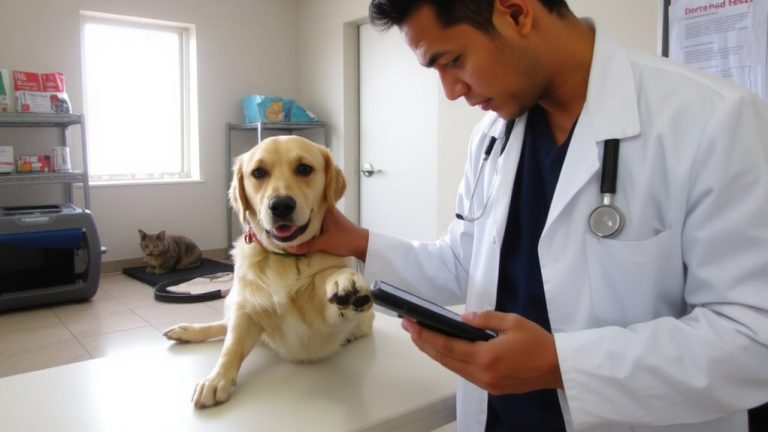
When your pet arrives at the emergency vet after a suspected snakebite, they’re treated like a top-priority case-no waiting, no paperwork delays, just immediate stabilization. The Emergency Veterinarian starts emergency treatment with pain medication, usually opioids, and IV fluids to support blood pressure. Blood tests check for clotting disorders, common with venomous snakebites. A snake venom detection kit might be used if the bite isn’t visible. Antivenom is the cornerstone of treatment for snake bites and is given intravenously to neutralize toxins. Hospitalization follows, often for 24–72 hours, with continuous monitoring, repeat labs, and IV fluids. If clotting factors are severely depleted, blood transfusions may be needed.
| Treatment Step | Purpose |
|---|---|
| Pain medication | Controls pain and stress |
| IV fluids | Maintains blood pressure |
| Antivenom | Neutralizes venom |
| Blood tests | Detects clotting disorders |
| Hospitalization | Enables ongoing care and monitoring |
On a final note
You’ve got this. If your pet’s bitten, stay calm and act fast-keep them still, restrict movement, apply a loose bandage if on a limb, and head straight to the vet. Time matters with venom. Most clinics stock antivenom and start IV fluids, pain meds, and monitoring right away. Know your local snakes and carry your pet’s vaccine records. Prevention? Snake avoidance training and leashes in high-risk areas. Quick action saves lives.