Understanding Feline Idiopathic Facial Dermatitis
You’re seeing red, crusted sores on your cat’s face-commonly on the eyelids, lips, or nose-along with intense scratching, often between 12–36 months of age. This condition, frequent in Persians, shows no infection or allergy despite inflammation, so tests rule out ringworm, mites, herpesvirus, or food triggers. Stress and poor environmental control contribute, so adding window perches, outdoor time, or cat-controlled spaces often helps. Using an e-collar prevents self-trauma while treatments like cyclosporine or gabapentin reduce symptoms, and consistent enrichment cuts relapse chances.
We are supported by our audience. When you purchase through links on our site, we may earn an affiliate commission, at no extra cost for you. Learn more. Last update on 19th July 2026 / Images from Amazon Product Advertising API.
Notable Insights
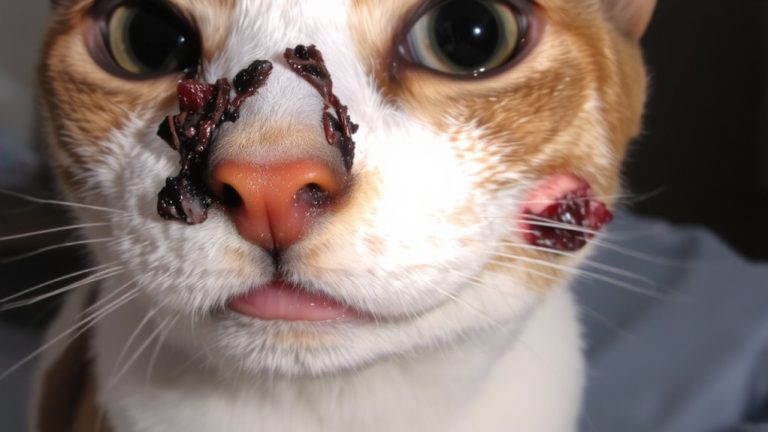
- Feline idiopathic facial dermatitis causes facial redness, crusting, and sores, often on eyelids, lips, and nasal folds.
- It typically starts around 19 months of age and features neutrophil-dominant inflammation and tissue damage on histopathology.
- No underlying infection or allergy is found, despite severe skin lesions and intense pruritus.
- Diagnosis requires ruling out dermatophytosis, parasites, herpesvirus, food allergies, and pemphigus foliaceus.
- Management includes E-collars, environmental enrichment, and medications like cyclosporine or gabapentin for long-term control.
Common Symptoms of Cat Facial Dermatitis
Facial dermatitis in cats isn’t just about skin deep issues-it’s a clear signal something’s off, and spotting the signs early can make all the difference. You might first notice redness, crusting, or sores on your cat’s face-common clinical presentation includes facial lesions on the eyelids, lips, and nasal folds. In dermatitis of Persian cats, black follicular casts often stick to the hair, a key clue in diagnosing idiopathic facial dermatitis. Pruritus is intense, prompting constant scratching that worsens the damage. Many cats also develop conjunctivitis, pointing to broader inflammation. This feline facial skin disease isn’t just uncomfortable-it disrupts daily life. Symmetrical lip lesions or nose depigmentation may hint at allergies. While corticosteroids offer temporary relief, benefits fade fast in refractory cases. Watch closely, act early, and consult your vet to manage symptoms effectively.
What Causes Idiopathic Facial Dermatitis in Cats?
What could be driving your cat to scratch so relentlessly at their face? In cats with idiopathic facial dermatitis, the underlying cause remains unknown, but clinical signs point to more than just skin irritation. This frustrating disease shows up as ulcers and excoriations, mainly on the neck and head, from self-induced trauma. Histopathology reveals severe inflammation, epidermal ulceration, and dermal necrosis-your cat’s immune system may be reacting abnormally, though no primary infection or allergy is found.
| Feature | Finding |
|---|---|
| Median onset age | 19 months |
| Primary lesion sites | Neck, head |
| Key histopathology | Neutrophil-dominant inflammation, fibrosis |
Chronic stress and poor environmental controllability likely trigger this condition. Secondary infections delay healing, worsening your cat’s discomfort. Despite normal immune testing, disrupted skin barrier function suggests a hidden imbalance. Environmental enrichment often improves outcomes markedly, offering real-world relief for affected cats.
Differential Diagnoses to Rule Out
While your cat’s constant scratching might seem like a simple allergy, several serious conditions could be behind those raw, inflamed patches on their face, and ruling them out is essential for effective treatment. You’ll need to exclude dermatophytosis with a fungal culture, even if a Wood’s lamp test is negative. Parasitic causes like Notoedres cati or Demodex gatoi require skin scrapings and sometimes trial treatments, as false negatives happen. Feline herpesvirus-1 can mimic other diseases, so PCR or biopsy with immunohistochemistry is key. Allergic dermatitis, especially food-related, should be investigated with an 8–12 week dietary restriction, particularly if eosinophilia is present. Finally, pemphigus foliaceus-the most common feline autoimmune skin disease-demands a biopsy for confirmation, since it’s easily confused with infections.
Treatment Options and Long-Term Management
How do you tackle feline facial dermatitis when steroids fail and the sores keep coming back? If your cat, especially a Persian with facial dermatitis of Persian, hasn’t responded to standard veterinary treatment, it’s time to rethink your treatment strategies. Start by using e-collars to stop self-mutilation-many ulcers heal spontaneously once trauma stops. Don’t overlook environmental enrichment: free window access, secure outdoor time, and cat-controlled spaces resolved lesions in 13 cats without meds. Though evidence is limited, neuromodulators like gabapentin and immunomodulators like cyclosporine show anecdotal success. Be cautious with long-term immunosuppression, especially if chronic kidney disease is a concern. Dysbiosis and the immune system’s role suggest holistic support may help. Lasting control depends on consistent enrichment and behavior adjustments-because without them, relapse is likely.
On a final note
You’ve got this-stick to vet-approved routines, keep your cat’s face clean with a gentle, hypoallergenic wipe daily, feed a balanced, limited-ingredient diet (think grain-free, 30% protein), and monitor for flare-ups. Most cases improve within 3–6 weeks using medicated shampoos with chlorhexidine 2%. Stay consistent, rule out allergies early, and partner with your vet. Small changes make a real difference in comfort and long-term skin health.