How to Identify and Treat Ringworm in Pets and Prevent Household Spread
You’ll spot ringworm as round, hairless patches with red, scaly edges, often on your pet’s face, ears, or paws. Confirm with a vet using a Wood’s lamp, fungal culture, or PCR test. Treat with miconazole cream, lime-sulfur dips twice weekly, and oral itraconazole for at least six weeks. Clean with a 1:10 bleach solution, vacuum daily, and wash bedding in water above 120°F-spores survive up to 18 months. A full recovery means two negative cultures a month apart, so consistency is key. There’s more to get right with follow-up care and environmental control.
We are supported by our audience. When you purchase through links on our site, we may earn an affiliate commission, at no extra cost for you. Learn more. Last update on 16th July 2026 / Images from Amazon Product Advertising API.
Notable Insights
- Ringworm is a fungal infection causing circular hair loss, red or scaly skin, and brittle claws in pets.
- Diagnose ringworm using fungal culture, Woods lamp exam, or microscopic analysis of plucked hairs.
- Treat with a combination of topical antifungals, medicated shampoos, and oral medications for at least six weeks.
- Continue treatment until two consecutive negative fungal cultures are obtained one month apart.
- Prevent household spread by daily vacuuming, disinfecting with bleach, washing bedding, and quarantining infected pets.
What Is Ringworm in Pets?
Think of ringworm as a stealthy fungus, not a worm at all, and you’re already one step ahead. Ringworm in pets is a common fungal infection caused by dermatophytes, especially Microsporum canis, which targets the skin, hair, and nails. It’s highly contagious, spreading through direct contact with an infected animal or contaminated surfaces. You might not always see symptoms-especially in cats, who can carry and shed fungal spores without lesions. These spores survive in your home for up to 18 months, making environmental cleanup essential. Any pet can be affected, and since it transmits easily to humans, prompt identification matters. You’ll want to use vet-approved disinfectants, vacuum daily, and wash bedding in hot water. Ringworm isn’t a worm, but this fungus behaves like an invader-quick, quiet, and persistent.
What Are the Symptoms of Ringworm in Dogs and Cats?
You might not always see signs of ringworm right away, but when they do appear, they often show up as round, hairless spots with red, crusty, or scaly skin-commonly on the face, ears, paws, or along the back. These symptoms of ringworm include circular patches of hair, also known as hair loss (alopecia), and distinct skin lesions that may look gray, raised, or inflamed. Affected pets often develop fragile hair shafts, leading to dry brittle hair and dandruff-like scaling deep in the coat. The reddened skin and crusted scaly skin aren’t usually itchy, making it easy to miss early on. Some cats, especially long-haired ones, may carry the fungus without showing signs. In severe cases, claws become rough, brittle, and broken. Watch for subtle changes-early detection helps stop the spread to other pets or household members.
How Is Ringworm Diagnosed in Pets?
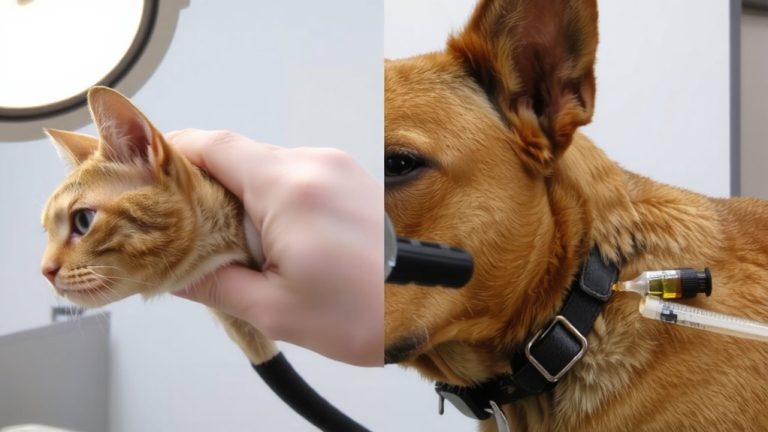
How do vets know it’s ringworm and not another skin condition? To diagnose ringworm in dogs, your veterinarian may recommend multiple tests. A Woods lamp exam can reveal yellow-green fluorescence in infected hairs, but only about half of Microsporum canis cases show this, so it’s not definitive. Instead, microscopic examination of plucked hairs lets vets see spores on or within hair shafts, offering early clues. For a confirmed diagnosis, fungal culture is the gold standard-it identifies the specific dermatophyte and takes 2–3 weeks. While PCR testing rapidly detects fungal DNA, it may give false positives and often can’t distinguish species, limiting its use for evaluating zoonotic risk. Your veterinarian may recommend combining clinical signs with fungal culture, microscopic examination, or PCR testing to confirm the diagnosis.
How Do You Treat Ringworm in Dogs and Cats?
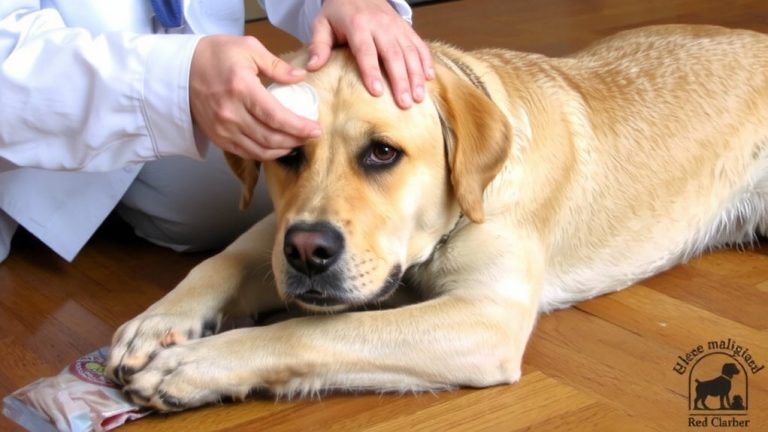
Once your vet confirms a ringworm diagnosis through fungal culture or microscopic analysis, treatment can begin right away to clear the infection and protect other pets and family members. Your treatment plan for cats and dogs will combine topical antifungal applications and oral medication. Apply antifungal creams directly to affected areas, and use chlorhexidine-miconazole shampoos twice weekly to reduce spore shedding. Lime-sulfur dips are effective, though smelly. For moderate to severe cases, oral medication like itraconazole is preferred and should continue for at least six weeks. Never stop treatment early-even if lesions improve, fungal spores can linger on contaminated objects. Confirm resolution with two negative fungal cultures one month apart.
| Treatment Type | Examples | Frequency/Duration |
|---|---|---|
| Topical antifungal | Miconazole cream, lime-sulfur dip | Daily to twice weekly |
| Medicated shampoo | Chlorhexidine-miconazole | Twice weekly, 6–12 weeks |
| Oral medication | Itraconazole, terbinafine | Daily, minimum six weeks |
How Can You Prevent Ringworm From Spreading in Your Home?
What makes ringworm so tricky isn’t just the infection on your pet-it’s the invisible spores lurking in carpets, on furniture, and across floors, surviving up to 18 months without proper cleanup. To stop ringworm spores from spreading, start with environmental decontamination: vacuum daily, focusing on carpets, furniture, and drapes, then immediately discard the contents. Disinfect all contaminated surfaces using a bleach solution-1 pint of bleach per gallon of water-proven to kill fungal spores. Wash pet bedding, towels, and blankets weekly in hot water above 120°F (49°C). Quarantine your infected pet to one easy-to-clean room to limit exposure. Clean grooming tools daily with the same bleach solution. Consistent daily cleaning and thorough disinfecting halt reinfection, keeping your home and pets safe through disciplined, science-backed care.
On a final note
You’ve got this-ringworm’s treatable with antifungal meds like miconazole cream, oral itraconazole, and lime sulfur dips every 5–7 days. Confirm diagnosis with a vet via fungal culture or Wood’s lamp. Clean bedding weekly, vacuum daily, and disinfect surfaces with 1:10 bleach solution. Use gloves when handling affected pets. Pair treatment with proper nutrition-feed balanced diets rich in omega-3s to support skin healing. Stay consistent, and your pet’s coat regrows within weeks. Prevention stops reinfection.