How to Identify and Treat Rat Bait Antidote (Vitamin K) Deficiency
If your pet ingests rat bait, watch for lethargy, pale gums, or nosebleeds 3–5 days later. Test clotting with PT and PTT 48 hours post-exposure-PT rises first due to short-lived Factor VII. Give vitamin K1 at 2.2 mg/kg SC initially, then 1.1 mg/kg SC or PO every 12 hours. Switch to oral Mephyton: 2.5–5 mg/kg daily. Treat warfarin cases 14 days, bromadiolone 21, brodifacoum 30-plus days with gradual tapering. Monitor at home for relapse signs and recheck PT after stopping-prolonged times mean extend treatment. There’s more to get right when timing and dosing are critical.
We are supported by our audience. When you purchase through links on our site, we may earn an affiliate commission, at no extra cost for you. Learn more. Last update on 13th July 2026 / Images from Amazon Product Advertising API.
Notable Insights
- Clinical signs of rat bait poisoning appear 3–5 days post-ingestion due to vitamin K-dependent clotting factor depletion.
- Look for bleeding symptoms like hematuria, melena, nosebleeds, or pale gums indicating internal hemorrhage.
- Confirm toxicity with coagulation testing: measure PT and aPTT 48 hours post-exposure if vitamin K1 was not administered.
- Treat with vitamin K1: start with 2.2 mg/kg SC, then 1.1 mg/kg SC or PO every 12 hours for 14–30 days based on toxin type.
- Prevent relapse by monitoring for 1–2 weeks post-treatment and rechecking PT 48–72 hours after stopping vitamin K1.
Watch for Rat Bait Poisoning Symptoms
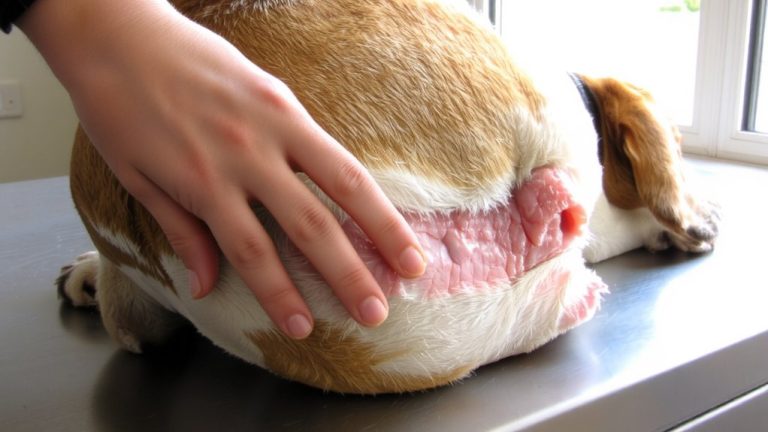
How long after your pet nibbles something suspicious should you start worrying? With anticoagulant rodenticides, the delayed onset means clinical signs often appear 3–5 days post-ingestion, so don’t wait. These poisons deplete Vitamin K, essential for blood clotting, putting companion animals at risk. Watch for signs of bleeding-external bleeding like hematuria, melena, or hematemesis is a red flag. Internal hemorrhage may cause lethargy, weakness, or pale gums. Respiratory signs such as dyspnea or coughing up blood suggest bleeding in the lungs. Neurologic signs including seizures or ataxia can occur if bleeding affects the brain. Over 100 pets die yearly because symptoms sneak in late. Spotting these signs early-your dog acting off, a nosebleed, bruising-could save their life.
Test for Coagulopathy With PT and PTT
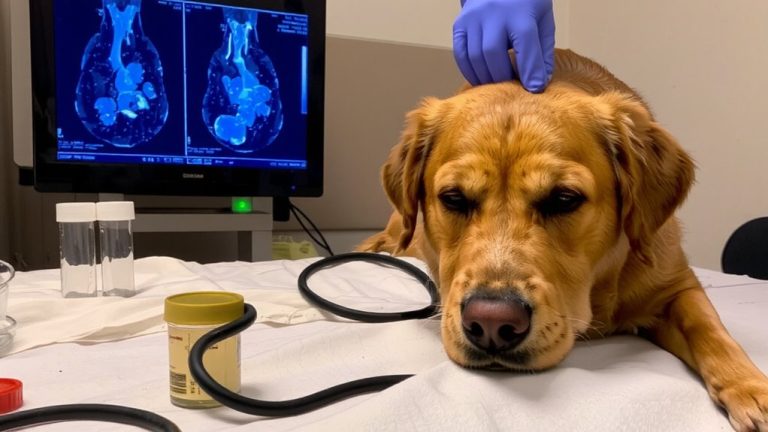
If you’ve noticed unusual bleeding or your pet seems off after a potential nibble of rat bait, it’s time to get lab work done-specifically, a PT and PTT test to check for coagulopathy. Prothrombin time (PT) is prolonged early in anticoagulant rodenticide poisoning because Factor VII, with its short 6–8 hour half-life, drops fast. PT is more sensitive than PTT for early detection. Activated partial thromboplastin time (aPTT) also helps, evaluating other vitamin K-dependent clotting factors like IX and X. A baseline PT and aPTT should be run 48 hours post-ingestion if vitamin K1 hasn’t been given yet. For accurate monitoring, serial PT and PTT testing every 6–12 hours tracks progress in symptomatic pets until values normalize.
Give Vitamin K1: Dosing and Duration
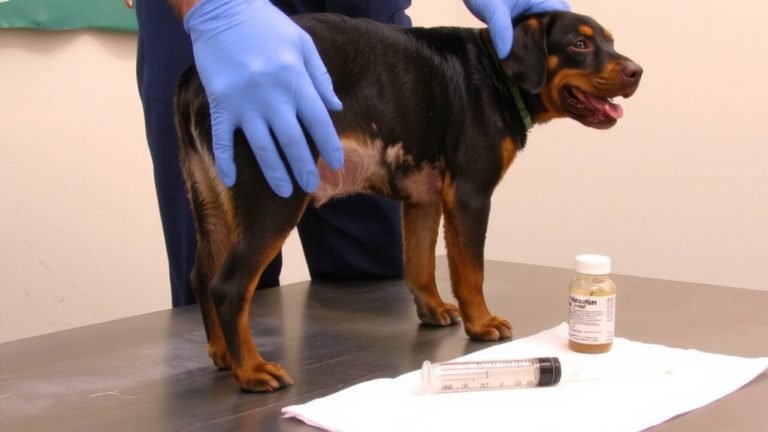
Once your vet confirms anticoagulant rodenticide poisoning, starting vitamin K1 therapy right away is critical to stop internal bleeding and support your pet’s recovery. The initial dose is 2.2 mg/kg SC, followed by 1.1 mg/kg SC every 12 hours until stable. Switch to oral vitamin K1 (Mephyton) at 2.5 mg/kg PO every 12 hours or 5 mg/kg PO every 24 hours. Dosing and duration depend on the toxin: warfarin needs 14 days, bromadiolone requires 21, and all other second-generation anticoagulants need 30 days of treatment. For long-acting poisons like brodifacoum, continue 1.1 mg/kg PO every 12 hours for 2 weeks, then taper over 4–6 weeks. Always monitor prothrombin time (PT); recheck 48–72 hours after stopping. If PT’s prolonged, extend vitamin K1 by 1–2 weeks until it normalizes.
Prevent Relapse With Home Monitoring
Even though your pet may seem fully recovered, staying vigilant at home is essential, especially after exposure to long-acting anticoagulant rodenticides like brodifacoum or bromadiolone, which can linger in the liver for months. Watch closely for clinical signs like pale gums, lethargy, or nosebleeds during and after vitamin K1 therapy-these can signal a relapse. This risk is highest with second-generation anticoagulant exposures due to delayed toxin redistribution from fat and liver stores. Continue home monitoring for 1–2 weeks after stopping treatment. Recheck prothrombin time (PT) 48–72 hours post-therapy; a prolonged PT means you’ll need another 1–2 weeks of vitamin K. Brodifacoum’s long half-life demands careful tapering-reduce the dose by 50% every 2 weeks after 30 days of treatment to prevent relapse. Consistent home monitoring saves lives.
On a final note
You’ll catch trouble early if you watch for bleeding gums, weakness, or trouble breathing after possible rat bait exposure. Quick PT/PTT tests confirm clotting issues. Give prescription vitamin K1 (not K2 or K3), typically 5 mg twice daily for dogs, for 30 days. Store tablets in a child-proof container. Refills are often needed-your vet may recommend home treatment with careful monitoring. Never skip doses.