How to Identify and Treat Flea Allergy Dermatitis in Dogs
If your dog itches like crazy at the base of their tail, loses hair on their rump, or develops red, inflamed skin, they might have flea allergy dermatitis (FAD)-even if you haven’t seen fleas. One bite triggers intense reactions due to proteins in flea saliva, so always check for flea dirt, which turns red when damp. Use a fine flea comb and start vet-approved preventatives like Bravecto or NexGard, which kill fleas within 12 hours. For fast relief, Capstar works in 30 minutes, while Apoquel or Cytopoint stops itching fast by targeting itch signals or IL-31. Add omega-3 and omega-6 supplements to support skin health. Treat all pets and wash bedding weekly to break the flea cycle. You’ll soon see how consistent care transforms their comfort and stops flare-ups before they start.
We are supported by our audience. When you purchase through links on our site, we may earn an affiliate commission, at no extra cost for you. Learn more. Last update on 19th July 2026 / Images from Amazon Product Advertising API.
Notable Insights
- Flea Allergy Dermatitis is caused by an allergic reaction to flea saliva, with even one bite triggering intense itching and skin inflammation.
- Look for hair loss, redness, and hot spots near the tail base, along with flea dirt that turns red when dampened.
- Diagnosis involves skin exams, flea combing, and sometimes blood or skin tests to confirm hypersensitivity to flea antigens.
- Treat with fast-acting flea killers like Capstar and anti-itch medications such as Apoquel or Cytopoint to break the itch-scratch cycle.
- Prevent recurrence with year-round flea control, treating all pets, washing bedding weekly, and using vet-approved preventive products consistently.
Identify the Cause of Flea Allergy Dermatitis
While you might assume a severe flea infestation is necessary to trigger skin problems, the reality is that flea allergy dermatitis (FAD) stems from your dog’s allergic reaction to proteins in flea saliva-just one bite can set off an intense immune response. Even a single flea bite can cause the immune system overreacts, releasing histamines that lead to relentless itching. It’s not about the number of flea bites or visible flea eggs; dogs with FAD react to proteins in flea saliva regardless of ongoing infestation levels. You don’t need a full-blown flea infestation for symptoms of flea allergy to flare-occasional exposure is enough. This hypersensitivity means your dog’s skin stays inflamed, especially if they already have environmental allergies. Preventing flea bites entirely is key, since even one triggers the allergic reaction. Consistent use of vet-approved flea control stops the cycle before it starts.
Recognize the Most Common FAD Symptoms
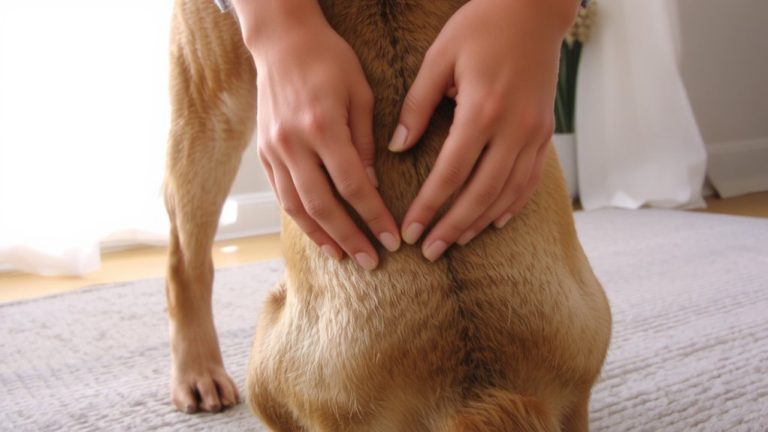
What does it look like when your dog’s skin reacts to just one flea bite? With Flea Allergy Dermatitis (FAD), a tiny amount of flea saliva triggers an intense allergic response. You’ll notice constant itching and scratching, especially at the base of the tail, rear legs, and lower back. This leads to hair loss and red inflamed skin. Left unchecked, hot spots form and secondary skin infections can take hold. Even without seeing fleas, check for flea dirt-comb your dog’s coat with a flea comb to spot the telltale black specks.
| Symptom | Common Location | Key Clue |
|---|---|---|
| Itching and scratching | Base of the tail | Flea triangle zone |
| Hair loss | Rump, hind legs | From licking, chewing |
| Red inflamed skin, hot spots | Lower back | Often with flea dirt, signs of infection |
Understand How Vets Diagnose Flea Allergy
You’ve probably noticed your dog’s relentless scratching and irritated skin, especially around the tail base and lower back-the classic signs point to flea allergy dermatitis (FAD). Your vet will start with a physical exam, using a fine flea comb to check for live fleas or flea dirt, which turns red when damp. They’ll also take skin scrapings to rule out mites and look for secondary infections complicating the diagnosis. While Flea Allergy Dermatitis is often suspected based on pattern and response to flea control, intradermal skin testing or IgE blood tests can confirm hypersensitivity to flea saliva. These tests aren’t always needed, though. A positive diagnosis of FAD frequently comes from improvement after strict flea prevention, even if you never see a single flea.
Treat Flea Allergy Dermatitis for Fast Relief
Since flea allergy dermatitis can make your dog miserable in a matter of hours, fast relief starts with quick-killing flea treatments and itch-blocking medications. For immediate flea kill, nitenpyram (Capstar) works within 30 minutes to stop further flea bite reactions and reduce exposure to saliva proteins that trigger Flea Allergy Dermatitis in dogs. To halt severe itching, corticosteroids like prednisone offer relief in 1–2 hours. For targeted control, oclacitinib (Apoquel) blocks itch signals in as little as 4–6 hours. Lokivetmab (Cytopoint), an injectable monoclonal antibody, neutralizes IL-31 to provide measurable fast relief within 24 hours with minimal side effects. These treatments tackle both the cause and symptoms, helping your dog feel better fast-whether it’s stopping the itch cycle or eliminating the fleas driving it.
Prevent Flea Allergy Dermatitis Flare-Ups for Good
A single flea bite can set off a chain reaction, so keeping FAD flare-ups at bay starts with consistent, year-round prevention using fast-acting veterinarian-recommended products like Bravecto, NexGard, or the Seresto collar, all proven to kill fleas within 12 hours of contact-critical for stopping antigen exposure before it triggers your dog’s hypersensitive immune response. Effective flea control means breaking the flea life cycle by pairing fast-acting flea preventatives with weekly washing of pet bedding and diligent vacuuming to cut down flea populations. You’ve got to treat all pets in the home, since untreated animals can harbor and spread fleas. Consistent use is non-negotiable-even skipping one dose risks a bite. For long-term skin health, consider omega-3 and omega-6 fatty acid supplements to bolster the skin barrier and reduce inflammation. Combined, these steps deliver reliable protection and fewer flare-ups.
On a final note
You can manage flea allergy dermatitis by using vet-approved flea preventives like Bravecto or Frontline, which kill fleas within 12 hours, and cleaning your dog’s bedding weekly in hot water. Feed a balanced diet rich in omega-3s to support skin health, and vacuum high-traffic areas every 2–3 days. Consistent prevention, combined with prompt treatment at the first sign of itching, keeps flare-ups under control and your dog comfortable.