Identifying and Managing Canine Panniculitis in Overweight Dogs
Your overweight dog is more prone to panniculitis, especially if they’re a Dachshund or Golden Retriever, due to increased fat inflammation and poor blood flow. Watch for firm, movable nodules on the trunk or neck that may ulcerate and drain oily, bloody fluid. Diagnosis often involves fine needle aspiration or biopsy. Treat with prednisolone at 2.0 mg/kg daily or surgery for isolated lesions. Keep your dog lean, manage wounds early, and consider omega-3 supplements at 1,000 mg per 20 lbs to support skin health-there’s more to how nutrition shapes recovery.
We are supported by our audience. When you purchase through links on our site, we may earn an affiliate commission, at no extra cost for you. Learn more. Last update on 19th July 2026 / Images from Amazon Product Advertising API.
Notable Insights
- Overweight dogs are at higher risk for panniculitis due to increased subcutaneous fat and chronic inflammation.
- Look for firm, movable nodules on the trunk or neck that may ulcerate and drain oily, bloody fluid.
- Diagnosis involves fine needle aspiration, biopsy, and histopathology to confirm inflammation and rule out infection or tumors.
- Treat single lesions surgically; use prednisolone for multiple or idiopathic cases, with cyclosporine as a steroid-sparing option.
- Prevent recurrence by managing weight, balancing dietary fatty acids, and monitoring for underlying conditions like pancreatitis.
What Is Canine Panniculitis?
Think of it as a silent flare-up beneath the skin-canine panniculitis is inflammation in the fatty layer under your dog’s skin, and it’s more common in overweight dogs than you might expect. Panniculitis means inflammation of the subcutaneous fat, where fat cells in the subcutaneous fat tissue react to injury, infection, or immune triggers. The fatty layer becomes damaged, leading to multiple nodules you can feel under the skin. These lesions are often firm or soft, mobile, and range from a few millimeters to several centimeters. In some cases, nodules grow cystic, ulcerate, and drain oily, yellow-brown to bloody fluid. Overweight breeds like Dachshunds, Poodles, Golden Retrievers, and German Shepherds face higher risks. Diagnosis needs fine needle aspiration showing inflammatory cells and lipid droplets, but a biopsy’s essential to confirm panniculitis and rule out tumors.
What Symptoms Should You Watch For in Dogs?
Where should you start looking for signs of panniculitis in your dog? Check the trunk or neck for deep, firm or soft, movable nodules, ranging from a few millimeters to several centimeters. These multiple lesions may ulcerate and drain oily, yellow-brown to bloody fluid, forming blackish crusts and scars. Though often non-painful, ulcerated sites can develop a secondary infection, especially if exposed to blunt trauma. Watch for systemic signs like fever, lethargy, or anorexia-particularly with widespread nodules. Some breeds, like Dachshunds and Golden Retrievers, are more prone. Your vet might order a complete blood count to rule out underlying issues.
| Symptom Type | Examples | Notes |
|---|---|---|
| Skin lesions | Firm or soft nodules | Move freely under skin |
| Drainage | Oily, bloody exudate | May crust black |
| Secondary infection | Redness, pus, swelling | Often from Staphylococcus |
| Systemic signs | Fever, lethargy, anorexia | Indicate deeper involvement |
| Diagnostic step | Complete blood count | Helps identify underlying causes |
Why Are Overweight Dogs More at Risk?
An overweight dog isn’t just carrying extra pounds-those added fat deposits actively increase the risk of developing panniculitis, and here’s why. Overweight dogs have more subcutaneous fat, giving inflammatory processes a larger target and often leading to multiple lesions. Excess fat creates chronic low-grade inflammation, raising the chance of abnormal immune responses. Poor blood supply in thickened fat layers causes localized ischemia, making tissue prone to trauma-induced panniculitis. These dogs are also at higher risk for pancreatitis, which releases lipases that trigger fat necrosis and secondary panniculitis. Subcutaneous injections further elevate risk due to altered immune activity in fat. While vitamin E supports skin health, it can’t fully offset these underlying issues. Managing weight is key-reducing fat volume decreases lesion formation and supports overall skin integrity in predisposed dogs.
How Veterinarians Diagnose Panniculitis
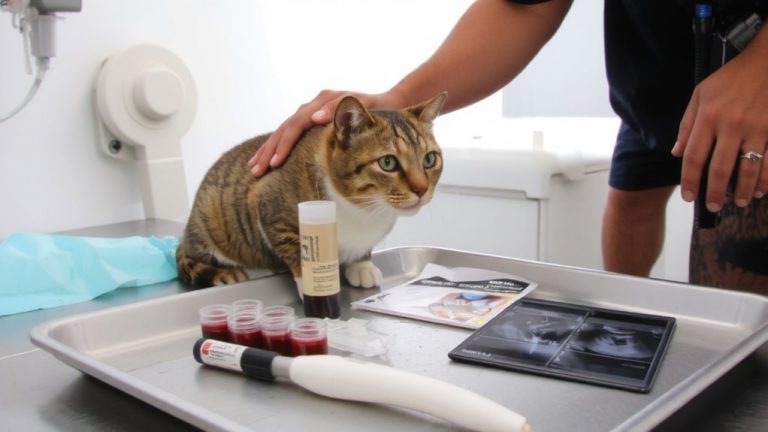
How do vets pinpoint panniculitis in your dog? They start with a fine needle aspiration (FNA), where microscopic examination reveals neutrophils, foamy macrophages, lipid droplets, and damaged fat cells-no organisms if it’s sterile. But FNA isn’t always enough. A biopsy, preferably incisional or excisional to include subcutaneous fat, gives a clearer picture and rules out tumors like mast cell disease. Histopathology usually shows pyogranulomatous or suppurative inflammation, and special stains plus polarized light help exclude foreign bodies or infections. Fungal and bacterial cultures are taken from non-ulcerated nodules-if there’s no growth, it supports idiopathic sterile panniculitis. If your dog has fever or appetite loss, vets run CBC and serum chemistry profiles to uncover an underlying cause, like pancreatitis or metabolic issues. This step-by-step approach guarantees an accurate diagnosis.
When to Choose Surgery or Medication
If your dog’s panniculitis shows up as a single, well-contained lump, surgery’s often the best move-especially when it’s tied to trauma or a clear local cause. Surgical excision can lead to long-term or permanent remission in these cases. But when you’re dealing with multiple, recurring, or idiopathic lesions, medical management is usually necessary. Start with immunosuppressive doses of prednisolone (2.0 mg/kg q24h) to control inflammation. If long-term therapy’s needed, switch to cyclosporine (5–10 mg/kg q24h) as a steroid-sparing agent. For sterile nodules unresponsive to steroids, consider tetracycline and niacinamide-doxycycline at 5–10 mg/kg q12h paired with niacinamide at 250 mg q8h often helps modulate the immune response. Delay surgery if new lesions appear within six months, as this changes when to choose surgery or medication.
How to Prevent Panniculitis From Coming Back
While you can’t always stop panniculitis before it starts, you can substantially reduce the chances of it coming back by tackling the root causes and sticking to a smart, consistent plan. The goal is to find possible causes like steroid therapy, vaccines, or diets high in polyunsaturated fatty acids. A thorough history helps spot patterns-some cases often require long-term or permanent therapy. For idiopathic forms, therapy may be needed, such as prednisolone or cyclosporine (5–10 mg/kg q24h). Solitary lesions should be removed surgically by an experienced vet, with histopathology confirming clean margins.
| Factor | Prevention Strategy | Monitoring |
|---|---|---|
| Diet | Balance fatty acids | Adjust as needed |
| Meds | Use cyclosporine if refractory | CBC every 2 weeks |
| Lesions | Removed surgically | Histopathology check |
On a final note
You’ve got this, pet parent. Catch panniculitis early by checking your overweight dog’s skin weekly, especially around the torso. Use a soft brush during grooming to spot tender spots or lumps. Switch to a vet-approved, high-fiber, low-fat diet-like Hill’s Metabolic + Mobility-to shed excess weight safely. Combine daily 30-minute walks with anti-inflammatory meds if prescribed. Consistency cuts recurrence risk by up to 70%, real owners report. Stay proactive, stay informed.