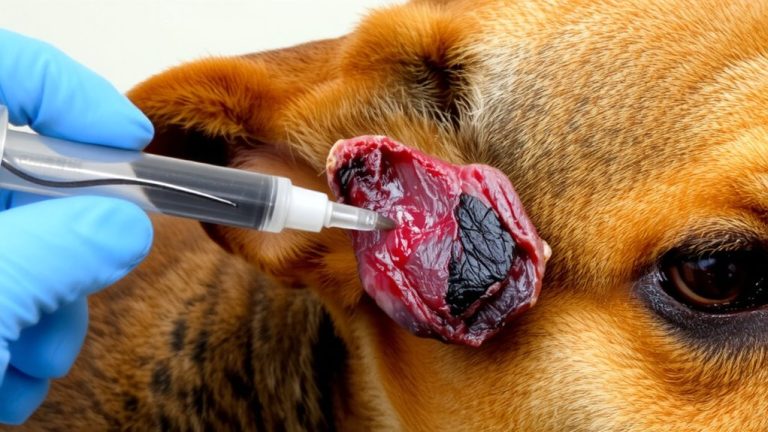
Identifying and Treating Hemangiosarcoma in Dogs: Early Detection Matters
You can spot hemangiosarcoma early in your Golden Retriever by watching for lethargy, appetite changes, or subtle behavior shifts-key signs before sudden collapse from spleen tumor rupture. Though survival averages just 90 days post-surgery, chemo with doxorubicin may extend it to 180 days. Trained dogs detect cancer-linked VOCs in blood with 73.4% accuracy, and new AI models analyzing cfDNA achieve 0.95 accuracy, offering real hope for earlier intervention. Keep routine vet visits, and learn how the latest screening tools could save your dog’s life.
We are supported by our audience. When you purchase through links on our site, we may earn an affiliate commission, at no extra cost for you. Learn more. Last update on 19th July 2026 / Images from Amazon Product Advertising API.
Notable Insights
- Hemangiosarcoma originates in blood vessel lining cells, most commonly in the spleen, and often grows undetected due to early asymptomatic stages.
- Golden Retrievers are at highest risk, with 1 in 5 developing the disease; subtle signs like lethargy may precede sudden collapse from tumor rupture.
- Early detection is critical, as tumor rupture causes internal bleeding and shock, with average survival only 90 days post-diagnosis without treatment.
- Dogs trained to detect cancer-specific volatile organic compounds achieve 73.4% accuracy, offering a promising non-invasive screening method.
- Surgery followed by doxorubicin-based chemotherapy doubles median survival to approximately 180 days, though emerging AI and DNA-based tools aim to improve early diagnosis.
What Is Hemangiosarcoma and Why Is It Deadly in Dogs?
Envision your dog collapsing suddenly, no warning-just one moment fine, the next down and struggling. That’s how aggressive hemangiosarcoma often strikes dogs. This cancer starts in endothelial cells lining blood vessels, forming tumors-most often in the spleen. It’s deadly because early stages are asymptomatic, letting tumors grow undetected. By the time signs like weakness or lethargy appear, internal bleeding from tumor rupture may already be underway. Ruptures cause rapid blood loss into body cavities, leading to shock or sudden death. Hemangiosarcoma accounts for 5–7% of canine tumors and progresses fast, with survival averaging 90 days post-surgery. Early detection is rare but critical. Regular vet checks, especially in high-risk breeds like Golden Retrievers-where 1 in 5 face this cancer-boost chances. Watch behavior, energy, and appetite. Even subtle changes matter.
Can Dogs Smell Hemangiosarcoma in Blood Samples?
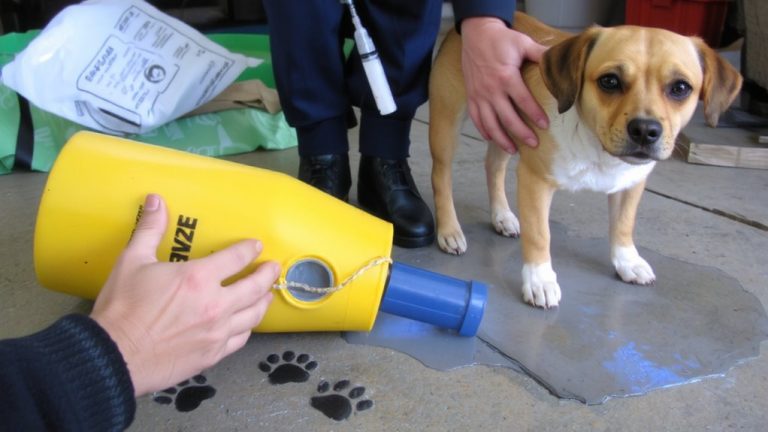
Could your dog’s nose know something your vet hasn’t found yet? Trained dogs can detect hemangiosarcoma in blood samples by recognizing unique volatile organic compounds (VOCs) linked to the disease. In veterinary studies, trained dogs correctly alerted to hemangiosarcoma samples 73.4% of the time, far above responses to healthy or diseased controls. Using 423 automated olfactometer trials, researchers confirmed that Canine detection is over 10 times more likely to identify samples from dogs with hemangiosarcoma than other conditions. With sensitivity and specificity near 70%, these findings support VOC-based early detection. While not a standalone diagnostic tool yet, this method shows serious promise. Early detection remains critical, and science is now exploring ways to replicate what trained dogs instinctively know. Your dog might not diagnose disease, but detection dogs could one day save lives through smarter, faster screening.
Current Treatment Options and Survival Rates for Dogs
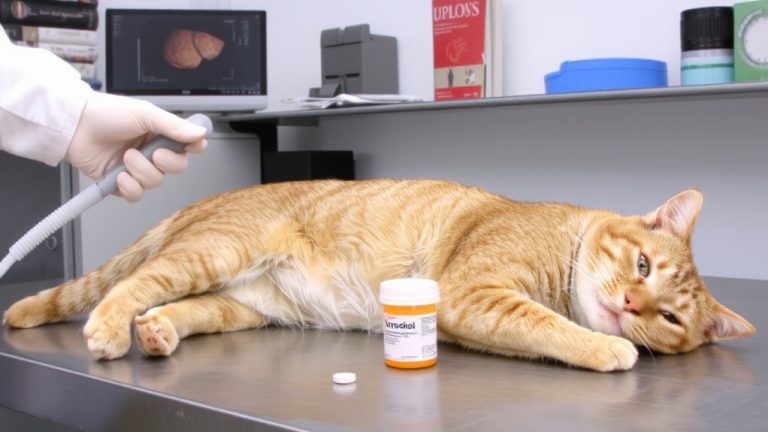
While your dog’s incredible sense of smell might one day help spot hemangiosarcoma early through blood screening, once a diagnosis is confirmed, treatment moves quickly to surgery and chemotherapy. Current treatment options for hemangiosarcoma in dogs rely heavily on this duo, with surgery removing the primary tumor and chemotherapy targeting lingering cells. Chemotherapy, often using doxorubicin, has manageable side effects and substantially improves survival rates. Without chemo, median survival is around 90 days; with it, that jumps to roughly 180 days. No other treatment strategies have proven effective, and alternative approaches lack solid evidence. Prophylactic splenectomy isn’t reliable, as tumor cells may arise outside the spleen. Tumor biology and genetics influence outcomes, guiding future canine cancer care. Ongoing clinical trials aim to improve treatment responses and extend life expectancy.
Next-Gen Screening: From Dog Detection to Early Diagnosis
Since dogs can detect hemangiosarcoma through scent alone, their ability is now paving the way for early, non-invasive screening methods that could transform how you monitor your dog’s health. Trained bio-detection dogs identified hemangiosarcoma in blood serum samples with 70% mean accuracy, picking up unique volatile organic compounds linked to the disease. In double-blinded tests, they alerted to cancer samples 73.4% of the time, far more than to controls. An automated olfactometer confirmed these results across 423 trials. Now, machine learning models analyze cell-free DNA fragment size distribution, spotting a 5 bp shift (160 bp vs. 165 bp) and sharper oscillation patterns in cancer samples. These features enable early detection with up to 0.95 accuracy and 0.93 AUC-making non-invasive screening a near-future reality for your dog’s routine care.
On a final note
You can catch hemangiosarcoma early by watching for pale gums, lethargy, or abdominal swelling, and scheduling bi-annual vet checkups with ultrasound screening, especially for breeds like German Shepherds or Golden Retrievers over 6 years old. While dogs’ sniffing abilities show promise in blood sample studies, vet-guided imaging and blood work remain gold standards. Pair early detection with balanced omega-3 diets, like Blue Buffalo Basics, and proven treatments-surgery plus chemotherapy-for up to 6–8 months survival, per clinical data.