How to Identify and Treat Anal Gland Issues in Dogs
You might notice your dog scooting across the floor or licking their back end, often a sign of blocked anal glands producing a strong, fishy odor. These tiny grape-sized sacs at 4 and 8 o’clock around the anus should empty naturally during bowel movements, but when they don’t, thickened secretions cause pain, swelling, or infection within 48 hours. Left untreated, abscesses can form, sometimes rupturing through the skin. At the vet, diagnosis involves a digital rectal exam, especially essential for breeds like Chihuahuas or German Shepherds prone to recurring issues. Treatment includes oral antibiotics like amoxicillin-clavulanate, anti-inflammatories such as carprofen, and possibly sedated flushing or localized steroid injections. For chronic cases, sacculectomy surgery may be reviewed, though it carries incontinence risks. You’ll want to review diet adjustments and weight management to reduce flare-ups. There’s a safe, effective way to support long-term gland health you’ll want to know.
We are supported by our audience. When you purchase through links on our site, we may earn an affiliate commission, at no extra cost for you. Learn more. Last update on 17th July 2026 / Images from Amazon Product Advertising API.
Notable Insights
- Anal glands are located at 4 and 8 o’clock around the anus and release foul-smelling fluid during bowel movements.
- Scooting, fishy odor, and excessive licking at the tail base signal potential anal gland problems.
- Blockages can quickly lead to infection and abscesses, causing pain, swelling, and pus discharge.
- A vet diagnoses issues via rectal exam and treats with antibiotics, anti-inflammatories, or flushing under sedation.
- Chronic cases may require surgery, but this carries risks like fecal incontinence.
What Are Anal Glands and Why Do They Matter?
Think of your dog’s anal glands as tiny scent factories, sitting at the 4 and 8 o’clock spots around the anus-about the size of small grapes. These anal glands in dogs are located on either side of the rectum and produce a foul-smelling, oily fluid used for scent marking. The secretion, chemically similar to skunk spray, typically releases when stool passes, thanks to natural squeezing action. This fluid carries unique chemical signatures, helping dogs identify each other. You might also notice them spontaneously express when your dog’s stressed, leaving a strong, fishy odor. When these glands don’t empty properly, they can become impacted, leading to discomfort, infection, or even abscesses. Keeping them functioning matters-not just for hygiene, but for your dog’s long-term health. Regular checks and a high-fiber diet support healthy expression.
Common Signs of Anal Gland Problems in Dogs
Noticing your dog scooting across the floor, especially on hardwood or carpet, is often the first clue that something’s off with their anal glands. If your pup is frequently scooting the rear end, it’s likely due to irritation from anal gland problems. You might also catch them excessively licking or biting near the tail base, or notice a persistent fishy odor around their rear-this smell means secretions are building up. Pain during bowel movements or sudden discomfort while sitting are red flags, too. Swelling, redness, or visible discharge can point to serious impaction or inflammation.
| Symptom | What It Might Mean |
|---|---|
| Scooting the rear end | Impacted anal glands |
| Fishy odor | Buildup of secretions |
| Licking or biting rear | Discomfort from swelling |
| Swelling or discharge | Severe impaction or abscess |
How Blockages Lead to Infection and Abscesses
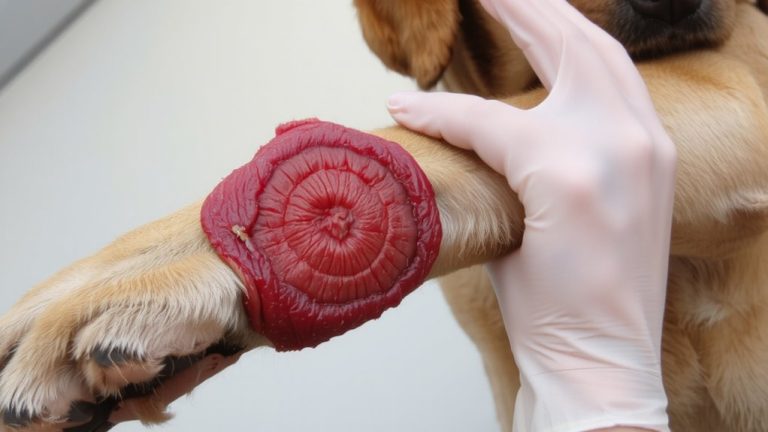
When the tiny ducts that drain your dog’s anal glands become blocked, secretions can’t empty naturally and start to thicken, trapping bacteria in an environment where they multiply fast-usually within 24 to 48 hours. These blockages create pressure and inflammation, paving the way for anal sacculitis, an infection marked by pus and swelling inside the gland. If you don’t address it, the infection worsens, leading to abscess formation. The swollen gland fills with bloody, pus-like fluid under pressure, making your dog visibly uncomfortable. Breeds like German Shepherds and small dogs such as Chihuahuas face higher risks due to narrower ducts and increased blockage susceptibility. The abscess may eventually rupture through the skin near the anus, causing pain and messy drainage. Catching blockages early helps prevent this painful progression and keeps your dog healthier longer.
When to See a Vet for Anal Gland Issues
Your dog’s anal glands can quickly go from a minor nuisance to a serious health issue if warning signs are overlooked, especially after a blockage has led to infection or abscess formation. If you notice pain during defecation, swelling, redness, or discharge, see a veterinarian immediately-these often signal infection. A persistent fishy odor, scooting, constant licking, or sudden sitting due to discomfort are red flags you shouldn’t ignore. These behaviors commonly point to anal sac disease. Breeds like Chihuahuas and German Shepherds are prone to recurring issues, so regular vet checkups are key. A veterinarian will perform a digital rectal exam to confirm impaction, infection, or more serious conditions like anal sac adenocarcinoma. Early diagnosis helps prevent complications and guides proper care, ensuring your dog stays comfortable and healthy. Don’t wait-when in doubt, schedule the visit.
Treatments for Anal Gland Infections and Pain
A trip to the vet can save your dog from escalating discomfort when anal gland infections take hold. Your vet will likely prescribe oral antibiotics like amoxicillin-clavulanate to clear the infection, while anti-inflammatory meds such as carprofen offer effective pain relief. If the glands are severely infected, they may need flushing under sedation and a localized injection of antibiotics and steroids. For ruptured abscesses, warm compresses and wound care paired with systemic antibiotics and pain relief speed healing.
| Treatment | Purpose | Example |
|---|---|---|
| Oral antibiotics | Fight infection | Amoxicillin-clavulanate |
| Anti-inflammatories | Pain relief | Carprofen |
| Flushing | Clear blockage | Sedated procedure |
Surgery (sacculectomy) is a last resort for chronic anal gland infections but comes with risks like incontinence.
Prevent Recurring Issues With Diet and Weight
Fiber’s your dog’s best ally when it comes to preventing recurring anal gland issues. High-fiber diets, like those with added Filaquin or sugar-free bran flakes, help create firmer stool consistency, which naturally squeezes the anal glands during bowel movements. That means fewer blockages and less irritation over time. Overweight dogs are more prone to problems due to poor muscle tone and compressed perianal anatomy, so managing their weight is key. A balanced, high-fiber diet combined with portion control and daily exercise supports both weight loss and healthy stool bulk. Maintaining a healthy body weight also reduces inflammation and improves sphincter function, helping glands empty properly. Always work with your vet before starting supplements. With consistent feeding and weight management, you’ll support long-term anal gland health and cut down on vet visits.
At-Home Expression: Is It Safe and Necessary?
While managing your dog’s diet and weight plays a major role in supporting healthy anal gland function, it’s equally important to know when-and if-at-home expression is needed. Most dogs naturally express their anal glands when they poop, so routine manual expression isn’t necessary. If your dog is scooting, licking excessively, giving off a strong fishy smell, or showing swelling at the 4 and 8 o’clock positions, their glands may need to be manually expressed. But don’t attempt this without guidance-improper technique can cause pain or damage. A veterinarian may recommend at-home expression only if your dog has chronic anal gland issues. Even then, they’ll teach you the safe method after an exam. Overdoing it can lead to irritation or anal sacculitis, so only express when truly needed and under professional direction.
On a final note
You can keep your dog comfortable by watching for scooting, licking, or foul odors-signs anal glands may need attention. Expressing them regularly, either at home or by a vet, helps prevent blockages. Switch to a high-fiber diet with at least 8% crude fiber to firm stools naturally. Maintain a healthy weight, use pumpkin supplements (1 tsp per 10 lbs daily), and schedule vet visits if swelling or pain occurs.