Feline Cutaneous Asthenia: Symptoms, Causes & Diagnosis in Cats
You’re managing a rare genetic disorder when your cat has feline cutaneous asthenia, also called Ehlers-Danlos in cats, caused by faulty type V collagen or procollagen peptidase. Watch for skin that stretches over 19% (SEI), tears easily into “fish mouth” wounds, and heals fast but weakly. Pendulous skin folds and joint hypermobility are red flags. Diagnosis combines SEI testing, biopsy with Masson’s trichrome staining, and genetic analysis. Keep your home padded, trim claws weekly, avoid scruffing, and block tight spaces. Stop breeding affected cats-no carrier test exists, so risks stay high. There’s more to learn about daily care that could make a real difference.
We are supported by our audience. When you purchase through links on our site, we may earn an affiliate commission, at no extra cost for you. Learn more. Last update on 19th July 2026 / Images from Amazon Product Advertising API.
Notable Insights
- Feline Cutaneous Asthenia (FCA) is a rare genetic disorder causing weak connective tissue due to defective collagen production.
- Affected cats show skin hyperextensibility, easy tearing, and rapid wound healing with poor-quality scars.
- The condition is linked to mutations in the COL5A1 gene or procollagen peptidase deficiency, inherited dominantly or recessively.
- Diagnosis involves skin extensibility testing, biopsy, electron microscopy, and genetic analysis for confirmation.
- Management focuses on preventing trauma; affected cats and relatives should not be bred due to genetic risks.
What Is Feline Cutaneous Asthenia?
You’re dealing with a rare but serious condition when your cat has Feline Cutaneous Asthenia (FCA), a genetic disorder that affects collagen production and leaves the skin dangerously stretchy and fragile. Feline cutaneous asthenia, also known as Ehlers-Danlos syndrome in cats, is a hereditary connective tissue disorder caused by a collagen defect. This genetic mutation disrupts type V collagen or procollagen peptidase, leading to abnormal collagen fibrils. You’ll see hyperextensibility of the skin, with a Skin Extensibility Index (SEI) over 19%, plus extreme skin fragility. The condition follows either an autosomal dominant or autosomal recessive pattern, most often in Himalayans or domestic shorthairs. Diagnosis relies on clinical signs, skin biopsy, and electron microscopy. Though no cure exists, supportive care-soft bedding, low-stress environments, and protective collars-can help manage daily risks linked to this inherited disorder.
Feline Cutaneous Asthenia Symptoms to Watch For
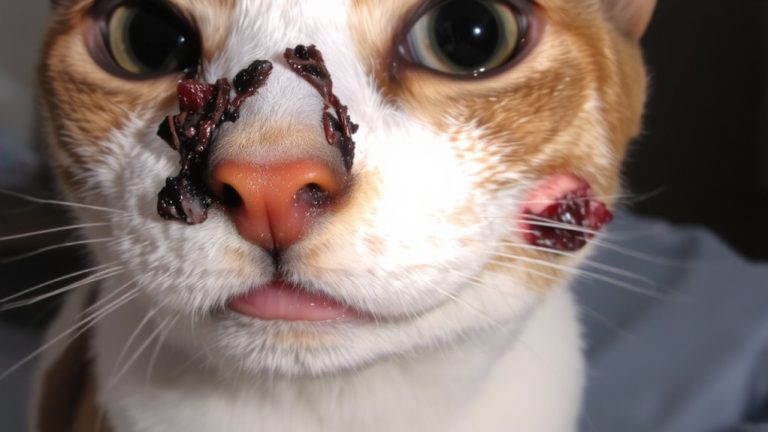
A cat’s overly stretchy skin might be the first clue you notice-when gently lifted, the skin can extend more than 19% of the distance from skull to tail, a measurement known as the Skin Extensibility Index (SEI), and that’s a hallmark sign of feline cutaneous asthenia. In cats with this condition, skin hyperextensibility and fragile skin mean even minor play can cause tears in the skin, often appearing as “fish mouth” lacerations with little bleeding. Wounds heal fast but form weak scar tissue due to abnormal collagen. You’ll likely see pendulous skin folds along the back or shoulders, and scruffing may trigger injury. While some cats show joint hypermobility, especially in autosomal dominant forms, others display extreme skin symptoms without joint issues. Regular handling requires care to avoid trauma and preserve skin integrity.
Genetic Causes and Inheritance Patterns
While genetics play a central role in feline cutaneous asthenia, the condition arises from distinct mutations that affect collagen structure and processing in different ways. This genetic disorder follows either an autosomal dominant or autosomal recessive pattern. In the autosomal dominant form, a COL5A1 gene variant leads to defective type V collagen, disrupting collagen synthesis and resulting in poorly packed collagen fibrils. The autosomal recessive form stems from an inherited mutation causing procollagen peptidase deficiency, which prevents proper collagen maturation and produces twisted collagen ribbons instead of strong, cylindrical fibrils. Cats with the recessive type need two copies of the mutant gene to show symptoms, while carriers stay healthy. Genome sequencing helps identify these mutations, though no commercial test is widely available yet. Understanding the inheritance pattern in your cat can guide breeding decisions and long-term care strategies effectively.
How Veterinarians Diagnose FCA
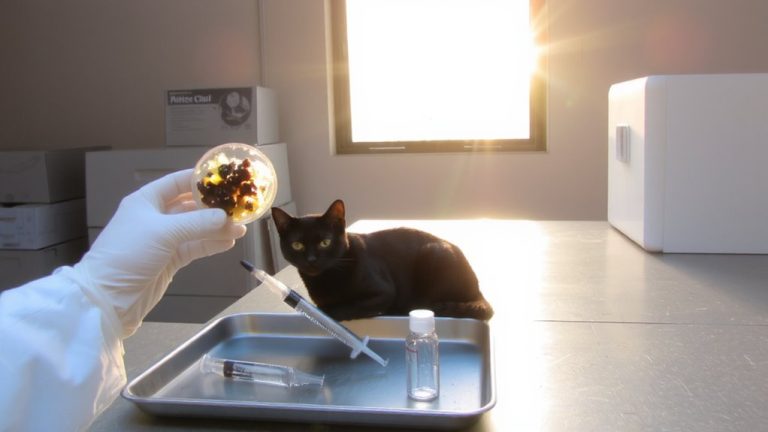
When your cat shows unusually stretchy or fragile skin, veterinarians start the diagnosis of Feline Cutaneous Asthenia (FCA) by measuring the Skin Extensibility Index (SEI), a reliable indicator that compares dorsal skin stretch to your cat’s skull-to-tail length; if the SEI exceeds 19%, FCA is strongly suspected. A skin biopsy then checks for abnormal dermal collagen, where Masson’s trichrome staining reveals thin, fragmented collagen fibres instead of dense, well-organized bundles. Electron microscopy may confirm twisted collagen ribbons, typical in recessive Cutaneous Asthenia. A confirmed gene mutation, like one in COL5A1, supports the diagnosis, though testing isn’t always available. This step-by-step approach-evaluating Skin Extensibility, collagen structure, and genetic cause-ensures an accurate FCA diagnosis, guiding proper care decisions without guesswork, keeping your cat’s health on track with science-backed clarity.
Daily Care for Cats With Fragile Skin
Because your cat’s skin can tear from even slight pressure or everyday movements, creating a safe living space is the foundation of daily care. For cats with feline cutaneous asthenia, a padded environment is essential-use soft bumpers on furniture edges and restrict access to tight spaces where skin tears might occur. You must prevent trauma by keeping your cat isolated from children and other pets. Daily claw trimming reduces the risk of self-inflicted wounds due to fragile skin and poor healing. Always avoid scruffing; their skin’s hyperextensibility makes it dangerously prone to tearing. When injuries do happen, they require tension-relief sutures, as the dermis has just 10% of normal strength. This careful daily care helps manage feline cutaneous asthenia and supports your cat’s quality of life.
Why Breeding Affected Cats Must Be Stopped
A cat with feline cutaneous asthenia shouldn’t be bred-period. This genetic disorder, inherited in an autosomal recessive form or dominant form, causes defective collagen that leads to painful clinical signs like fragile skin, joint issues, and hernias. If you breed affected cats, you risk passing the mutation to up to 25% of offspring-even more in dominant cases. There’s no reliable genetic test to identify carriers, so even seemingly healthy cats could spread the fault. These issues severely impact cats’ quality of life, making everyday activities risky. You can’t cure cutaneous asthenia, and treatment only manages symptoms. To prevent passing this debilitating condition to future generations, responsible breeders must exclude affected cats and close relatives from breeding programs entirely. It’s the only way to protect feline welfare long-term.
On a final note
You’re now equipped to support a cat with cutaneous asthenia, from gentle handling to using soft, non-irritating grooming tools like silicone brushes, 1-cm bristle spacing. Feed high-protein, omega-3 fortified food-look for 28% protein, 1.5% EPA/DHA on labels. Keep claws trimmed weekly, use padded bedding. Never breed affected cats. With consistent care, your cat can live comfortably, reducing tear risks by up to 60%, per clinical observations.