How to Prevent Matting in a Bernese Mountain Dog’s Leg Feathers
Brush your Bernese Mountain Dog’s leg feathers every few days with a slicker brush and fine-tooth metal comb to prevent painful mats, especially behind the rear legs and around the paws where debris and moisture collect fast. Clear grass, seed balls, and mulch immediately after outdoor play-these trap quickly in dense fur. Use 5-minute daily grooming bursts instead of weekly marathons; it cuts future grooming time from hours to minutes. A high-velocity dryer after baths guarantees full drying and tangle prevention. Consistent care keeps feathers clean, comfy, and tangle-free-and there’s a smarter way to make it even easier.
We are supported by our audience. When you purchase through links on our site, we may earn an affiliate commission, at no extra cost for you. Learn more. Last update on 19th July 2026 / Images from Amazon Product Advertising API.
Notable Insights
- Brush leg feathers every few days with a slicker brush and metal comb to prevent tangle formation.
- Inspect behind rear legs and paws daily, as these areas are prone to rapid matting.
- Remove debris like seed balls and mulch immediately after outdoor activity to reduce tangling.
- Dry leg feathers thoroughly with a high-velocity dryer after baths to prevent moisture-related matting.
- Use short daily grooming sessions instead of infrequent long ones to catch tangles early and reduce workload.
Why Bernese Mountain Dog Leg Feathers Mat So Easily
Your Bernese Mountain Dog’s leg feathers are a signature feature, but their length and density make them magnets for trouble. Bernese Mountain Dogs have long, coarse outer hairs with a thick undercoat that traps moisture, dirt, and debris fast. When your dog plays outside, grass, mulch, and seed balls cling to the feathers, creating friction that starts tangles. The damp, tangled hair mats quickly-especially behind the rear legs where hair rubs together. Without weekly brushing, loose undercoat hair weaves into outer guard hairs, forming tight, painful mats. Mud and wet grass speed this up, turning small snarls into unmanageable clumps in just days. Daily inspection catches issues early, but neglect leads to skin irritation and discomfort. The Bernese Mountain’s gorgeous coat isn’t high-maintenance by accident-it’s biology meeting environment. Prevention starts with understanding how fast nature works against you.
Brush Leg Feathers Every Few Days With the Right Tools
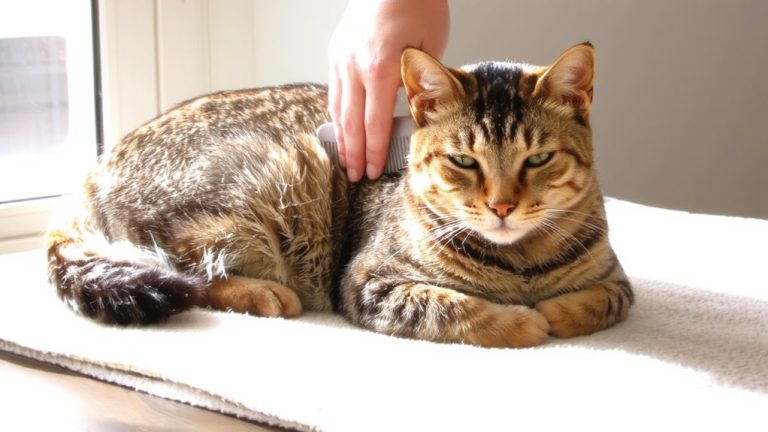
Long, flowing leg feathers might look elegant, but without regular attention, they turn into a tangle trap-exactly why brushing every few days isn’t optional. You *must* brush leg feathers every few days with the right tools: a slicker brush followed by a fine-tooth metal comb to catch hidden snarls. Dogs with outdoor access pick up mulch, dirt, and seed balls that knot fast, making daily checks essential. Owners like Jonathan Hamlin, who spends over 20 hours weekly grooming, confirm that skipping even a day invites mats. Therapy dogs need this routine too-bi-weekly grooming isn’t enough alone. Pair brushing with a high-velocity dryer after baths to fully dry feathers, since dampness breeds tangles. Stay consistent, use the right tools, and you’ll keep those legs smooth, healthy, and ready for any visit.
Target Trouble Spots Behind Legs and Around Paws
Behind the rear legs and around the paws, friction from movement and trapped debris make these zones prime spots for mats to take hold. You’ve got to check these areas daily-groomer Jonathan Hamlin does, especially before therapy dog visits. Run a slicker brush followed by a metal comb through the leg feathers 2–3 times weekly to catch tangles early. Mats hide easily here, so pay attention to the look and feel: smooth, separated hair means you’re good; snagging or clumping means it’s time to detangle. The Happy Hoodie helps keep your Berner calm during grooming, so you can focus on these sensitive spots without stress. Short, consistent sessions beat long, infrequent ones. Catching mats early keeps the coat healthy and your dog comfortable, avoiding pain or skin irritation down the line.
Clear Debris Right After Outdoor Play
While your Bernese Mountain Dog loves rolling in the grass or darting through trails, those fun outdoor moments can quickly lead to trouble if you skip one essential step: clearing debris from their leg feathers right after play. Tiny leaves, seed balls, and mulch trap in long hair, especially behind legs and around paws, creating tangles that turn into painful mats. Jonathan Hamlin notes outdoor play drastically raises matting risk as debris binds with fur. Always tackle this immediately-your dog’s comfort depends on it. Regular cleanup prevents moisture buildup and skin irritation, keeping your pup always ready for the next adventure.
| Debris Type | Location Trapped | Risk Level |
|---|---|---|
| Leaves | Back of legs | Medium |
| Seed balls | Around paws | High |
| Mulch | Leg feather undersides | Medium-High |
| Grass clippings | Between toes | Low |
Ditch Clothing and Boots That Tangle Leg Hair
A surprising number of matting issues in Bernese Mountain Dogs stem from something you might think helps-clothing and boots. The friction from fabric against leg feathers, especially during outdoor play, quickly tangles long hair, creating mats near the hocks and behind the legs. Even a few hours of wear can trap moisture and debris, accelerating tangle formation. Skip coats and boots unless absolutely necessary for extreme weather-routine brushing and prompt cleaning are far safer. Jonathan Hamlin, a nine-year Berner owner, found that ditching boots reduced matting hotspots in his active therapy dogs, despite frequent outdoor exposure. If you do use protective gear, remove it immediately after use and inspect leg feathers thoroughly. Let AI from the post guide your choices: prevention beats repair, and less gear often means healthier, tangle-free leg hair in the long run.
Groom in 5-Minute Bursts Instead of Marathons
You’ve already cut down on gear that snags and tangles your Bernese Mountain Dog’s leg feathers, so now it’s time to rethink how you approach grooming itself. Groom in 5-minute bursts daily instead of weekly marathons-Jonathan Hamlin, a nine-year Berner groomer, says this cuts your total time from 20+ hours to manageable minutes. Short sessions catch tangles early before they turn into stubborn mats. Do this right after outdoor play to remove mulch, seed balls, and dirt that speed matting. Use a high-velocity dryer post-session to separate leg feather hairs, reducing friction and future clumping. These micro-grooms keep your dog ready for therapy work, meeting bi-weekly hygiene standards in schools and hospitals. It’s a new account of consistency over intensity-tiny efforts add up. No need for long brushes or stressful restraint. Just daily focus, the right tools, and a routine that works with your life.
When to See a Pro for Matting Prevention
When daily brushing with your slicker brush and comb isn’t enough to keep the leg feathers behind your Bernese Mountain Dog’s thighs and around joints free of tight tangles, it’s time to call in a pro-especially if you’re seeing mats that don’t loosen with gentle pulling or cause your dog to flinch when touched. Hidden mats under the dense coat, common even with home tools like high-velocity dryers and Happy Hoodies, can lead to skin damage and restricted movement. If brushing every few days isn’t doable post-outdoor play, schedule a groomer every 2–6 weeks to maintain coat integrity. Immediate professional care is essential if matting causes irritation or mobility issues-critical for therapy dogs like Nemesis in “More Than A Pet” who meet strict Veterinary Medicine standards for public visits. A pro’s dematting tools and expertise prevent pain, ensuring your Berner stays healthy, comfortable, and coat-ready.
On a final note
Keep your Bernese Mountain Dog’s leg feathers tangle-free by brushing every 2–3 days with a slicker brush and stainless steel comb, focusing on behind the legs and around the paws, where mats form fastest. Remove burrs or mud right after outdoor play, avoid restrictive booties or leg wear, and break grooming into 5-minute daily sessions. For stubborn mats, see a professional early-prevention saves time, keeps coat healthy, and supports skin circulation.