How to Dry a Thick-Coated Newfoundland After a Bath Without Trapping Moisture
After your Newfoundland’s bath, let them shake first, then blot with a microfiber towel to remove excess water-cotton won’t cut it. Use a high-velocity 3200W dryer like the AIIYME with its 78-inch hose to push air deep into the coat, drying down to the skin. Focus on the chest, underlegs, and armpits where moisture hides. Dry each section 10–15 minutes on low heat, brush as you go, and confirm with your hand-skin should feel warm, not damp. You’ll soon see exactly how this full routine prevents issues before they start.
We are supported by our audience. When you purchase through links on our site, we may earn an affiliate commission, at no extra cost for you. Learn more. Last update on 19th July 2026 / Images from Amazon Product Advertising API.
Notable Insights
- Allow your Newfoundland to shake off excess water immediately after bathing to reduce drying time and moisture retention.
- Use absorbent microfiber towels to blot high-moisture areas like the chest, underlegs, and behind ears without tangling the coat.
- Employ a high-velocity dryer with adjustable heat, such as the AIIYME 3200W, to penetrate the dense undercoat and reach the skin.
- Dry in sections-starting at the back-spending 10–15 minutes per area to ensure deep, thorough drying and prevent trapped moisture.
- Finish by checking key damp-prone zones, brushing with a slicker brush, and confirming dryness by touch, smell, and inspection.
Why Proper Drying Prevents Health Issues in Newfoundlands
While it might seem like leaving your Newfoundland a little damp won’t hurt, that moisture trapped deep in their dense double coat can quickly turn into a breeding ground for bacteria and yeast, especially in warm, humid conditions. You’ve got to remember, their thick coat holds water like a sponge, slowing evaporation and keeping moisture close to the skin for hours. That prolonged dampness doesn’t just cause a musty smell-it can lead to skin irritation, redness, and painful hot spots. Areas like the chest and under legs stay wet longer, increasing infection risks and encouraging matting that traps more moisture. In cooler temps, a damp Newfoundland can lose body heat fast, which might lead to chills or even hypothermia. Proper drying isn’t just about comfort; it’s a vital step in preventing health problems tied directly to their thick coat and slow-drying fur.
Shake and Towel Dry Immediately After the Bath
You just finished rinsing off your Newfoundland, and now it’s time to tackle drying-starting with letting your dog shake it off. That vigorous shake removes a surprising amount of excess water, cutting drying time markedly. Once your DOG finishes, grab highly absorbent microfiber or chamois towels-these pull moisture far better than cotton bath towels. Begin to towel dry immediately, focusing on high-moisture zones like the chest, under the legs, and behind the ears where trapped dampness can cause odors or irritation. Blot gently instead of rubbing to avoid tangles in the wet, dense coat. Replace soaked towels fast; dry ones work much better at pulling out excess water. Quick, efficient towel drying sets the stage for a healthier, more comfortable coat, keeping your Newfoundland feeling great and reducing the risk of skin issues down the line.
Choose a High-Velocity Dryer for Your Newfoundland’s Coat
Since your Newfoundland’s double coat can hold a lot of moisture, a high-velocity dryer isn’t just helpful-it’s a necessity for thorough, efficient drying. A powerful dog dryer like the AIIYME with 4.3HP/3200W moves enough air to dry your dog down to the skin level, cutting drying time drastically. Unlike regular hairdryers, a high-velocity dryer delivers strong airflow that penetrates the dense undercoat, preventing fungal growth and skin irritation. It features adjustable settings so you can safely control temperature and intensity while drying your dog. With a 78-inch flexible hose and multiple nozzles, you can direct air exactly where it’s needed-like under the chest and legs-ensuring no damp spots remain. This professional-grade tool isn’t overkill; it’s smart care. Using a high-velocity dryer keeps your Newfoundland comfortable, odor-free, and healthy long after bath time.
Dry Section by Section to Prevent Trapped Moisture
When tackling your Newfoundland’s thick, moisture-holding coat, drying it section by section is the smart way to prevent trapped dampness that can lead to odor and skin issues. Start at the back, then move to the chest, legs, and tail, using a high-velocity dryer like the AIIYME Dog Dryer (3200W) to power through the dense undercoat. This drying process guarantees you fully dry each area before moving on. Spend 10–15 minutes per section on low heat to safely evaporate residual moisture without irritating your dog’s skin. Focus on drying deep where trapped moisture hides, especially near the neck and underarms. Check by touching the skin beneath the fur-it should feel warm and dry. Breaking the coat into sections helps you catch missed spots, speeds up the drying process, and reduces the risk of fungal growth from lingering dampness.
Target Damp-Prone Areas in Your Newfie’s Coat
The chest, armpits, underlegs, and behind the ears are hotspots for lingering moisture in your Newfoundland’s double coat, and skipping a thorough check in these zones can undo all the careful section drying you’ve already done. These damp-prone areas trap moisture close to the skin, risking odor, irritation, or hot spots. Blot thick sections with a microfiber towel first-it cuts dampness by up to 50% and speeds drying. Then use a high-velocity dryer on low heat to safely reach deep undercoat layers.
| Area | Risk if Damp | Drying Tip |
|---|---|---|
| Chest | Musty odor | Lift coat, dry downward |
| Armpits | Redness, chafing | Hold dryer at 45-degree angle |
| Underlegs | Matting | Use cool setting, lift fur |
| Behind ears | Skin irritation | Gently separate, dry inward |
Stay focused-complete drying prevents issues before they start.
Brush While Drying to Prevent Mats and Improve Airflow
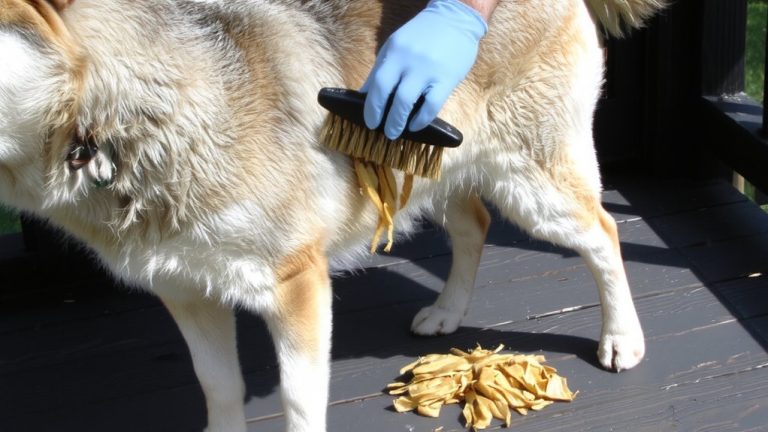
While drying your Newfoundland, brushing as you go keeps mats from forming in that thick, moisture-trapping coat, especially in trouble zones like behind the ears, under the legs, and along the chest where damp fur tangles fast. Use a slicker brush or wide-tooth comb to gently remove any tangles before they tighten. Brushing during drying separates wet strands and boosts airflow through the dense double coat, speeding up the process. Work in the direction of hair growth to avoid stressing the skin and to let air reach the undercoat. Every few minutes, stop and comb through high-moisture areas to catch developing knots early. Pairing high-velocity drying with frequent brushing guarantees even results and prevents dampness from lingering near the skin. This routine keeps your Newfie’s coat smooth, healthy, and free of trapped moisture-critical for comfort and skin health.
How to Tell When Your Newfoundland Is Fully Dry?
How do you know your Newfoundland is truly dry after a bath? Even if the outer coat looks dry, your Newfoundland dog isn’t completely dry until the dense undercoat is, too-especially in high-moisture zones like the chest, underarms, and behind the ears. You’ve got to run your fingers all the way down to the skin to check; if it feels damp at all, keep drying. A high-velocity dryer with adjustable airflow works best, taking 1 to 1.5 hours for thorough results-skimping on time risks trapped moisture. Don’t just touch, though: sniff and inspect. A musty or moldy odor near the shoulders or chest is a red flag. That smell means dampness lingers deep in the coat, which can lead to skin irritation or infections. Only when both touch and smell confirm dryness should you call it done.
On a final note
Dry your Newfoundland thoroughly with a high-velocity dryer set to warm air, section by section, focusing on the chest, underbelly, and tail base where moisture hides. Brush while drying to lift the dense undercoat and boost airflow. Always towel-dry first-use two absorbent microfiber towels, squeezing gently. A fully dry coat feels crisp, not cool or damp underneath. Proper drying prevents hot spots, yeast, and skin infections, keeping your Newfie healthy.