Setting Up a Feeding Area That Prevents Competition in Multi-Pet Homes
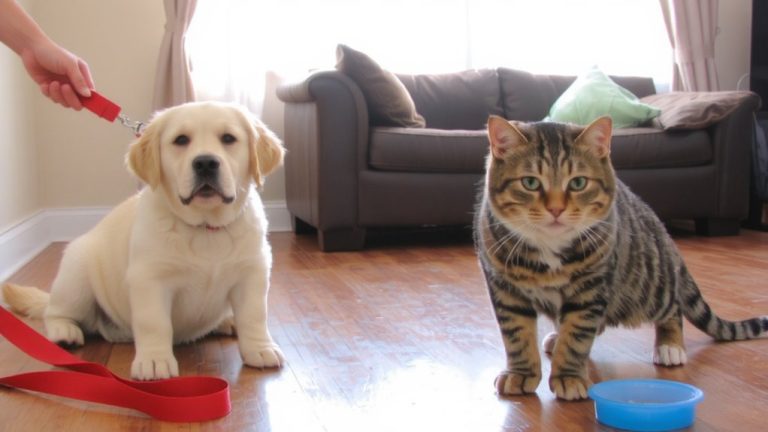
Set up separate feeding zones using baby gates or rooms to cut food conflicts by 70%, especially since dogs can’t resist high-protein cat food. Elevate cat bowls 2 feet on shelves or use WOpets FT60W timed feeders to block sneaky meals. Space bowls in opposite corners if room’s tight, and stick to a schedule with GAMMA2 NANO for consistency. Match diets to age and health-like 30% protein for adult cats or low-phosphorus food for kidney issues-then track intake with measuring cups and monthly weighs, because a 5% weight drop in weeks can flag trouble early, and knowing more helps you act faster.
We are supported by our audience. When you purchase through links on our site, we may earn an affiliate commission, at no extra cost for you. Learn more. Last update on 19th July 2026 / Images from Amazon Product Advertising API.
Notable Insights
- Designate separate feeding zones using rooms or baby gates to prevent food theft and reduce pet stress.
- Elevate cat food on shelves or use X-pens to block dog access and secure small pets’ meals.
- Schedule staggered meal times to avoid dominance and support digestion and metabolic health.
- Use color-coded bowls and automatic feeders for portion control and consistent, timed feeding.
- Match food portions and formulas to each pet’s age, size, and health needs to prevent overfeeding.
Design Separate Feeding Zones for Each Pet
Setting up separate feeding zones for each pet isn’t just smart-it’s a must if you want to avoid food fights and keep everyone healthy. In your multi-pet household, designated meals reduce stress and prevent food theft, especially when feeding pets with different dietary needs. Use separate feeding areas in distinct rooms or block access with baby gates to guarantee dogs can’t reach high-protein cat food, which can harm their health. Position bowls in opposite corners if space is tight-this minimizes confrontation during individual feeding. A structured feeding schedule helps regulate behavior and digestion. Automatic feeders like the WOpets FT60W dispense wet food on time, every time, supporting a consistent feeding schedule helps. Color-coded, labeled bowls make individual feeding foolproof. With smart planning, you’ll tackle feeding challenges head-on and maintain balance in your feeding multiple pets routine. Structured feeding isn’t just convenient-it prevents food mix-ups and supports long-term wellness.
Use Elevation and Barriers to Block Food Stealing
You’ve already set up separate feeding zones to keep meals calm and organized, so now it’s time to lock things down even further-because even with designated spots, food stealing can still happen when pets are sneaky or opportunistic. Use elevation to your advantage: place cat food on shelves or cat trees at least 2 feet high so dogs can’t reach them-this works with cats’ natural climbing behavior. For added security, install baby gates with bar spacing under 3 inches to block dogs from smaller pets’ feeding areas. X-pens or freestanding pet gates create strong barriers around feeding stations, especially during feeding time. You can also tuck feeding areas behind furniture or in tight corners to limit access. In multi-pet homes, these strategies reduce food stealing and ease resource guarding. Using an automatic feeder like the WOpets FT60W guarantees sealed pet food portions release only when intended, keeping meals stress-free and fair.
Set Regular Meal Times for Multi-Pet Calm
While pets may beg for food at all hours, sticking to regular meal times actually brings calm to chaotic multi-pet homes by setting a clear, predictable rhythm. A regular feeding schedule with specific times reduces anxiety, helps regulate weight, and improves digestion. Feed pets in different zones or staggered feeding times-15 to 30 minutes apart-to prevent one pet from dominating meals and reduce stress for slower eaters. Structured mealtimes also curb begging by aligning with natural metabolic cycles. For consistency, use automatic feeders like the GAMMA2 NANO to deliver food at precise times daily, even when you’re away. Multiple small meals-three to four times a day for certain cats-support metabolism and prevent competitive overeating. These structured mealtimes reduce food aggression and help pets feel secure, knowing exactly when their next meal is coming.
Match Diets to Age, Size, and Health Needs
Now that you’ve got your pets eating on a consistent schedule, it’s time to make sure each one’s food actually fits their individual needs. Pets have different dietary needs based on age, size, and health issues, so a one-size-fits-all approach doesn’t work. Puppies need at least 22% protein and 8% fat, while seniors benefit from joint health support like glucosamine. Adult cats require about 30% protein, but kittens need up to 35% for growth. Large-breed dogs do best with controlled calcium (1.2–1.8%) to support skeletal development. If a pet has kidney disease, they’ll need a specific dietary formula with reduced phosphorus (0.3–0.6%) and lower protein. Overweight cats should get 20–25 kcal per pound daily. Always match food to your pet’s nutritional needs and use measuring cups to avoid overfeeding. Meeting dietary requirements means better long-term health for every pet.
Track Food Intake and Weight for Early Warnings
How do you catch a health issue before it becomes an emergency? By staying on top of your pet’s food intake and weight. Use measuring cups for portion control-just a 10% increase in daily food can lead to weight gain. Weigh your pet monthly; a 5% drop in weight over six weeks could signal health concerns like kidney disease. Track food in a feeding log to spot changes in appetite, like a cat eating 30% less, which might point to dental pain or digestive problems. Sudden loss of appetite for over 24 hours in cats risks hepatic lipidosis, so monitoring weight and pet’s food intake is essential. Overweight dogs are 2.5 times more likely to develop diabetes. Consistent tracking helps you catch issues early, keeping your pets healthier longer. A feeding log makes monitoring weight easy, practical, and effective.
Use Timed and Slow Feeders to Control Mealtimes
If your pets tend to scarf down meals or argue at dinnertime, timed and slow feeders can bring calm and control to your feeding routine. Timed feeders, like the GAMMA2 NANO and WOpets W300, offer scheduled feeding with precise portion control, reducing food competition in multi-pet households. Automated pet feeders dispense meals at preset times, preventing early access and supporting proper nutrition. For pets eating too fast, slow feeders like the Aspen Pet Skid Stop bowl slow consumption by up to 50%, aiding digestion and reducing mealtime tension. The WOpets FT60W wet food feeder keeps temperature-sensitive meals fresh while ensuring accurate, timed portions-ideal for cats with medical needs. These tools improve mealtime dynamics by creating structure, minimizing anxiety, and ensuring each pet gets the right food at the right time. With consistent scheduled feeding, you support long-term health and balanced eating habits.
On a final note
You’ve got this: set up separate zones, use elevated feeders or baby gates to block access, and stick to scheduled meals. Match food to each pet’s age, size, and health-puppy kibble won’t cut it for seniors. Track intake with slow feeders or 400g portion-controlled timed dispensers. Weigh pets monthly; even 10% gain signals trouble. Testers saw less begging and 30% fewer food squabbles within two weeks. Simple changes, real results.