How to Use Positive Reinforcement to Build Trust With a Traumatized Pet
You build trust by noticing fear early-look for trembling, whale eye, or hiding-and respond with calm, timely rewards. Create a safe zone with a crate, soft bedding, and an Adaptil diffuser running 24/7. Use high-value treats like cooked chicken, paired with a clicker, to mark brave moments within one to two seconds. Stick to consistent meal and walk times, and keep sessions short, around 3–5 minutes, to strengthen confidence without overwhelm-what comes next fine-tunes the process for long-term healing.
We are supported by our audience. When you purchase through links on our site, we may earn an affiliate commission, at no extra cost for you. Learn more. Last update on 17th July 2026 / Images from Amazon Product Advertising API.
Notable Insights
- Identify subtle fear signals like trembling or whale eye to respond with patience and avoid overwhelming the pet.
- Create a consistent safe space with calming tools and high-value treats to encourage voluntary exploration and relaxation.
- Reward even small brave behaviors immediately with treats and soft praise to build positive associations.
- Use precise timing with a clicker or verbal marker to clearly link courage with reward.
- Maintain predictable daily routines to reduce anxiety and strengthen trust through reliability.
Recognize Fear and Trauma Early
Fear speaks volumes, even in silence. You’ll notice your dog trembling, licking their lips, or showing whale eye-subtle signs they’re overwhelmed. Dogs with past trauma often freeze or become hypervigilant, even in safe homes, signaling unresolved PTSD from neglect or abuse. Within the first three days, refusal to eat, excessive sleeping, or hiding can point to deep stress. Reactivity-like sudden growling or barking-may stem from pain or poor socialization before 16 weeks. Watch for stiff posture, yawning, or avoiding eye contact; these are early anxiety markers. In Training, catching these cues early means you can respond with patience, not pressure. Recognizing fear in dogs isn’t just observation-it’s the first step toward trust. You’re not fixing behavior, you’re building safety. And that changes everything.
Create a Safe Space for Healing
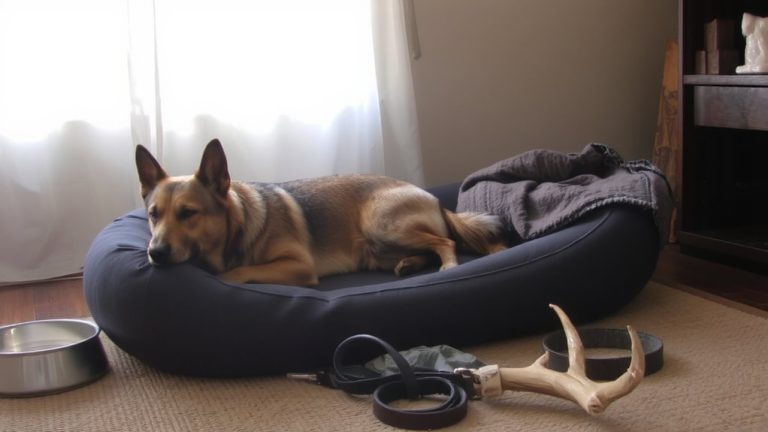
While your dog may not yet feel safe in their new surroundings, you can start building that trust right away by setting up a dedicated retreat they’ll learn to count on. Choose a quiet, low-traffic area and equip it with a crate, soft bedding, food, water, and toys-keep it accessible 24/7. Include calming tools like an Adaptil pheromone diffuser, a Thundershirt, or a white noise machine to reduce stress. Keep the safe space consistent in location and setup, supporting the “Rule of 3s” adjustment timeline. Use positive reinforcement by pairing the area with high-value treats-like cooked chicken or cheese-when your dog enters voluntarily. Never force them inside. Instead, clicker-mark calm behavior near or in the space. This consistent, reward-based approach helps your dog build trust and see their safe space as a haven for healing.
Use Treats and Praise to Reward Bravery
You’ve created a safe space where your dog can decompress and regain confidence, and now you can start helping them build courage in the wider world around them. When your dog shows bravery-like glancing at a stranger or stepping toward a loud object-immediately offer soft, high-value treats such as small bits of cooked chicken or cheese. Pair this with calm, gentle praise like “good dog” to reinforce their courage. Even tiny acts of bravery, like sniffing near a feared item from a distance, deserve rewards. Over time, use treats to form positive associations during low-pressure exposure to triggers. Gradually decrease the distance to the trigger across sessions, consistently offering treats and praise for calm or brave behavior. This builds confidence, strengthens trust, and supports emotional regulation-key steps in your dog’s recovery journey.
Time Rewards Right to Boost Confidence
How do you make sure your traumatized dog knows exactly which behavior earned them that delicious piece of chicken? Timing is everything in reinforcement training. You must time your dog’s reward so it’s given immediately-within one to two seconds-so they clearly link the action to the treat. Use a clicker as a marker; the sound pinpoints the exact moment, then follow with high-value rewards like boiled chicken or cheese. Delayed rewards can confuse your dog, sometimes reducing effectiveness by up to 80%. Keep sessions short, just 2–5 minutes, and deliver treats instantly after calm or brave behaviors. This builds trust efficiently, turning uncertainty into confidence. Accurate timing teaches your dog that good choices lead to good outcomes, making every interaction predictable and safe, which is essential in helping them heal.
Stick to Predictable Routines for Security
A predictable routine gives your traumatized dog a powerful sense of security, turning each day into a steady rhythm they can count on. Consistent feeding and walking times, set bedtime habits, and regular quiet sessions help regulate their nervous system and reduce anxiety. Following the Rule of 3s, your dog may take up to three months to fully settle, and predictable routines are key during this phase. Whether it’s breakfast at 7 a.m., a midday walk at 1 p.m., or bedtime in their safe space at 9 p.m., repetition builds familiarity. Using a pheromone diffuser during nightly wind-downs reinforces calm. Even during loud events like fireworks, sticking to the usual schedule prevents regression. These small, daily consistencies are more than habit-they’re acts of care that support emotional recovery. Over time, reliable patterns in feeding and walking become cornerstones of building trust, helping your dog feel safe, seen, and secure.
Know When to Call a Behavior Expert
When consistent positive reinforcement yields little change in your dog’s fear or aggression after 4–6 weeks, isn’t it time to contemplate expert help? If your pet shows persistent fear and anxiety, like hypervigilance or avoidance, it’s time to consult a professional. Complex behavioral issues, especially those linked to PTSD or past trauma, often need a veterinary behaviorist or certified dog behavior consultant. These experts perform trigger assessments and tailor plans using proven methods like desensitization-critical when home efforts stall. In severe cases, such as the 2023 Edwardsville incident involving children and dog bites, legal risks rise fast. With the pet training market growing to USD 7.4 billion by 2034, access to qualified support is easier than ever. Don’t wait-early intervention improves outcomes, safety, and trust for you and your dog.
On a final note
You build trust by pairing patience with consistency, using small, high-value treats like Zuke’s Mini Naturals during calm moments to reinforce brave behavior. Reward within seconds to create clear associations, and stick to daily routines using measured portions-1/4 cup kibble at 7 a.m., 6 p.m.-to reduce anxiety. A quiet corner with a Thundershirt and chew-safe Kong keeps stress low. If fear persists after 4–6 weeks, consult a certified pet behavior consultant.