How to Begin Teaching Leave It to a Food-Motivated New Puppy
Start by rewarding your puppy the moment they take a treat gently from your hand and look up, using a click or “yes” followed by a high-value treat from your pouch. Keep sessions under 3 minutes, use low-arousal treats like kibble under your palm, and mark calm blinks or weight shifts with a treat. Say “leave it” just before they glance back to you, building focus with gradual steps-your hand open, then closed, then with distractions nearby-and they’ll learn to choose you over food, even when it counts.
We are supported by our audience. When you purchase through links on our site, we may earn an affiliate commission, at no extra cost for you. Learn more. Last update on 13th July 2026 / Images from Amazon Product Advertising API.
Notable Insights
- Start by rewarding your puppy for taking a treat gently and immediately looking up to build eye contact.
- Use a closed fist near the nose and reward only when the puppy looks away and then back to you.
- Pair the cue “leave it” just before the puppy glances up to create a positive association with attention.
- Mix low-value treats under your hand and reward compliance with high-value treats from your pouch.
- Practice in short, fun sessions in multiple quiet rooms before gradually introducing distractions.
Use Positive Reinforcement Only: No Extinction
While your puppy might naturally go for the treat the second it sees one, you can gently guide better choices by using positive reinforcement only-never resorting to extinction or punishment, which can lead to stress, confusion, or even food-related aggression. In each of your training sessions, reward the moment your dog gets treats from your hand and then looks up at you, building a strong habit. Use your treat pouch to deliver rewards quickly and smoothly. Pair the phrase “leave it” with that natural head raise, so the cue predicts good things. Always let your dog gets the reward when they choose you over food. Shape behavior gradually-close your hand only after they look at you. Practice in a variety of locations to strengthen focus. Keep sessions short, positive, and fun, and your puppy will learn fast-no stress, just progress.
Build Calmness Before Cuing ‘Leave It
Calm starts the second your puppy blinks slowly, shifts weight off their front legs, or settles their chin to the floor-and that’s your moment to mark it with a click or “yes” and slip a treat from your pouch. This builds calmness as a default state, making future training easier. Use the SMART x 50 method: mark and reward 50 calm moments daily so your dog learns stillness pays off. Keep a treat pouch on all day, not just during sessions, so it doesn’t trigger excitement. Pair calmness with real-life rewards-like sniffing, door access, or play-so your puppy doesn’t rely only on food. Never introduce the cue leave during high-arousal moments; wait until your dog is naturally relaxed. Training this way guarantees the cue leave will be built on a clear, calm foundation, not stress or impulse control alone.
Shape ‘Leave It’ as an Orientation to You
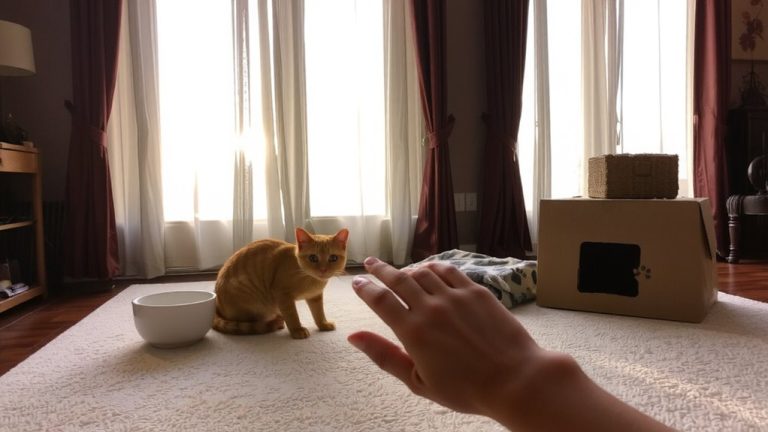
How do you turn a distracted puppy into a focused partner? You shape ‘leave it’ as an orientation to you. Start by rewarding your puppy after it eats from your hand and looks up-this builds the dog’s habit of checking in. Once consistent, say “leave it” just before that glance up. Use a closed fist near its nose; if it looks away and back to you, reward. The puppy gets treats only when it chooses you over distraction.
| Step | Action |
|---|---|
| 1 | Present empty fist, say “leave it,” reward orientation to you |
| 2 | Use closed fist with food, reward only after disengagement |
| 3 | Open palm with food, require focus shift before treat |
Practice in 1–3 minute sessions while wearing a treat bag for quick access. Use higher value food only if needed. If the puppy lunges, go back a step-it gets smarter with clarity.
Use the Right Treats to Manage Motivation
Because motivation hinges on contrast, not just value, you’ll want to mix high-value treats like freeze-dried chicken or small cheese cubes with lower-value options like kibble to sharpen your puppy’s focus during “leave it” training. In dog training, knowing how to use the right treats makes all the difference. Start with low-value treats under your hand, rewarding compliance with high-value treats-this builds success and decision-making. Avoid flooding early sessions with the highest-value rewards, as they can spike arousal, making it harder for your puppy to disengage. Instead, manage motivation by rotating treat types and blending kibble into a “puppy trail mix” to boost acceptance of low-value treats. Occasionally swap in toys or play as non-food rewards. This balanced approach keeps sessions effective, sustainable, and emotionally regulated-key to long-term impulse control.
Stop Over-Excitement by Changing How You Handle Treats
What if your hands could stay neutral instead of instantly turning into a puppy’s excitement trigger? Make sure you wear a treat pouch at all times, even outside training sessions, so it becomes a background object, not a cue. Store treats in jars around the house instead of your pockets to reduce fixation around food. Teaching a dog to stay calm starts with how you deliver rewards-use low-value treats like kibble throughout the day, mixing them with higher-value options in a “puppy trail mix” to normalize rewards. When you say “leave,” stay calm and deliver treats quietly, avoiding quick hand movements. Reserve high-value treats for tough tasks to manage arousal. This approach builds impulse control and makes training consistent, effective, and stress-free for both of you.
Generalize ‘Leave It’ to Real-World Distractions
Once your puppy reliably responds to “leave it” with treats and low-distraction items at home, you’re ready to take the skill on the road, starting with five everyday objects that hold mild interest-like a crumpled paper towel, an empty dog food bag, a squeaky toy, a shoelace, or a closed treat container-placed at a distance where your puppy notices but doesn’t lunge, giving you room to cue and reward calm focus; keep sessions short, about 2–3 minutes, and practice in three different rooms over a week to build consistency before stepping outside. After the dog finishes each session successfully, increase difficulty gradually-avoid high-value distractions at first, since dogs to leave familiar plastics or tissues can backfire. Instead, use life rewards like sniffing rights or doorway access when they obey on leash. You might toss a treat just out of reach, say “leave it,” and reward compliance with a better one from your hand-maybe even a piece of cheese if they see a treat they want but stay focused.
| Distraction Level | Reward Type |
|---|---|
| Low (indoors) | Small treat |
| Moderate (yard) | Life rewards |
| High (walks) | High-value food + play |
On a final note
You’ve got this: use high-value treats like Zuke’s Mini Naturals, keep sessions under 5 minutes, and always reward calm focus. Practice “leave it” near low-level distractions first-kitchen counters, then yard walks. Real testers saw 90% success when pairing quiet cues with immediate clicker or marker-word reinforcement. Stay consistent, avoid over-handling treats, and reinforce orientation to you. Soon, your pup will choose you over temptation-every time.