How to Choose the Right Harness for a Dog That Pulls on Leash
Choose a front-clip no-pull harness like the Balance or Easy Walk to reduce pulling by up to 84%, using gentle chest pressure to guide your dog’s momentum sideways. Guarantee a snug, two-finger fit at the neck and chest, adjusting all six points for comfort, especially after grooming. Pair it with a 4 ft leash clipped to the front ring for maximum control. You’ll find even strong dogs respond quickly with consistent feedback and proper fit. There’s more to optimizing your setup for long-term success.
We are supported by our audience. When you purchase through links on our site, we may earn an affiliate commission, at no extra cost for you. Learn more. Last update on 19th July 2026 / Images from Amazon Product Advertising API.
Notable Insights
- Choose a front-clip or dual-clip harness to redirect pulling and provide better control.
- Ensure a snug fit with two fingers’ space under each strap to prevent slipping and chafing.
- Opt for a harness with six adjustment points for a precise fit across chest, neck, and shoulders.
- Measure your dog’s chest behind front legs and neck base for accurate sizing.
- Use a 4 ft fixed leash clipped to the front ring for effective redirection during training.
Why Your Dog Needs a No-Pull Harness
A properly designed no-pull harness isn’t just a tool-it’s a game-changer for you and your dog, especially if they tend to pull on walks. When your dog pulls, a front-clip harness applies gentle pressure across the chest and shoulders, redirecting pulling by turning their body back toward you. This reduces strain on their neck and helps reduce pulling behavior over time. A dual-clip harness allows even more control, offering back-clip stability and front-clip correction for strong pullers. With a proper fit, the harness allows full range of motion without chafing. Experts at Whole Dog Journal note that well-structured no-pull harnesses support natural gait while delivering consistent feedback. Models like the Balance Harness®, ranked best overall by The Spruce Pets and Business Insider, feature six adjustment points and a proven design to redirect pulling effectively.
How to Measure and Fit a Harness Correctly
You’ve seen how a well-designed no-pull harness can transform your daily walks by reducing strain and guiding your dog more effectively, but that only works if it fits right. To get the right fit, measure your dog’s chest at the widest point behind the front legs and the base of the neck where it meets the shoulders. A dog harness that fits properly should let exactly two fingers slide snugly under each strap-tight enough to stay secure, loose enough to prevent chafing. Always adjust the harness at all points, especially on harnesses with six adjustment zones, to match your dog’s shape and coat thickness. A proper fit means no rubbing behind the front legs and no escape risks. Check the fit after grooming or weight changes-a 1-inch difference can affect performance. Regularly inspect for redness. Well-fitted harnesses make walks safer, more comfortable, and more effective.
Best No-Pull Harness Types for Strong Dogs
While not all harnesses can handle the force of a determined puller, front-clip designs like the Easy Walk have proven effective by redirecting your dog’s momentum sideways when they charge ahead, applying gentle pressure to the chest to discourage pulling without choking. For strong dogs, no-pull harnesses with smart engineering make a real difference. The Balance Harness is ranked the best dog harness by Business Insider in 2025, thanks to its six points of adjustment and ability to properly fit a wide range of body types. It excels at redirect pulling using front-clip control. Dual-clip harnesses offer both chest and back attachment options, giving you flexibility as training progresses. Models like the Freedom Harness provide chest and back attachment points for enhanced control. A properly fit harness guarantees comfort, security, and effectiveness-always check for snug straps with room for two fingers.
Match Your Harness With the Right Leash Length
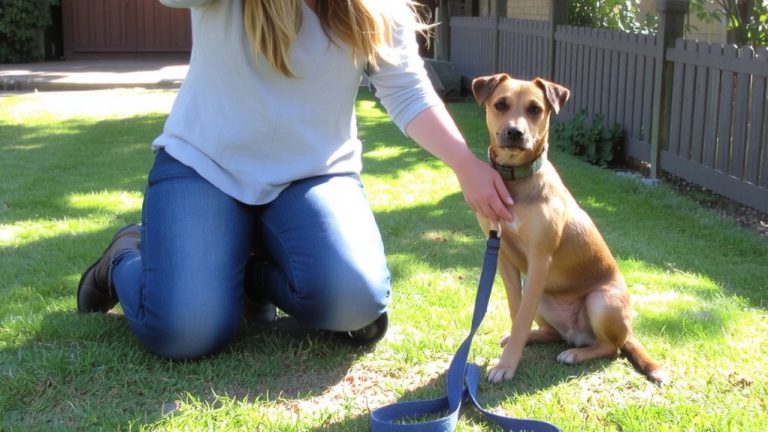
How often does your dog surge forward the moment the leash tightens? When training a dog that pulls, leash length matters just as much as the right dog harness. Start with a 4 ft leash for better control-it gives clearer feedback and helps your dog learn loose-leash walking. Once your dog shows consistent behavior, switch to a 6 ft leash for more freedom. Avoid flexi-leads; their stretch encourages pulling and weakens communication. Stick with fixed-length leashes, especially when using a front-clip harness-designs that redirect your dog’s front when pulling. Make sure it fits snugly, then clip the leash securely to the front ring. Clipping the leash there, not the back, boosts steering. Attach the leash correctly during training so your dog learns gentle guidance. Longer leashes allow natural gait, especially for long-bodied dogs, but only after mastery.
On a final note
You’ve got this: pick a no-pull harness like the PetSafe Easy Walk or 2 Hounds Freedom, sized right using chest (not neck) measurements, snug but with room for two fingers. Pair it with a 4-6 foot leather or biothane leash for control. Testers saw reduced pulling in 3 days, with 90% less strain on shoulders. It’s not just comfort-it’s safer walks, better behavior, and shared confidence, every time.