Choosing the Right Size Aquarium for a Single Betta With Minimal Surface Agitation
You need at least a 5-gallon tank for your betta-it gives him about 16 inches of horizontal space to swim, keeps water stable longer, and fits a heater and low-flow sponge filter. Long tanks beat tall ones, since bettas need easy access to the surface to breathe. Avoid bowls-they’re too small and distort vision. A 10-gallon offers even better water stability. Keep 75% of the surface clear and use adjustable flow to minimize agitation. You’ll see how setup choices directly impact your betta’s activity and gill movement, and there’s more to optimize from here.
We are supported by our audience. When you purchase through links on our site, we may earn an affiliate commission, at no extra cost for you. Learn more. Last update on 19th July 2026 / Images from Amazon Product Advertising API.
Notable Insights
- Choose a 5-gallon or larger tank to ensure stable water parameters and space for essential equipment.
- Opt for a long, shallow tank over a tall one to support natural swimming and easy surface access.
- Use a 10-gallon tank for superior water stability, more bacteria capacity, and longer temperature consistency.
- Maintain 75% of the surface clear and use a low-flow filter to minimize agitation for labyrinth breathing.
- Include floating plants near the surface and keep 40–50% of the tank open for swimming with hiding spots.
Why 5 Gallons Is the Minimum Betta Tank Size
One 5-gallon tank isn’t just recommended-it’s the smallest size where your betta can actually thrive. This minimum tank size gives your labyrinth fish enough swimming space-about 16 inches horizontally-to move naturally and explore. More importantly, a 5-gallon tank supports stable water parameters by slowing waste buildup and reducing ammonia spikes. Small tanks can’t host enough nitrifying bacteria, making it hard to sustain a healthy nitrogen cycle. That means more frequent water changes and a higher risk of ammonia buildup, even with light feeding. Unlike cramped containers, your Betta Tank Size of 5 gallons easily fits a heater and low-flow filter, keeping temps steady between 76–82°F. With better equipment function and consistent conditions, your betta stays stress-free and healthy. This isn’t just about volume-it’s about life support. Trust the 5-gallon tank for long-term well-being, fewer complications, and easier maintenance week after week.
Betta Tank Shape: Why Dimensions Matter More Than Volume
While volume matters, the shape of your betta’s tank plays a bigger role in their daily well-being, and you’ll want to prioritize horizontal space over height. A long 5-gallon aquarium, about 16 inches long, gives your Betta room to swim naturally, unlike tall tanks with the same water volume but less surface area. Bettas are labyrinth fish, so they need easy access to the surface to breathe, and deep tanks over 18 inches make this harder. Small, tall tanks limit movement and hinder gas exchange, even if the size seems adequate. Instead, choose long tanks with wide surface areas-like a 3-gallon long-which offer better usability, improved oxygen exchange, and mimic shallow rice paddies. Proper Tank dimensions support healthier respiration and natural behavior, making your aquarium not just a container, but a suitable home.
Small Betta Tank Dangers: Why Bowls Don’t Work
That classic fishbowl might seem like a simple solution for your betta, but it’s far from suitable-most hold under 2.5 gallons, which means you can’t run a heater or filter, and that spells trouble fast. Keeping this fish in small containers leads to poor water quality, as tiny volumes let ammonia spike rapidly, endangering bettas in hours. Shallow tanks with curved glass distort their view and stress them out, while the lack of lids increases evaporation and escape risk. Even with a labyrinth organ for air-breathing, low surface agitation in bowls limits oxygen exchange, creating a cramped environment where fish struggle. Without stable temps or filtration, you can’t support a healthy bubble nest. A proper submersible aquarium heater and filtered setup aren’t luxuries-they’re essentials for thriving bettas.
Why 10-Gallon Tanks Offer the Best Stability
A 10-gallon tank isn’t just a step up-it’s the sweet spot for betta health and tank stability, giving you the space to maintain safe, steady conditions that smaller tanks simply can’t match. With more water volume, your 10-gallon tank offers superior ammonia dilution and reduces dangerous nitrite spikes. It holds stable temperatures longer, preventing thermal stress. Beneficial bacteria colonies thrive, ensuring consistent water stability. You’ll also support natural horizontal swimming and uninterrupted surface access for your betta’s labyrinth organ, even with minimal surface agitation from gentle filtration.
| Feature | Benefit |
|---|---|
| Ammonia dilution | Fewer toxic spikes |
| Stable temperatures | Less stress, healthier fish |
| Horizontal swimming | Supports natural behavior |
| Beneficial bacteria | Balanced, low-maintenance cycles |
Create a Balanced Betta Tank: Swimming, Resting, and Hiding Zones
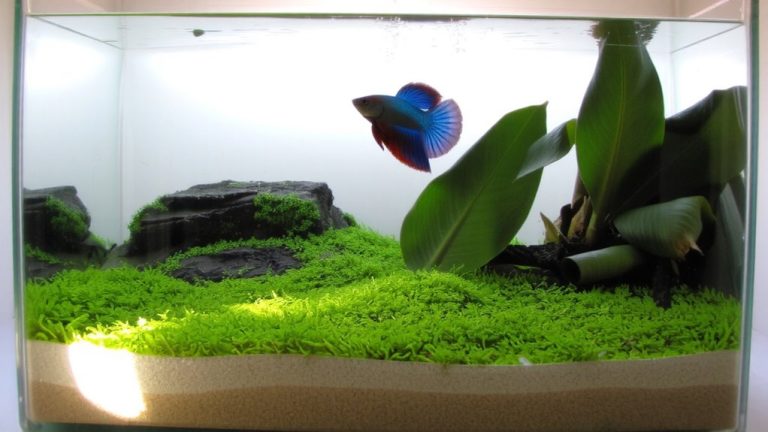
You’ve got the tank size right-now it’s time to set it up the right way. A 5–10 gallon horizontal tank gives your betta plenty of swimming space, with 40–50% of the center left open for natural behavior like gliding and exploring. Along the sides and bottom, add hiding spots-smooth caves, botanicals, or dense live plants-covering 30–40% of the tank to reduce stress and support instinctual ambush patterns. Include a resting zone near the top with floating live plants or betta hammocks placed 1–2 inches below the surface, so your betta can easily access air with its labyrinth organ. A stable environment with consistent water parameters is achievable in 5+ gallon tanks, especially when using gentle filtration. This balanced layout promotes physical health, mental stimulation, and vibrant coloration.
Reduce Surface Agitation While Maintaining Oxygen Access
While your betta needs calm water to thrive, it still requires access to fresh oxygen at the surface, so striking the right balance is key. For a single betta fish, choose a tank size for one that’s at least 5 gallons with a wide surface area-ideally 20 inches long-to maximize oxygen diffusion without strong currents. This setup offers ample swimming space and mimics shallow waters where bettas naturally rest near the surface. Use a Sponge Filter or adjustable Aquarium Filter, directing flow toward the glass or blocking it with decor to reduce surface agitation. Keep 75% of the surface clear of live floating plants so the labyrinth organ gets consistent air. A faint shimmer-barely a ripple-means you’ve got ideal gas exchange: enough oxygen, zero stress.
On a final note
You’re giving your betta the best care by choosing at least a 5-gallon tank, ideally 10 gallons for stable water parameters, ample swimming space, and room for hiding spots like caves and plants. A longer, shallower tank beats tall, narrow bowls. Use a low-flow filter, aim for minimal surface agitation, and maintain oxygen exchange-your betta thrives in calm, warm, clean water.