How to Build a Secure Outdoor Enclosure for Guinea Pigs With Predator Netting
Place your enclosure within 10 meters of your house on well-draining ground, using pressure-treated posts set 30cm deep and a 150cm frame with a 30cm overhang. Cover entirely with 13mm welded wire or predator netting, secured tightly with heavy-duty staples or zip ties, and include a three-section, beam-supported roof lid. Add a raised, draft-proof shelter with fleece and straw bedding, position it away from wind, and rotate untreated wood, bricks, and live plants weekly-there’s more to optimizing safety and comfort just ahead.
We are supported by our audience. When you purchase through links on our site, we may earn an affiliate commission, at no extra cost for you. Learn more. Last update on 19th July 2026 / Images from Amazon Product Advertising API.
Notable Insights
- Choose a well-draining, partially shaded site within 10 meters of your house for safety and easy monitoring.
- Build a sturdy frame with pressure-treated wood and install 13mm welded wire mesh to block predators.
- Cover the entire enclosure with tight-fitting predator netting or welded wire to protect from aerial and climbing threats.
- Add a weatherproof, raised shelter with insulated bedding positioned away from wind and rain exposure.
- Install enrichment items like untreated wood hides and live plants, avoiding plastic to ensure safety and stimulation.
Choose the Best Location for Your Outdoor Enclosure
Where should you set up your guinea pigs’ outdoor home for both safety and comfort? To choose the best location for your outdoor enclosure, pick a spot within 10 meters of your house so you can monitor them easily and react quickly if needed. You’ll want half-shade, half-sun exposure-this balance helps prevent heatstroke while letting your pets warm up naturally. Position the enclosure on the north side of a building to get afternoon and evening shade, reducing overheating. Make sure the ground drains well to avoid dampness or pooled rainwater inside the run. Finally, your site must support at least 8 m² (4 m × 2 m) so three guinea pigs have enough space year-round. These conditions support healthy behavior, proper thermoregulation, and stress-free living. Choosing wisely now prevents problems later.
Build a Sturdy, Predator-Proof Frame
Now that you’ve picked the right spot near your home with balanced sun and shade, it’s time to start building a frame that keeps your guinea pigs safe from predators and the elements. Use pressure-treated wooden slats or sturdy timber posts, setting them at least 30cm into the ground to block diggers. Frame the enclosure to a minimum height of 150cm, adding a 30cm outward-facing overhang to deter climbers. Secure fine-mesh welded wire (13mm x 13mm) tightly with heavy-duty staples or galvanized nails-don’t use chicken wire, as it’s too weak. Reinforce all joints with bolts instead of flimsy cable ties or swivel latches. Build the roof frame with three-section lids supported by wooden beams to handle weight and resist birds of prey. This strong base guarantees lasting safety and stability.
Cover the Top to Block Hawks and Predators
While hawks like kestrels can strike in broad daylight, you can stop attacks before they happen by fully covering your guinea pig run with secure, small-gauge protection. Make sure your enclosure is completely covered with welded wire mesh or predator netting with less than 1-inch gaps so your pets stay protected from predators. Fasten the netting tightly using heavy-duty staples or zip ties to wooden or metal frames, sealing all openings. For larger runs, use a three-section lid with support beams to prevent sagging. Extend coverage over feeding zones-guinea pigs are vulnerable even during daytime grazing. Add electric tape around the outer perimeter, well out of reach, to deter foxes and other ground threats, keeping your setup fully protected from predators.
| Material | Gap Size | Best For |
|---|---|---|
| Welded Wire Mesh | 1/2 inch | Maximum security |
| Nylon Predator Netting | 3/4 inch | Visibility & airflow |
| Heavy-Duty Zips | N/A | Long-term hold |
| Electric Tape | N/A | Perimeter defense |
| Support Beams | N/A | Large enclosure stability |
Install a Weatherproof Shelter With Bedding
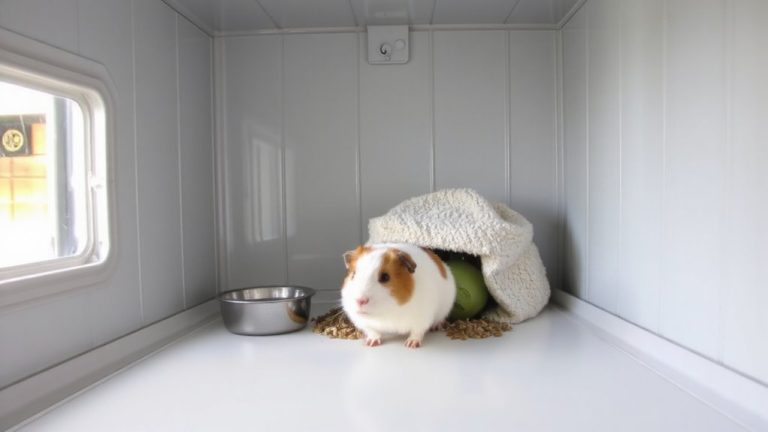
A well-insulated, weatherproof shelter keeps your guinea pigs safe and comfortable no matter the season, so choose a sturdy wooden hutch or small shed that’s at least 1.5 x 1 meters to comfortably house three adults. To install a weatherproof shelter with bedding, pick one with a waterproof roof and raised floor to block dampness from the ground. Position it so the entrance faces away from prevailing winds and rain, boosting protection. Use insulating bedding like fleece, straw, or hay inside-it keeps them warm, especially when temps dip below freezing. Set up a dedicated sleeping zone lined with fresh, dry bedding, and swap it out weekly to maintain hygiene and warmth. Guinea pigs are sensitive to drafts, so sealing gaps guarantees a draught-proof space. Install a weatherproof shelter with bedding that’s both cozy and easy to clean, and your pets will stay healthy, dry, and content all year.
Use Safe, Outdoor-Suitable Enrichment
Your guinea pigs’ outdoor enclosure becomes a haven of mental stimulation when you incorporate safe, natural enrichment designed for year-round use. In your outdoor run, use untreated wood, earthenware pots, and live plants like hay-safe grasses or parsley to encourage foraging and safe chewing. Place at least three hides-ceramic pipes or PVC-free plastic tunnels-so they can retreat, explore, and stay stress-free. Add overhanging fir branches or hazel shrubs for gnawing and cover, boosting psychological well-being. Avoid plastic playhouses; they degrade in sunlight, trap bacteria, and can be toxic if chewed. Instead, rotate sturdy items like bricks, logs, and shelters weekly to keep the space fresh and engaging. Natural, non-toxic materials stand up to weather and chewing, staying safe across seasons. Regular rearranging mimics changing environments, preventing boredom. With thoughtful, durable enrichment, your outdoor run isn’t just secure-it’s enriching, too.
Ensure Year-Round Safety and Cleanliness
Guinea pigs’ safety and comfort depend on a well-built, easy-to-maintain enclosure that holds up through every season. Make sure the structure is at least 8 m² and built with fine-mesh welded wire, securely fastened to resist chewing and predator attacks. Use a fully enclosed roof of predator netting with 1-inch (or smaller) mesh to block hawks, kestrels, and foxes. Position the enclosure so half is shaded, and add removable waterproof covers over feeding zones to keep food dry and prevent mold. Line the base with washable, replaceable bedding, and include elevated wooden shelters with smooth, easy-clean interiors. Make sure to inspect weekly for chew marks, soil erosion, or damp spots. Reinforce the bottom edge with galvanized metal strips to deter diggers and chewers. These steps keep your guinea pigs healthy, your enclosure clean, and your routine simple-all year long.
On a final note
You’ve built a safe, comfortable space your guinea pigs will love, using 1-inch hex galvanized predator netting, secured 2 feet into the ground with 4-inch mesh hardware cloth, and anchored a weatherproof shelter measuring at least 4 x 2 feet for every two piggies. With daily fresh veggies, clean bedding, and shaded hideouts, your piggies stay healthy, calm, and alert-just like testers observed in outdoor setups lasting 8+ months.