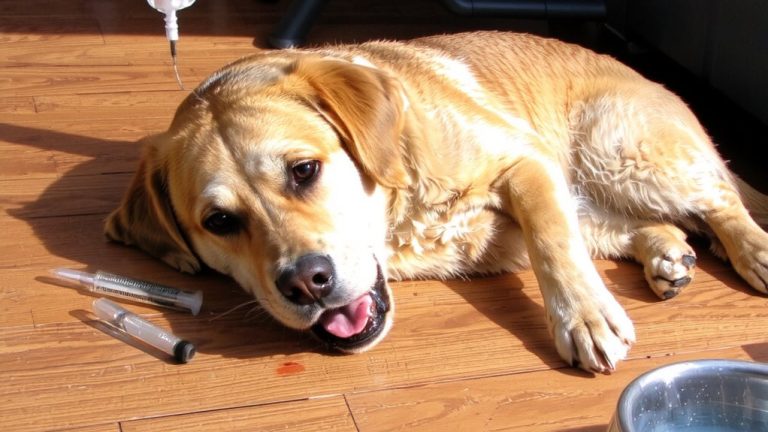
Identifying and Managing Canine Acral Lick Granuloma
You’re likely dealing with acral lick granuloma if your dog-especially a German shepherd, lab, or Doberman-obsessively licks a firm, hairless sore on their front leg. It often starts with itch or pain and spirals into infection, commonly from *Staphylococcus pseudintermedius*. Break the cycle with 6–8 weeks of oral antibiotics like cephalexin, use a DogLegg sleeve or E-collar, apply Synotic® drops TID, and consider fluoxetine for anxiety; most cases need long-term care to fully resolve.
We are supported by our audience. When you purchase through links on our site, we may earn an affiliate commission, at no extra cost for you. Learn more. Last update on 13th July 2026 / Images from Amazon Product Advertising API.
Notable Insights
- Acral lick granulomas appear as firm, hairless, ulcerated lesions on lower limbs, often from obsessive licking due to pain or behavioral issues.
- Diagnosis involves skin cytology showing cocci, ruling out parasites, and imaging to detect underlying joint or bone abnormalities.
- Most cases involve *Staphylococcus pseudintermedius* infection requiring 6–8 weeks of oral antibiotics like cephalexin.
- Treatment combines physical barriers, topical anti-inflammatories, and psychopharmacologic drugs for behavioral components.
- Prevention focuses on managing triggers, long-term medication, environmental enrichment, and continued barrier use to avoid recurrence.
What Causes Lick Granuloma in Dogs?
Think of it as a cycle your dog can’t break-lick granuloma often starts with something small, like an itch or a twinge of pain, but quickly spirals into a serious skin issue. Acral lick dermatitis is more than just over-grooming; it’s often tied to an underlying cause like atopic dermatitis, flea allergic dermatitis, or arthropathy, especially in older dogs. That initial trigger launches the itch-lick cycle, where constant licking causes skin trauma and opens the door to bacterial infection, commonly with *Staphylococcus pseudintermedius*. Over time, nerve damage releases endorphins, turning the behavior into a compulsive disorder. Up to 70% of cases have a behavioral component-you’re not just fighting infection, but anxiety or boredom too. Treating lick granuloma means addressing both physical and psychological factors, from antibiotics to environmental enrichment, to truly break the cycle.
Early Signs of Lick Granuloma to Watch For
While it might start subtly, early signs of lick granuloma are worth catching fast-look for redness, flaky skin, or slight crusting on the lower legs, especially along the top of the front wrists or paws, where dogs can’t resist licking. These acral lesions usually appear as firm, oval-to-linear spots with hair loss and erosion from constant licking. You might notice your dog showing intermittent licking, not yet obsessive, making early signs of lick granuloma easy to miss. The skin often thickens within weeks, and in dogs like the German shepherd, symptoms can show up earlier, around age 4. Breeds like Labs and Dobermans are also prone. Spotting changes early-like a small, red, raised area on otherwise healthy skin-gives you the best shot at stopping the cycle before it worsens. Keep watch, especially if your dog seems distracted or frequently licks one spot.
How Vets Diagnose Acral Lick Granuloma
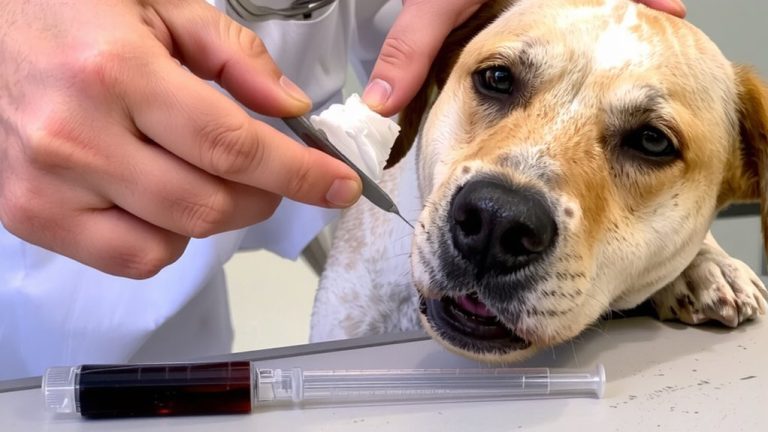
When your dog keeps licking a sore spot on their leg, especially on the top of the front wrist or paw, your vet will start by examining the area closely, looking for a firm, hairless, ulcerated patch typical of acral lick granuloma in breeds like Doberman Pinschers and German Shepherds. These clinical signs are key, but your vet will also perform skin cytology to check for a deep bacterial infection, often revealing cocci in 90% of cases. Skin scrapings rule out parasites like demodex, while a dermatophyte culture checks for ringworm. Radiographs help identify underlying orthopedic issues such as arthritis. If the lesion seems unusual or doesn’t respond, a biopsy with histopathology is needed to exclude tumors or fungal disease. This step-by-step approach guarantees an accurate diagnosis of acral lick granuloma and sets the stage for effective treatment.
Effective Treatments for Lick Granuloma
Now that your vet has confirmed acral lick granuloma, treatment focuses on breaking the cycle of licking, clearing infection, and addressing any underlying triggers. You’ll likely need long-term oral antibiotics, like cephalexin or clavamox, for 6–8 weeks due to deep secondary bacterial folliculitis in 90% of cases. Physical barriers-such as Elizabethan collars, basket muzzles, or DogLegg sleeves-are essential to stop access and let lesions heal. Topical therapy with 0.05% dexamethasone acetate and 2% dimethyl sulfoxide (Synotic®), applied three times daily, reduces inflammation effectively. If anxiety’s the underlying cause, psychopharmacologic treatment with fluoxetine (0.1–1 mg/kg SID) or clomipramine (2–4 mg/kg BID) helps in up to 70% of acral lick granulomas. CO2 laser therapy can sterilize lesions and seal nerves but only works after controlling the root issue. Explore multimodal treatment options for best results.
Preventing Lick Granuloma Recurrence
Because acral lick granuloma often stems from deep-rooted issues like allergies, joint pain, or anxiety, stopping it from coming back means tackling those triggers for life, not just the surface wound. Preventing lick granuloma recurrence hinges on lifelong management of the underlying causes. You’ll need long-term antibiotics-yes, 6–8 weeks or more-based on culture to fully clear bacterial infections and break the itch-lick cycle. Pair this with physical barriers like Elizabethan collars or DogLegg boots to block access. Psychopharmacologic medications such as fluoxetine or clomipramine should continue for months post-healing. Add lifestyle modifications: more walks, puzzle toys, and less isolation, especially for high-risk breeds.
| Strategy | Key Details |
|---|---|
| Long-term antibiotics | 6–8+ weeks, culture-guided |
| Physical barriers | Elizabethan collars, DogLegg boots |
| Psychopharmacologic medications | Fluoxetine 0.1–1 mg/kg daily, months after healing |
| Lifestyle modifications | Daily exercise, enrichment, reduced confinement |
On a final note
You can manage canine acral lick granuloma by addressing both physical and behavioral triggers, like allergies or boredom. Start with vet-prescribed treatments-antibiotics for 4–6 weeks, an Elizabethan collar to block licking, and possibly a hypoallergenic diet. Add daily enrichment: puzzle toys, 30-minute walks, and omega-3 supplements (150 mg EPA/DHA per 10 lbs). Most owners see improvement in 3–4 weeks with consistency, making early action key to healing and prevention.