Symptoms and Care for Dogs With Addison’s Disease Flare-Ups
If your dog has Addison’s, missing fludrocortisone doses or DOCP injections, stress, or illness like a UTI can trigger a flare-up. Watch for early signs: lethargy, vomiting, increased thirst. Emergency symptoms include collapse, pale gums, weak pulse, or heart rate below 60 bpm. Give dexamethasone if approved, keep them warm, and head to the vet immediately. At the clinic, expect IV fluids with sodium and dextrose, glucocorticoids, and 2–5 days of monitoring-knowing the full care plan helps you act fast when every minute counts.
We are supported by our audience. When you purchase through links on our site, we may earn an affiliate commission, at no extra cost for you. Learn more. Last update on 19th July 2026 / Images from Amazon Product Advertising API.
Notable Insights
- Inconsistent steroid therapy or missed DOCP injections can trigger Addison’s flare-ups in dogs.
- Early symptoms include lethargy, vomiting, and increased thirst, while collapse signals an Addisonian crisis.
- Emergency signs like pale gums, weakness, and bradycardia require immediate veterinary care.
- Administer prescribed glucocorticoids and keep the dog warm and calm during transport to the vet.
- Treatment involves IV fluids, electrolyte correction, and hospitalization until the dog stabilizes on oral medications.
Common Triggers of Addison’s Flare-Ups in Dogs
When you’re managing your dog’s Addison’s disease, even small missteps can lead to a flare-up, so it’s essential to stay consistent with treatments like fludrocortisone (Florinef) tablets or DOCP injections-missing just one dose can disrupt their electrolyte balance and trigger symptoms. Inconsistent steroid replacement is a top cause of flare-ups in dogs, and abruptly stopping long-term glucocorticoid therapy can even induce iatrogenic Addison’s disease. Physical stress like surgery, injury, or infection overwhelms your dog’s limited cortisol production, increasing crisis risk. Emotional stress-such as boarding, travel, or extreme weather-can also trigger flare-ups. Underlying illnesses, including UTIs or gastrointestinal issues, further strain their system. You’ve got to anticipate these triggers and maintain a strict schedule with fludrocortisone or DOCP injections. Planning ahead and supporting your dog during stressful times helps prevent complications and keeps their health steady.
Recognizing Early vs. Emergency Flare-Up Symptoms
Spotting the signs of an Addison’s flare-up early can make all the difference in keeping your dog stable and avoiding a trip to the emergency clinic. With Addison’s Disease in Dogs, early flare-up symptoms like lethargy, mild vomiting, increased thirst and urination, and unexplained weight loss often come and go. These subtle changes hint at developing electrolyte imbalances and shouldn’t be ignored. However, emergency flare-up symptoms-such as severe vomiting and diarrhea, sudden weakness, pale gums, and hypothermia-signal an Addisonian crisis. At this stage, circulatory shock may develop, requiring immediate veterinary care. Dogs may appear disoriented or stop responding to stimuli, which can rapidly progress to collapse. If your dog has known Addison’s and shows these signs for more than 24 hours-especially with dehydration or tremors-don’t wait. Timely action prevents life-threatening complications.
Emergency Signs Requiring Immediate Vet Care
If your dog suddenly collapses or can’t stand, especially if they’ve been diagnosed with Addison’s, you’re likely facing an Addisonian crisis-this is a medical emergency, and every hour counts. These severe symptoms demand immediate veterinary care. Without emergency intervention, dehydration, electrolyte imbalances, and circulatory failure can be fatal.
| Sign | What to Watch For | Why It Matters |
|---|---|---|
| Collapse | Sudden inability to stand or move | Hallmark of Addisonian crisis |
| Weak pulse | Faint, hard-to-detect heartbeat | Indicates poor circulation |
| Bradycardia | Slow heart rate (<60 bpm) | Common in severe electrolyte imbalances |
| Pale gums | Whitish or blue-tinged gums | Sign of shock or low oxygen |
| Lethargy | No response to stimuli | Adrenal insufficiency disrupting organs |
Even before an ACTH stimulation test confirms low cortisol, treatment must begin. Immediate veterinary care saves lives.
Stabilize Your Dog During an Addison’s Flare-Up
Act fast-your dog’s life depends on it. During an Addison’s disease flare-up, give prescribed glucocorticoids like dexamethasone right away if your vet approved it. This counters the adrenal insufficiency and buys time. If your dog can’t stand, carry them on a blanket stretcher to avoid injury. Keep them warm and calm-shock and stress worsen the crisis. Check gums often: pale or blue means poor circulation and calls for immediate medical attention. En route to veterinary care, bring all meds-especially fludrocortisone or DOCP injections-to maintain hormone replacement continuity. These steps stabilize your dog’s condition and support recovery. Time matters-acting quickly improves outcomes dramatically. You’re their best defense during a flare-up. Prepare now so you’re ready when it counts.
What to Expect During Emergency Treatment
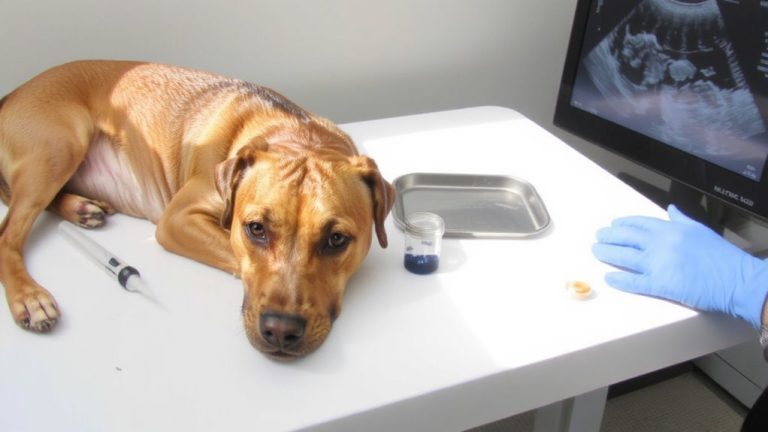
Once your dog reaches the clinic during an Addisonian crisis, the veterinary team moves quickly to stabilize their condition with targeted treatments you can’t provide at home. They’ll start IV fluid therapy right away, using intravenous fluids packed with sodium and dextrose to tackle dehydration, low blood pressure, and hypoglycemia. Glucocorticoids like dexamethasone are given immediately to replace missing cortisol and support heart rate and circulation. Your dog’s sodium and potassium levels will be closely watched, since electrolyte imbalances-especially high potassium and low sodium-are common and dangerous. You’ll see anti-nausea medications such as maropitant used to control vomiting, often alongside GI protectants. Throughout, staff monitor blood pressure, heart rate, urine output, and mental status. With IV fluid therapy and careful correction, most dogs begin improving within hours and stay hospitalized 2–5 days until stable on oral meds.
Build a Flare-Up Crisis Plan With Your Vet
While Addison’s disease can be managed well on a day-to-day basis, having a solid crisis plan in place is what could mean the difference between life and death when flare-ups strike. Work with your vet to create a written Addisonian crisis plan that includes emergency contact numbers, exact medication dosages, and clear signs like collapse, persistent vomiting, or severe lethargy. Your plan must outline when to use injectable dexamethasone or prednisolone, especially if oral meds aren’t possible. List symptoms requiring immediate care-weakness, pale gums, abnormal heart rate-so you act fast. Pre-arrange access to rapid intravenous fluid therapy at a nearby clinic, as delays can be fatal. Review and update your crisis plan every six months, especially if dosages or medications change, ensuring it stays accurate, practical, and lifesaving when every minute counts.
Preventing Future Flare-Ups With Daily Management
Because Addison’s disease means your dog can’t produce essential stress-response hormones, sticking to a strict daily routine is key to preventing dangerous flare-ups. Consistent medication administration is part of lifelong treatment, whether using oral fludrocortisone or monthly DOCP injections for mineralocorticoid replacement. These help stabilize cortisol levels and prevent electrolyte imbalances that could lead to an Addisonian crisis. Never skip a dose-missed glucocorticoid dosage can quickly become life-threatening. During illness or stress, your vet may adjust the glucocorticoid dosage temporarily. Keep a 2-week emergency supply on hand to maintain uninterrupted treatment. Schedule regular veterinary checkups every 3–6 months to monitor blood work and fine-tune therapy. With attentive care, proper medication, and consistent monitoring, you’re not just managing symptoms-you’re ensuring long-term stability and effective Addisonian crisis prevention.
On a final note
You’ve got this. Watch for lethargy, vomiting, or weak pulses-act fast if they appear. Keep prednisone and saline on hand, per your vet’s plan. During a crisis, stay calm, minimize stress, and head to the clinic immediately. Daily care with fludrocortisone (0.1 mg/kg daily), balanced electrolytes, and consistent meals prevents most flare-ups. Monitor sodium and potassium every 3–6 months, adjust meds as needed, and stick to routine-your dog counts on you.