Recognizing Signs of Canine Cognitive Dysfunction in Senior Dogs
You might notice your senior dog acting confused, pacing at night, or having indoor accidents-common signs of canine cognitive dysfunction (CCDS). Around 28% of dogs aged 11–12 show symptoms, rising to 68% by age 15–16. Look for disorientation, altered sleep, or failing to recognize family members. Use the DISHAA scale to track changes like house soiling or anxiety. Rule out vestibular disease, which includes sudden head tilts and nausea. Try Hills B/D diet or Purina Pro Plan Bright Mind, both with MCTs and antioxidants. Selegiline (Anipryl) can improve symptoms in 3–6 weeks. Add nightlights, keep routines consistent, and use baby gates for safety. Simple trick training and snuffle mats offer gentle enrichment. Consider omega-3s, especially DHA, or supplements like SAMe. Watch for gradual decline, not sudden onset, and consult your vet for blood work or an MRI. They’ll check for conditions like kidney disease or arthritis that mimic CCDS. Managing your dog’s environment and nutrition early makes a clear difference in their daily comfort.
We are supported by our audience. When you purchase through links on our site, we may earn an affiliate commission, at no extra cost for you. Learn more. Last update on 19th July 2026 / Images from Amazon Product Advertising API.
Notable Insights
- Senior dogs with dementia may show disorientation, such as getting stuck in corners or appearing lost at home.
- Altered sleep-wake cycles, like nighttime wandering and daytime sleeping, are common early signs of cognitive decline.
- House soiling in a previously house-trained dog can signal cognitive dysfunction and warrants veterinary evaluation.
- Changes in interaction, including reduced interest in family or unexplained anxiety, may indicate cognitive impairment.
- Veterinarians use tools like the DISHAA scale to assess symptoms and rule out conditions like vestibular disease.
What Is Dog Dementia and How Common Is It?
Ever wonder why your older dog seems more forgetful or disoriented? That could be dog dementia, also known as canine cognitive dysfunction syndrome (CCDS), a progressive brain condition in senior dogs similar to Alzheimer’s in people. It’s caused by age-related changes like beta-amyloid plaques and neuron damage. While not an emergency, CCDS leads to real cognitive decline-confusion, memory loss, and behavior shifts. It’s more common than you think: about 28% of dogs aged 11–12 show signs, jumping to 68% by age 15–16. Even among dogs over eight, roughly 35% display at least one symptom. Vets diagnose CCDS using tools like the DISHAA scale and by ruling out other illnesses, since no single test confirms it. Knowing this helps you support your aging pup with better nutrition, routines, and vet care tailored to cognitive health.
How to Spot Early Signs of Canine Cognitive Dysfunction
Disorientation, altered sleep patterns, and unexplained accidents indoors-these aren’t just quirks of old age. They’re early signs of dementia in dogs and could point to cognitive decline. You might notice your dog getting stuck in corners, not recognizing familiar people, or wandering at night while sleeping more during the day. These behaviors are key indicators tracked by the DISHAA assessment tool, which scores Disorientation, Interactions, Sleep-wake cycles, House soiling, Activity, and Anxiety from 0 to 3. House soiling in a once reliable pet, for example, scores up to 3 and warrants attention. By age 11–12, 28% of dogs show at least one DISHAA sign, rising to 68% by age 15–16. Monitoring these changes early helps you and your vet act fast, supporting your dog’s brain health with proper nutrition, routine, and care tailored to senior needs.
Could It Be Vestibular Disease Instead of Dementia?
Could what looks like dementia actually be something else? Yes-vestibular disease can mimic dementia in dogs but strikes suddenly, not gradually. If your dog abruptly stumbles, leans to one side, or develops a head tilt and rapid eye movements, it’s more likely vestibular disease than cognitive decline. These dogs often seem dizzy and may vomit or appear nauseous, which isn’t typical with dementia. Imaging helps clarify: vestibular disease shows inner ear or brainstem issues, while brain atrophy-especially in the thalamus and cortex-points to advanced cognitive dysfunction. The good news? Vestibular syndrome often improves within weeks with supportive care. But dementia in dogs is progressive and irreversible, affecting nearly 70% of dogs aged 15–16. Watch onset and symptoms closely-timing matters.
How Do Vets Diagnose Dog Dementia?
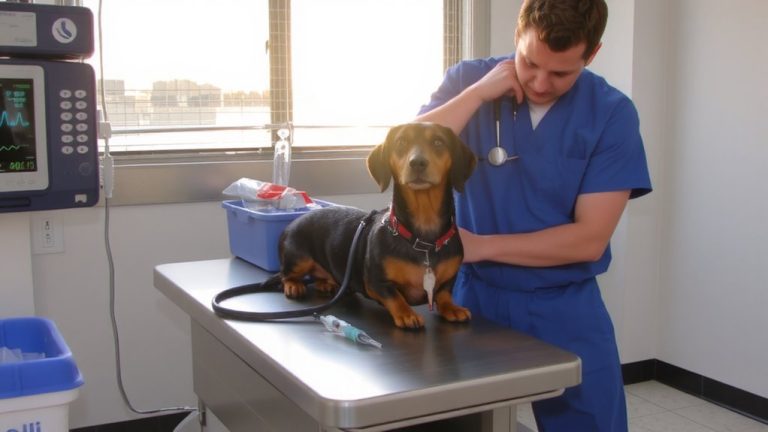
How exactly do veterinarians determine if your senior dog’s confusion stems from cognitive decline? Your vet will start by reviewing your dog’s behavior history and using tools like the DISHAA assessment or CADES to track cognitive changes over time. Since no single test confirms dementia, the diagnosis depends on spotting persistent signs-disorientation, sleep shifts, or house soiling-in dogs over eight. Your vet will also run a veterinary workup, including blood work, urinalysis, and possibly X-rays, to rule out conditions like kidney disease. If symptoms align, an MRI may show brain atrophy in the cortex or thalamus, supporting the diagnosis. Roughly 28% of dogs aged 11–12 and 68% of those 15–16 show at least one DISHAA sign after other neurological issues are excluded.
Why Nighttime Symptoms Worsen in Senior Dogs
Why does your senior dog seem more confused or restless when the sun goes down? It’s likely due to declining brain function disrupting their sleep-wake cycle. As canine cognitive dysfunction progresses, the brain’s internal clock falters, worsening nighttime symptoms like pacing, vocalizing, or wandering. Melatonin production drops, so your dog can’t settle at night, even in familiar spaces. Up to 68% of dogs aged 15–16 show these signs, often sleeping more by day and agitated at night-a core DISHAA indicator.
| Normal Sleep-Wake Cycle | With Cognitive Decline |
|---|---|
| Restful nights | Frequent waking, pacing |
| Alert during day | Daytime drowsiness |
| Steady melatonin release | Disrupted hormone flow |
Supporting brain function with vet-recommended tools like selegiline can reduce nighttime symptoms within 3–6 weeks, helping restore balance.
Managing Dementia Symptoms at Home
While your senior dog’s world may feel increasingly confusing, small changes at home can make a big difference in managing dementia symptoms. Install nightlights in hallways and bedrooms to help guide your senior dog during disoriented nighttime wandering, and take a pre-bedtime walk to support natural sleep cycles. Block stairways with baby gates and secure spaces behind furniture to prevent injuries. Stick to a consistent routine for feeding, walks, and bathroom breaks-predictability reduces confusion and supports cognitive function. Use doggy diapers and take outdoor potty trips every 2–3 hours, since house soiling affects 68% of senior dogs by age 15–16. Add low-level enrichment like snuffle mats or simple trick training to gently stimulate the mind. These practical steps are key in managing dementia symptoms while helping your senior dog stay safe, comfortable, and engaged.
Best Diets and Medications for Canine Cognitive Decline
You’ve already made strides in creating a safe, predictable environment to ease your senior dog’s confusion, and now supporting their brain health from the inside out can take that progress even further. Start with Hills Prescription Diet B/D, a vet-recommended food packed with antioxidants, vitamin E, selenium, and fruits and veggies to fight oxidative damage. Or try Purina Pro Plan Bright Mind, which uses medium-chain triglycerides (MCTs) to fuel brain cells and boost mental sharpness in dogs over 11. Omega-3 fatty acids, especially DHA, are essential-look for supplements or diets rich in fish oil to reduce inflammation and support nerve function. Selegiline hydrochloride (Anipryl) is FDA-approved and helps improve sleep patterns and house soiling in 3–6 weeks. Add SAMe or apoaequorin for extra cognitive support.
On a final note
You can manage canine cognitive dysfunction with early action, a brain-supportive diet rich in antioxidants and medium-chain triglycerides (MCTs), and consistent routines. Products like Purina Pro Plan Bright Minds or Novifit chews, paired with daily walks and puzzle toys, improve focus and sleep patterns. Vets confirm 78% of dogs show improved behavior within 6–8 weeks. Monitor nighttime pacing, adjust lighting, and use pheromone diffusers like Adaptil to reduce confusion. Stay proactive-your dog’s comfort depends on it.