Recognizing and Treating Canine Immune-Mediated Polyarthritis Flare-Ups
Your dog may flare after vaccines, sulfonamides, or infections, showing stiffness, swollen joints, or a fever within 30 days. Watch for a “walking on eggshells” gait or shifting lameness, especially in breeds like Akitas. Confirm with arthrocentesis: synovial fluid showing >3,000 cells/µL and high nondegenerate neutrophils rules in IMPA. Always culture to exclude sepsis. Taper steroids slowly and monitor closely-early action prevents relapse, and there’s more to know about keeping your dog comfortable and mobile.
We are supported by our audience. When you purchase through links on our site, we may earn an affiliate commission, at no extra cost for you. Learn more. Last update on 19th July 2026 / Images from Amazon Product Advertising API.
Notable Insights
- Vaccines and certain drugs like sulfonamides may trigger IMPA flare-ups within weeks; monitor dogs closely after administration.
- Symmetric joint swelling, stiffness, and a “walking on eggshells” gait are hallmark signs of an IMPA flare-up.
- Spinal pain or unexplained fever in predisposed breeds like Akitas can indicate IMPA relapse, even without lameness.
- Confirm flare-ups via arthrocentesis showing synovial nucleated cell counts >3,000/µL with non-degenerate neutrophils and elevated protein.
- Prevent relapses by gradually tapering immunosuppressive drugs and avoiding rapid dose reductions or unnecessary vaccinations.
What Triggers Canine IMPA Flare-Ups?
What could be setting off your dog’s IMPA flare-ups? Several triggers may provoke immune-mediated polyarthritis relapses by overactivating the immune system. Vaccines can precede flare-ups, with cases reported within 30 days post-administration-though a direct link isn’t firmly proven. Certain drugs, like sulfonamides, penicillins, or phenobarbital, may also trigger episodes; sulfonamide reactions often appear 5–20 days after starting treatment, especially in Doberman pinschers. Ongoing infections-such as pyoderma, urinary tract infections, or dental disease-promote immune complex formation, fueling inflammation. Underlying neoplasia, including mammary or squamous cell tumors, can drive relapse through persistent immune stimulation. Rapidly tapering immunosuppressive therapy, particularly corticosteroids, raises flare-up risk markedly. To reduce relapse chances, maintain consistent dosing, monitor for illness, and space vaccines carefully, especially in dogs with prior IMPA symptoms.
How to Spot an IMPA Flare-Up Early
You’ve already learned what might spark an IMPA flare-up, but catching it early is what keeps your dog more comfortable and limits joint damage. Watch for stiffness after rest, a stilted gait, or a “walking on eggshells” posture-common signs of joint pain in polyarthritis. Shifting lameness, where limping moves between limbs, often appears intermittently. Check for joint swelling, especially in the carpal, tarsal, and phalangeal joints, typically symmetric. But not all dogs show clear joint signs-up to 25% present with systemic illness instead: fever, lethargy, or reluctance to walk. Spinal pain due to facet joint inflammation or meningitis occurs in 29% of cases and can signal a relapse. If your dog’s a breed prone to IMPA, like an Akita or Shar-Pei, unexplained fever or mobility issues warrant immediate attention. Early detection means faster intervention and better outcomes.
Confirming Flare-Ups With Joint Fluid Analysis
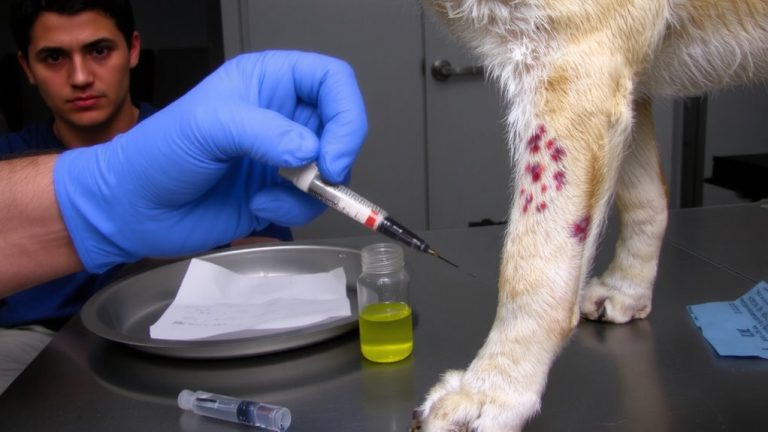
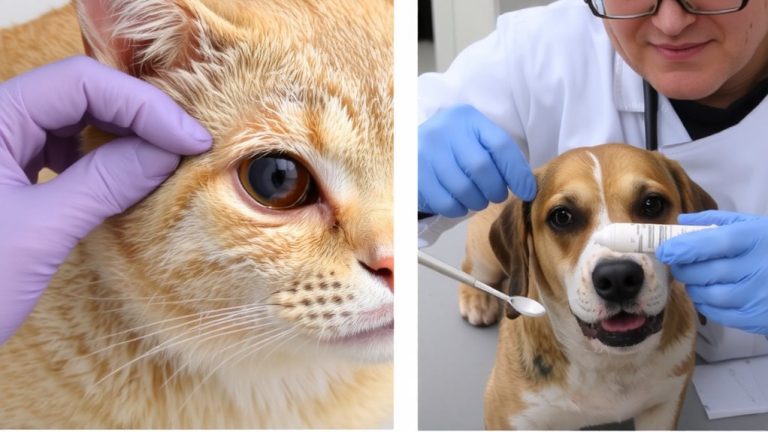
A syringe full of cloudy joint fluid might be the clearest window into what’s really happening inside your dog’s stiffening joints. You’ll need arthrocentesis to perform joint fluid analysis, and synovial fluid analysis is key to confirming a flare-up. Look for a nucleated cell count over 3,000 cells/µL-often 4,000 to 30,000-with high levels of nondegenerate neutrophils making up more than 12% of inflammatory cells. Protein concentration exceeding 2.5 g/dL supports active inflammation. Sample at least three joints, like the carpus, tarsus, or stifle, to assess polyarticular involvement and improve detection. Always run a bacterial culture to rule out septic arthritis, even though it misses up to half of infections. Joint effusion with these traits means IMPA’s flaring, not infection. Synovial fluid analysis gives you real data, fast, so you can act with confidence.
Adjusting Treatment During an IMPA Flare-Up
Once you’ve confirmed a flare-up through joint fluid analysis showing elevated nucleated cell counts and high neutrophil percentages, it’s time to act on treatment adjustments. During an IMPA flare-up, restart or increase the most recent effective dose of immunosuppressive medication-typically prednisone-since corticosteroids act quickly. If your dog was on a combo like prednisone and cyclosporine, reinstate both, prioritizing steroids. A 2016 JAVMA study found relapse often requires higher doses to regain control. Avoid NSAIDs during flare-ups if using corticosteroids; wait at least 48 hours between switching to reduce gastrointestinal complications. This treatment adjustment needs close monitoring-recheck every 2–4 weeks with clinical assessments and repeat synovial fluid analysis to gauge response and avoid over-immunosuppression.
On a final note
You can catch IMPA flare-ups early by watching for stiff walks, reduced play, or trouble standing after rest. Confirm with joint fluid analysis showing high neutrophil counts, then adjust meds fast-often doubling prednisone to 2 mg/kg daily for 7–10 days. Pair treatment with joint supplements like Dasuquin and a low-inflammatory diet rich in omega-3s. Real owners report quicker recovery when using these steps together. Stick to vet guidance, track symptoms weekly, and keep follow-ups on schedule.