Step-By-Step Guide to Cleaning a Dog’s Anal Glands With Gloves and Lube
Wear disposable gloves and lubricate your index finger with petroleum jelly before gently lifting your dog’s tail. Locate the glands at 4 and 8 o’clock around the anus, then compress upward with your thumb and forefinger to express brown to tan fluid. Use paper towels to clean the area, and follow up with warm, soapy water or pet-safe wipes. Stop if you see blood, pus, or your dog shows pain-these mean it’s time to see a vet. A consistent routine every 4–6 weeks can prevent scooting and discomfort, especially in small breeds like Chihuahuas or Bulldogs. More signs and deeper care steps are just ahead.
We are supported by our audience. When you purchase through links on our site, we may earn an affiliate commission, at no extra cost for you. Learn more. Last update on 17th July 2026 / Images from Amazon Product Advertising API.
Notable Insights
- Wear clean disposable gloves and apply petroleum jelly to your index finger before starting the expression process.
- Position your dog securely on a stable surface or floor, using a helper if needed for safety.
- Locate the anal glands at the 4 and 8 o’clock positions around the anus using gentle palpation.
- Gently squeeze the glands upward with thumb and forefinger to express brownish fluid onto paper towels.
- Stop immediately if you see blood, pus, or your dog shows pain, and seek veterinary care.
What Dog Anal Glands Are and Why They Need Emptying
Think of your dog’s anal glands as tiny, built-in scent factories-two pea-sized sacs nestled at roughly the 4 and 8 o’clock positions inside the rectum, just under the skin. These anal sacs produce a foul-smelling, brown fluid that acts as a territorial marker, packed with unique chemical signatures for dog-to-dog communication. Normally, your dog’s anal glands are expressed regularly when firm stool passes, applying pressure to the glands located just inside. But when they don’t empty, secretions thicken, leading to impacted anal glands or even infected anal glands if left unchecked. Small breeds, overweight dogs, or those with soft stools often struggle to dogs naturally express fully and could benefit from manual expression. Left untreated, full and could benefit cases turn into painful anal gland problems, including abscesses. Regular checks help prevent discomfort and keep your pup healthy, happy, and scoot-free.
Common Signs Your Dog Needs Anal Gland Expression
Scooting isn’t just awkward-it’s your dog’s loudest signal that something’s off. If your dog drags their rear across the floor daily, their anal glands are likely full and need to be expressed. Another clear sign is a persistent fishy odor coming from your dog’s back end. You might also notice your dog frequently licking or biting near the anus, which suggests discomfort. Redness, swelling, or inflammation around the area? That’s a red flag the glands are impacted. Straining during bowel movements means they’re probably blocked. These signs tell you it’s time to act. Don’t wait-full anal glands can lead to infection. When you clean them, always use Clean, disposable gloves to stay safe and hygienic. You’re not just managing symptoms-you’re helping your dog feel better, faster. If these signs persist, your dog may need regular care to keep things running smoothly.
How to Express Anal Glands at Home Safely
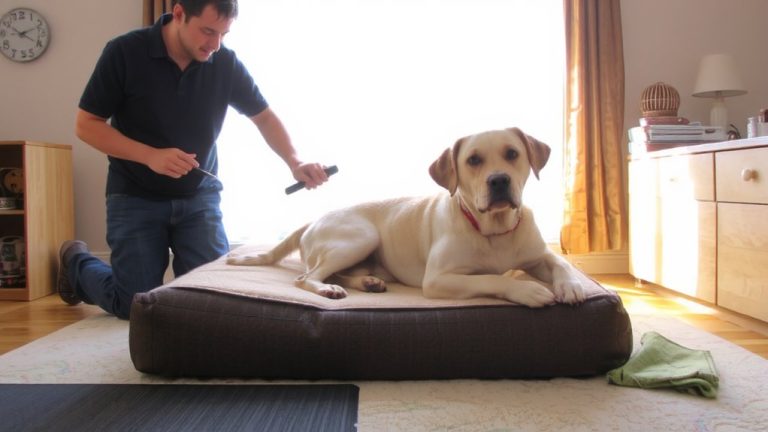
When those warning signs like scooting, licking, or a fishy smell tell you it’s time, expressing your dog’s anal glands at home can be a straightforward process-if you do it safely and correctly. Start by wearing disposable latex gloves and applying a small amount of petroleum jelly to your index finger. Locate the glands at the 4 and 8 o’clock positions around your dog’s anus. For dog anal gland expression, gently compress upward with your thumb and forefinger to express a dog’s anal fluid-expect a brown to tan discharge. Use paper towels to catch the mess, then Clean Your Dogs’ area with warm soapy water or pet-safe wipes to Clean Dog Anal skin and prevent irritation. Expressing anal glands should never cause pain; stop if you see blood or chunks. Don’t overwork it-repeat only if needed, otherwise skip and call a pro. Position small dogs on a towel-covered table, big dogs on the floor with a helper. Practice calm handling to make Express Dog Anal Glands less stressful for both of you.
When to Call the Vet: Anal Gland Warning Signs
If you spot redness, swelling, or pus around your dog’s anus, don’t wait-these are clear signs of infection or an abscess forming, and your vet needs to step in right away. Watch for pain, vocalizing, or straining during expression, which suggest impaction or injury. If you see bloody fluid, thick discharge, or chunky discharge resembling toothpaste, infection is likely. Persistent scooting or licking after expression may mean a rupture or chronic issue. Frequent expression-more than every 4–6 weeks-points to an underlying problem.
| Symptom | Action Needed |
|---|---|
| Redness, swelling | Call vet immediately |
| Pus | Professional treatment |
| Pain or vocalizing | Stop and seek help |
| Bloody or thick discharge | Vet evaluation |
| Scooting, licking | Rule out chronic disease |
On a final note
You’ve got this-expressing anal glands at home is doable with the right prep: wear nitrile gloves, use a water-based lube like K-Y Jelly, and work gently. Most dogs need it every 4–6 weeks, though overweight pets may need it more often. If you see redness, swelling, or your dog scoots after expressing, call your vet. Regular checks, a high-fiber diet, and routine care keep things running smoothly. Stay consistent, stay clean, and your dog will thank you.