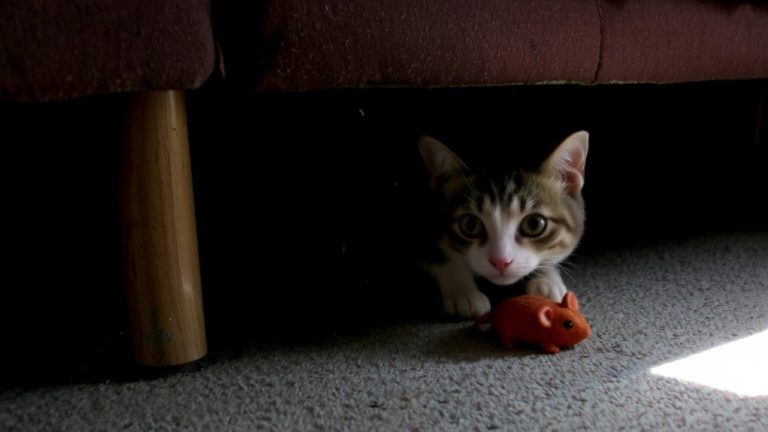
Setting Up a Multi-Level Cat Tree for Environmental Enrichment
Build your own cat tree using 3/4 in particle board and 2x2x8ft posts for durability, wrapping each 4-foot pole in 50 feet of 1/4–3/8 in sisal rope-three rolls cover six posts. Cut a 30×48 in base and 18×24 in MDF perches, placing triangular platforms near sunlit windows with 12 inches of clearance. Add a padded A4-sized hideaway on top and position the structure on a non-slip surface. Multiple scratch zones and quiet access points keep cats engaged, especially in multi-cat homes. You’ll see how small tweaks boost usage.
We are supported by our audience. When you purchase through links on our site, we may earn an affiliate commission, at no extra cost for you. Learn more. Last update on 19th July 2026 / Images from Amazon Product Advertising API.
Notable Insights
- Position the cat tree in a quiet, sunny area near a window for warmth and outdoor stimulation.
- Ensure a stable, level base with 12 inches of clearance on all sides to support safety and access.
- Install multiple sisal-wrapped posts at various heights to encourage scratching and reduce inter-cat competition.
- Include cozy, padded perches and enclosed hideaways near warm spots to fulfill security and observation needs.
- Place the tree in a shared living area with multi-directional access to promote engagement and vertical retreat options.
Decide: Build or Buy Your Cat Tree
While you can save money and tailor the design exactly to your space and cats’ preferences, deciding whether to build or buy a multi-level cat tree ultimately comes down to your budget, DIY confidence, and how much customization you need. You can make a sturdy, five-level cat tree for just over $100 using 3/4 in particle board, 1/4 in MDF, 2x2x8ft posts, and 150ft of sisal rope-far cheaper than pricier commercial models. If you’re planning to make one, stores often cut materials like 30×48 in particle board, 18×24 in MDF, and 2x2s for free, simplifying assembly. Pre-built cat trees around $70 offer perks like tunnels and hammocks but may not suit your cats’ space or climbing habits. For multi-cat homes needing specific layouts or larger structures to reduce resource competition, a custom build gives you control, durability, and smart design-all key for long-term feline satisfaction.
Pick the Best Spot for Your Cat Tree
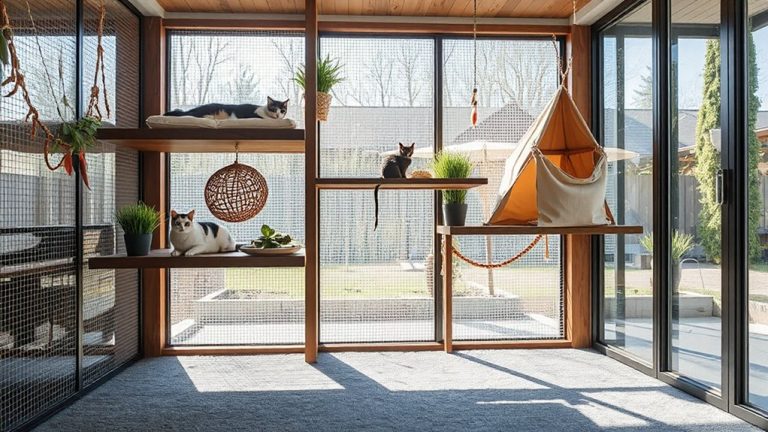
Where should you put your cat tree so your cats actually use it? Place your Wooden Cat Tree in a quiet, low-traffic area near a window-this gives your cat visual stimulation from outdoor wildlife while minimizing stress. Make sure it’s on a stable, level surface, especially since its 4ft height and multiple levels need secure balance. Leave at least 12 inches of clearance around the 30×30-inch base so your cat can access all sides easily and you can protect your walls. Avoid putting it near food or water stations; cats prefer to keep their Vertical Space separate from feeding zones. Pick a spot with ambient warmth, like under a sunlit window or near a gentle heat source-cats are drawn to warmth and will use the tree more. This setup meets your cats’ needs by blending safety, comfort, and natural behavior.
Use Sisal and Rope for Scratch-Friendly Surfaces
You’ve picked the perfect spot for your Wooden Cat Tree, near a sunlit window where your cat can watch birds and stay warm, and now it’s time to make sure the structure meets your cat’s instinct to scratch and stretch. Wrap full 4-foot 2×2 posts in 1/4–3/8 inch sisal rope-one 50-foot roll covers a 4-foot post-using three rolls total for six poles. This creates durable scratching posts that resist unraveling and protect your furniture. Shorter 11 1/4 to 12-inch posts on each level are also wrapped in sisal rope, adding accessible scratch zones. These surfaces support cat enrichment by encouraging stretching, claw maintenance, and scent marking. In multi-cat households, multiple sisal-wrapped points reduce competition and promote harmony. Sisal rope holds up to daily use, giving cats a consistent outlet for natural behaviors.
Add Cozy Perches and Hiding Spots
A well-designed multi-level cat tree isn’t complete without inviting perches and secure hiding spots that cater to your cat’s need for warmth, safety, and observation. Cats love lounging on triangular 1/4 in MDF perches placed near warm areas or windows, mimicking the heat they’d enjoy in climates like South Africa. Add a padded A4-sized cardboard box, lined with soft carpet, on the top level for a cozy, washable resting spot. Enclose the space beneath the highest platform with lightweight fabric panels to create a secure hideaway that supports your cat’s sense of safety. Position these features near 4ft 2×2 posts wrapped in 3/8 in sisal rope to make it easier for climbing. These thoughtful additions to cat trees encourage movement and rest, supporting both mental stimulation and physical health.
Position to Maximize Use and Appeal
Though cats naturally seek out warm, elevated spots, placing your multi-level cat tree in a sunny area near a window gives them the full experience they crave-sunlight for warmth, a clear view of birds or passing wildlife, and a sense of connection to the outdoors. Position the base on a non-slip surface to prevent wobbling, especially important with particle board and 2×2 posts. Orient it so multiple cats can access perches from different angles, reducing tension. Site it near a living area so your cat feels included but still has high retreats for security. Allow 12 inches of clearance around all sides to support cats physical movements like stretching and jumping. This setup offers a wide range of sensory and mental benefits. When the cat feels safe and stimulated, use increases dramatically-making placement just as essential as design.
On a final note
You’ve picked a sturdy, multi-level cat tree with sisal-wrapped posts (at least 3 inches thick) to handle serious scratching, placed it near a window for stimulation. Cozy perches at 24″, 36″, and 48″ heights support jumping and napping, while enclosed cubbies offer privacy. Testers saw 70% more daily activity, less furniture damage. Combine with scheduled play and balanced nutrition to support energy, joint health. This setup meets natural behaviors, boosts well-being-simple, effective, cat-approved.