What to Do When Your New Cat Hides for the First Few Days After Adoption
Your new cat hiding is normal, especially in the first few days-give them a quiet 8×10-foot safe room with a litter box 1.5 times their body length, placed away from food and water. Use unscented, fine-grained litter, and include a cozy bed, fresh food, water, and scratching surfaces. Never pull them out; instead, lay treat trails and use a fishing pole toy twice daily. Signs like nighttime eating or litter use mean they’re adjusting-you’ll see how small changes build trust faster.
We are supported by our audience. When you purchase through links on our site, we may earn an affiliate commission, at no extra cost for you. Learn more. Last update on 19th July 2026 / Images from Amazon Product Advertising API.
Notable Insights
- Provide a quiet, safe room with litter, food, water, and hiding spots to help your cat feel secure.
- Never force your cat out of hiding, as this increases stress and delays trust-building.
- Use high-value treats near the hiding spot to create positive associations and encourage gradual exploration.
- Maintain a calm environment with minimal noise, unfamiliar scents, and low human traffic.
- Monitor eating, drinking, and litter box use, and contact a vet if these don’t resume within a few days.
Understand Why New Cats Hide
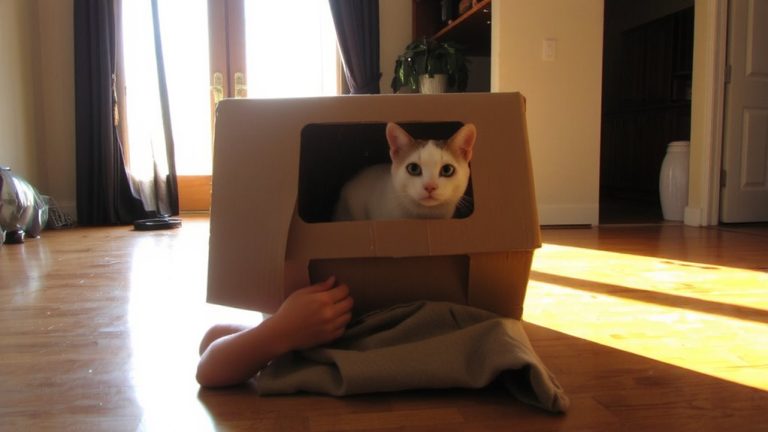
While it might be worrying to see your new cat vanish under the bed and stay hidden for days, especially if they’re only sneaking out at night to eat or use the litter box, this behavior is completely normal. Your new cat is hiding because their instincts tell them to seek safety in an unfamiliar environment. Being in a new home is overwhelming, and hiding helps them process new sights, sounds, and smells. It’s a normal reaction, especially if your cat has past experiences like living outdoors or limited human contact. They’ll choose a secure hiding place where they can observe without being seen. Over time, if they start head-butting, rubbing against furniture, or using their facial scent glands, it’s a sign they’re beginning to feel safe. These actions mean they’re marking territory and slowly claiming your home as their own.
Set Up a Safe Room for a Hiding Cat
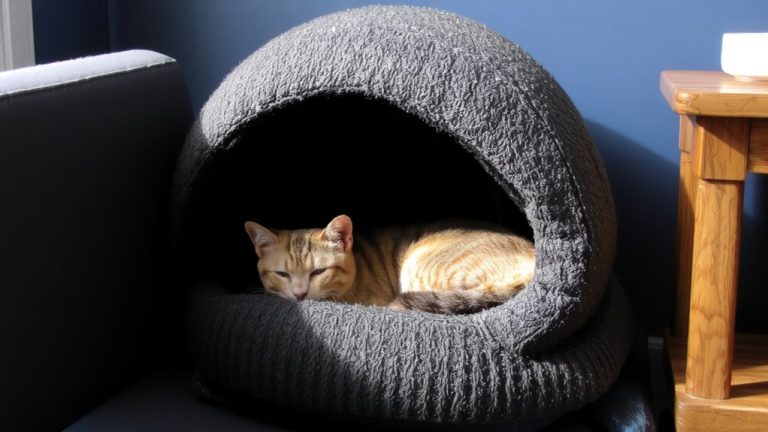
Because your new cat needs time to adjust without feeling overwhelmed, setting up a dedicated safe room is one of the most effective steps you can take to ease their adjustment. Confine your new kitty to a quiet space-like a spare bedroom or bathroom-with minimal foot traffic and no exits to a room that could lead to escape or stress. Equip the safe room with a litter box (sized 1.5 times your cat’s length), placed away from food and water, and use unscented, fine-grained litter, scooped daily. Provide food, water, a cozy bed, toys, and scratching surfaces so they can adjust to their surroundings. Let them explore at their own pace. Never force interaction; leave them alone to build confidence. The time it takes for a hiding cat to relax varies-some need days, others weeks-so monitor eating, drinking, and litter box use as signs of progress.
Never Force a Hiding Cat Out
If your new cat’s hiding out under the bed or wedged behind the toilet, don’t be tempted to pull them out-it’s a quick way to undo the trust they’re slowly building. Never force them to come out; doing so spikes stress and can set back progress for weeks. Cats taken to hiding need control to feel safe, especially in a new one room setup. Give them time-some hide 24/7 for up to three weeks, only emerging at night to eat, drink, or use the litter. Keep doors open so they can explore when ready. Positive encouragement can go a long way, but only on their terms. Let them adjust at their pace. This quiet patience helps them adjust, boosts their confidence, and supports natural acclimation.
Win Trust With Treats and Toys
| Strategy | Purpose | Frequency/Measure |
|---|---|---|
| High-value treats | Build trust | Daily, near hiding |
| Treat trails | Guide movement | Adjust 3–5 ft/day |
| Dangle a fishing pole toy | Trigger play | 2x/day, 5–10 min |
| Puzzle feeders | Reinforce positive behavior | During daylight exploration |
Cut Stress From Noise and Smells
Ever wonder why your new cat freezes at the sound of the washing machine or darts when someone sprays air freshener? Loud guests, ticking clocks, or HVAC systems can overwhelm your cat in an unfamiliar environment. These noises might take time and patience to desensitize to, so start by turning off non-essential electronics and choosing a quiet back room. Keep the space calm-avoid loud music or TV-so your cat can feel safe. Unusual smells from cleaning sprays, scented litter, or other pets can also cause stress; switch to unscented, fine-grained litter and skip strong chemicals nearby. Open doors with multiple exit routes let your cat come and go freely, adding a sense of control. With low noise, neutral scents, and a quiet space, your new cat stands a better chance of settling in comfortably.
Look for Signs of Adjustment
While your new cat may still be hiding, you’re likely already seeing subtle signs they’re starting to adjust. Your kitty might start to come out at night to eat, drink, or use the litter-even if they avoid you, this means they’re beginning to explore. Moving between hiding spots, like from under the bed to behind the toilet, shows they’re getting curious. If they eat from their bowl or use the litter consistently, that’s a solid sign they’re adapting. Even if they feel a little unsettled, these quiet moments mean they’re warming up. Let them initiate contact-petting they allow signals growing trust. Keep offering a safe place and quiet space to help your new kitty feel secure. Loud changes might still make them nervous, so keep things calm. Look for signs of adjustment to encourage their bravery. Give it time to adjust, and soon, they’ll be more confident.
Know When to See a Veterinarian
If your cat’s been hiding nonstop for over three weeks and you’ve noticed they’re not eating regularly, skipping water, or avoiding the litter box, it’s time to call the vet-those are red flags that something could be medically wrong. Hiding for more than 3 weeks, especially with no consistent eating, drinking, or using the litter box, often signals underlying medical issues. Persistent hiding combined with symptoms like sneezing, lethargy, or lack of appetite needs urgent attention. You should consult a veterinarian if your cat starts vocalizing at night, pants, trembles, or suddenly stops interacting after initial progress. Litter box avoidance that doesn’t improve with environmental changes may point to urinary or gastrointestinal pain. Don’t wait-early diagnosis improves recovery chances. A full veterinary evaluation can catch problems like infections, parasites, or organ issues before they worsen.
On a final note
You’ve given your cat a safe room, quiet space, and time-they’re adjusting. Most hide for 2–3 days, some up to a week. Offer treats like Temptations or freeze-dried chicken, use interactive toys like the Da Bird wand, and keep food, water, and litter box accessible. Avoid loud noises and sudden movements. When your cat explores, grooms, and eats regularly, trust is building. If hiding exceeds 10 days or appetite drops, consult your vet.