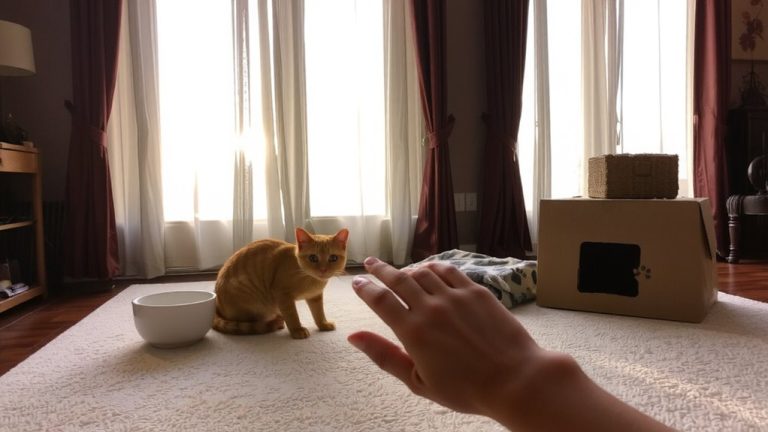
What to Do When Your New Pet Won’t Come Out of Their Carrier
Keep the carrier door open in a quiet corner, and place familiar bedding, soft toys, and a sprinkle of high-value treats like chicken slivers or Cat Man Doo fish flakes nearby. Position food, water, and a litter tray just a few steps away, and use Feliway spray to calm the space. Stay close but quiet, avoiding forced contact. Most pets gradually emerge within 9 days, though some, like trauma-affected rescues, take longer-patience builds trust, and there’s more to discover about helping them adjust.
We are supported by our audience. When you purchase through links on our site, we may earn an affiliate commission, at no extra cost for you. Learn more. Last update on 19th July 2026 / Images from Amazon Product Advertising API.
Notable Insights
- Keep the carrier door open and let your pet exit at their own pace to avoid increasing fear.
- Create a calm, quiet safe zone around the carrier with familiar bedding and soft scents like Feliway.
- Place food, water, and litter nearby so your pet can access essentials without leaving the carrier.
- Toss high-value treats near, then inside the carrier to build positive associations gradually.
- Seek help from a vet or behaviorist if your pet won’t exit after 72 hours or shows severe anxiety.
Why Won’t Your New Pet Come Out of the Carrier?
Why is your new pet still huddled in the carrier, refusing to budge? Your New Dog may be overwhelmed by sudden changes in sights, sounds, and smells, triggering stress. This Dog Behavior is completely normal, especially within the first 9 days in a new home, like with rescue dogs such as Coyah. Past trauma or limited socialization, common in shelter or border-rescue animals, often leads to avoidance-staying in the carrier offers a sense of safety. Even familiar gestures, like offering treats or introducing a dog walker, might cause retreat instead of curiosity. Kittens and dogs alike may hide for hours or days, depending on temperament and history. You’re not doing anything wrong; your pet is just processing. Understanding this response helps you respond with patience, not pressure. Letting them acclimate at their own pace supports long-term confidence and bonding, without forcing interaction before they’re ready.
Make the Area Around the Carrier a Safe Zone
You’ve given your new pet time to settle, and now it’s time to shape their immediate surroundings into a haven that encourages calm and curiosity. Place familiar bedding and a soft toy near and inside the carrier to create a den-like space that helps calm anxiety. Position food, water, and a litter tray within easy reach-just a few steps away-so they don’t feel exposed. Use Feliway spray around the carrier; its calming pheromones help reduce stress and build confidence. Stay nearby quietly, reading or speaking softly to normalize your presence. Keep the area free of loud noises, sudden movements, and other pets. This safe zone, enriched with comforting scents and familiar bedding, supports emotional stability and natural exploration-no pressure needed.
Let Your Pet Set the Pace: No Forced Contact
While your instinct might be to coax or comfort your new pet right away, it’s best to let them come to you on their own terms-keeping the carrier door open and placing it in a quiet corner gives them space to feel safe. You should keep the door unhindered and avoid reaching in, as forced contact can increase fear and delay trust-building. Pets like rescue dogs-such as Coyah, who took up to three months to adjust-need time without forced contact to observe, relax, and explore. Place familiar bedding or a soft toy inside to encourage comfort. Let them hear your voice daily, but don’t hover. Watch for signs of severe anxiety, like refusal to eat or constant trembling, which may require a vet or animal behaviorist. Letting your pet exit on their own terms supports long-term confidence and bonding, without pressure or stress.
Tempt Them Out With Smelly, Tasty Treats
With a little patience and the right snack, you can turn your pet’s carrier into a welcome spot they’ll want to explore. Use high-value, aromatic treats like chicken slivers or hot dog slices-these strong scents grab attention faster than regular treats. For cats fasting before surgery, toss in fish flake treats such as Cat Man Doo; they offer flavor without breaking medical restrictions. Aim treats toward the back of the carrier to encourage full entry, helping your pet see it as safe and rewarding. If you have a dog, try stuffing a Kong with cream cheese and freezing it-this creates a long-lasting, mentally stimulating reward that keeps them engaged outside the crate. Repeat daily with treats without skipping, building consistency. Over time, your pet will start entering voluntarily, forming positive associations that lead to comfort and confidence.
When Luring Fails: What to Do Next
What happens when your pet still won’t budge, even with the smelliest treats on the trail? Don’t force them out-just leave the carrier door open and let them explore on their own terms. Place their favorite bedding or a soft toy inside to make it cozy, and spritz Feliway or plug in a DAP diffuser 10 minutes ahead to calm nerves. For cats, try the “Lie in Wait” trick: drop fish flakes deep inside, and when they’re 2/3 in, shut the door quickly. It’s not about trapping them-it’s about safety during transport if you must move them. If they still won’t come out, let time and comfort do the work. Never yank them out, since that can break trust and worsen fear. Just be patient, keep the area quiet, and check in quietly every few hours.
Signs You Need Help From a Pro
How long should you wait before stepping in when your new pet won’t leave their carrier? If your dog hasn’t come out with the door open after 72 hours-especially if they’re trembling, panting, or not eating-seek help. Increasing the time without progress, particularly past a week, signals deeper anxiety. A rescue dog from a border situation may need expert-led desensitization. If they’ve been on 25 mg of Trazodone and still won’t exit during an 8.5-hour window, professional support is critical. Forced handling that leads to biting, or hiding under furniture, means it’s time to call a certified animal behaviorist or vet. Don’t wait weeks with no improvement. Early intervention prevents long-term behavioral issues. Trust your gut-if something feels off after consistent, gentle efforts, a pro can help you adjust tactics safely and effectively.
On a final note
Give your pet time, a quiet space, and strong-smelling kibble or freeze-dried treats like Stella & Chewy’s to build trust. Keep the carrier door open, place a soft blanket nearby, and avoid reaching in. Most pets emerge within 2–4 hours. If yours stays hidden past 24 hours, shows heavy panting, or won’t drink water, consult a vet. Patience, silence, and routine speed up adjustment-never force contact.