How to Identify and Treat Feline Eosinophilic Dermatitis
You’ll spot feline eosinophilic dermatitis as red, oozing sores on your cat’s lips, belly, or thighs that don’t heal. It’s often triggered by flea bites, so use monthly preventatives like fipronil or imidacloprid, even indoors. If you see constant licking, ulceration, or trouble eating, your vet should check for eosinophilic plaques or granulomas. Diagnosis may include a biopsy, and treatment typically starts with prednisolone at 1–2 mg/kg daily. For long-term control, cyclosporine at 7 mg/kg can reduce steroid use. There’s more to managing flare-ups effectively.
We are supported by our audience. When you purchase through links on our site, we may earn an affiliate commission, at no extra cost for you. Learn more. Last update on 19th July 2026 / Images from Amazon Product Advertising API.
Notable Insights
- Feline eosinophilic dermatitis causes inflamed, itchy skin lesions, often on the lips, chin, belly, or thighs.
- Look for three lesion types: indolent ulcers on lips, eosinophilic plaques on the belly, and granulomas on thighs or chin.
- Flea bite hypersensitivity is the most common trigger; use monthly flea preventatives even for indoor cats.
- Seek immediate vet care for ulcerated, oozing, or rapidly spreading lesions, or if your cat has trouble eating.
- Diagnosis may require skin scrapings or biopsy; treatment typically involves corticosteroids or cyclosporine to control inflammation.
What Is Feline Eosinophilic Dermatitis?
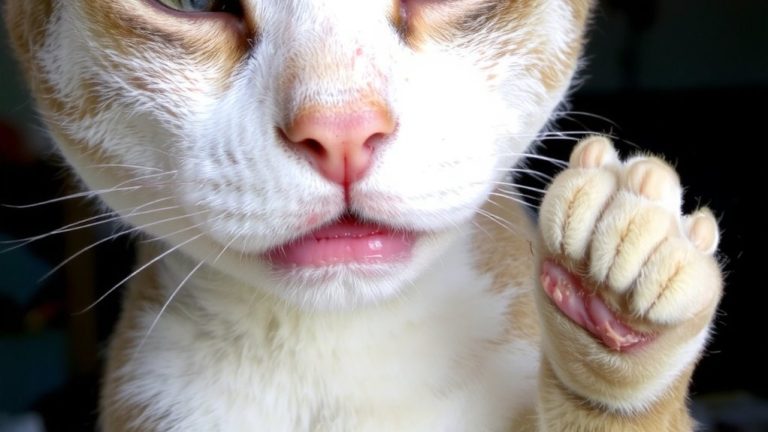
Think of eosinophils as your cat’s immune system’s overzealous cleanup crew-when they swarm the skin in excess, you’re likely dealing with feline eosinophilic dermatitis. This condition is part of the eosinophilic granuloma complex, a group of skin issues marked by inflamed, itchy lesions. It often stems from a hypersensitivity reaction, though the exact trigger isn’t always clear. You might spot sores on your cat’s lips, chin, belly, or thighs-common spots for feline eosinophilic dermatitis. Lesions can be swollen, raw, or ulcerated, and some cats lick obsessively at the affected areas. While any cat can develop this, certain breeds may have a genetic tendency. Diagnosis typically involves a vet examining lesion appearance, medical history, and sometimes a skin biopsy. It’s not contagious, but it won’t resolve without proper care. Early detection helps manage symptoms fast, keeping your cat comfortable and itch-free.
Allergic Triggers of Eosinophilic Dermatitis in Cats
The most common allergic trigger behind feline eosinophilic dermatitis is flea bite hypersensitivity-just one bite can set off a severe reaction because your cat’s immune system overreacts to proteins in flea saliva. You’ve got to stay on top of monthly flea preventatives like fipronil or imidacloprid, even for indoor cats. A single lapse can reignite itching and lesion flare-ups. Mosquito bite allergies are another culprit, especially in summer, causing sores on ears and noses-consider keeping your cat indoors during peak dusk activity. Food allergy may be underlying, too, with common offenders like beef, dairy, or fish prompting eosinophilic plaques. A strict 6–8 week hypoallergenic diet trial using hydrolyzed protein food is essential for diagnosis. Environmental allergens like pollen or dust mites can also contribute, particularly in genetically prone cats.
The 3 Main Types of Eosinophilic Lesions
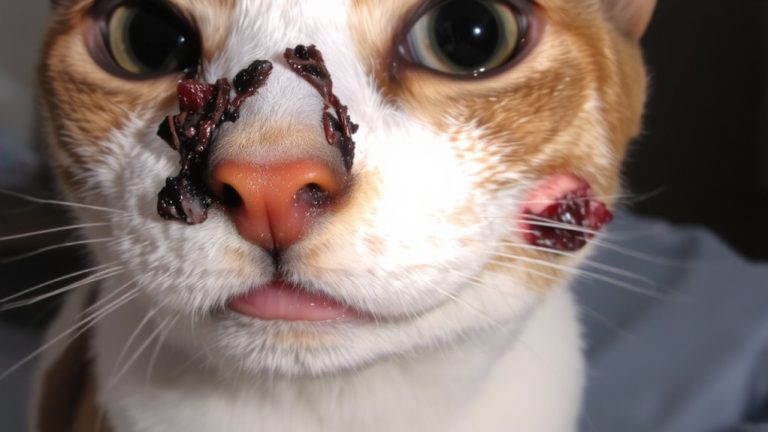
While your cat’s immune system tries to fend off allergens, it can mistakenly release eosinophils into the skin and mucous membranes, leading to one of three hallmark lesions you might spot at home. An indolent ulcer, often called a rodent ulcer, usually shows up on the upper lip, especially at the philtrum, looking eroded, firm, and sometimes oozing, typically affecting both sides. An eosinophilic plaque appears as a red, moist, hairless area your cat licks or bites due to intense itchiness, commonly on the belly, inner thighs, or neck. Then there’s the eosinophilic granuloma, which looks like a firm, raised, yellowish-pink line or swelling, often on the back of the thighs, chin (“fat chin”), or inside the mouth. Though these lesions-indolent ulcer, eosinophilic plaque, eosinophilic granuloma-look different, they all stem from allergic inflammation.
Signs Your Cat Needs Immediate Veterinary Care
Spotting one of those telltale lesions-whether it’s a crusty patch on the lip, a raw spot on the belly, or a swollen chin-means your cat’s immune system is in overdrive, and though these signs often point to allergic inflammation, some red flags mean you can’t wait. If your cat has rapidly spreading lesions in cats, open sores, or a bleeding ulcer on the cat’s upper lip, get help now. Severe itching leading to self-trauma, trouble eating, or a swollen feline eosinophilic granuloma needs urgent care.
| Symptom | Action Needed |
|---|---|
| Ulcerated, oozing skin | Vet visit within 24 hours |
| Constant licking or biting | Immediate pain and inflammation control |
| Difficulty eating or dropping food | Oral exam for eosinophilic granuloma |
| Fever or lethargy with lesions | Urgent testing for infection or malignancy |
How Vets Diagnose the Condition
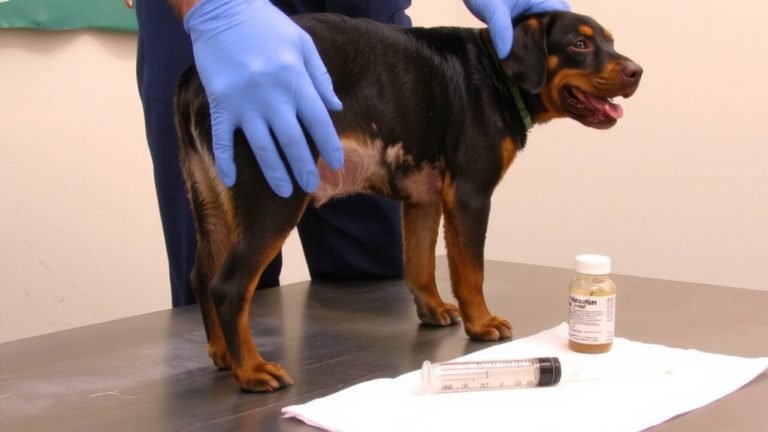
When your cat’s skin shows telltale signs of trouble-like raised, inflamed patches or stubborn sores near the mouth or on the belly-a vet’s first move is a hands-on check paired with a detailed history, so be ready to share when the spot appeared, how it’s changed, and any shifts in diet, flea prevention, or household products. They’ll likely perform a fine needle aspiration or use impression smears to look for clusters of eosinophils, which strongly suggest eosinophilic dermatitis. But for a definitive call, especially with odd or oral lesions, a skin biopsy is usually needed to confirm eosinophilic infiltration and rule out cancer or infection. Diagnostic testing often includes checks for fleas, ringworm, bacterial overgrowth, and autoimmune issues. If initial findings are unclear, your vet might explore allergy testing or recommend a strict hypoallergenic food trial to pinpoint hidden environmental or dietary triggers.
Treating Feline Eosinophilic Dermatitis: What Works
Now that your vet has confirmed eosinophilic dermatitis, you can start addressing the flare-ups with treatments that target both symptoms and root causes. Corticosteroids like prednisolone (1–2 mg/kg/day orally) are the primary treatment and most cats respond quickly with reduced itching and inflammation. You’ll need to use vet-recommended flea preventatives aggressively for 2–4 months, since flea bite hypersensitivity often triggers the condition. If your cat doesn’t fully respond or needs long-term therapy, cyclosporine (7 mg/kg/day orally) can help as a steroid-sparing option. For oozing or crusted lesions, antibiotics-chosen via culture and sensitivity-are essential to clear secondary infections. When food allergy is suspected, a strict hypoallergenic diet trial for 6–8 weeks helps determine if diet plays a role. With consistent treatment, most cats respond well and resume normal, comfortable lives.
Home Care and Flare-Up Prevention
While managing your cat’s eosinophilic dermatitis at home, staying ahead of flare-ups means tackling triggers before they escalate. Consistent flea control using vet-approved topical or oral products is non-negotiable-flea bite hypersensitivity is the most common cause of flare-ups. Keep your cat indoors during dawn and dusk to reduce exposure to mosquitoes and fleas. If food allergy is suspected, your vet may recommend a food trial using a hydrolyzed or novel protein diet for 6–8 weeks, strictly eliminating common allergens like beef or dairy. Use a buster collar to prevent self-trauma from licking or biting, which worsens lesions. Support skin health daily with vet-recommended omega-3 and omega-6 fatty acid supplements, proven to strengthen the skin barrier and help prevent flare-ups with long-term use.
On a final note
You’ve got this-spotting eosinophilic dermatitis early means faster relief for your cat, so watch for raised sores, itching, or lip ulcers. Work with your vet to pinpoint triggers like fleas, food allergens (try limited-ingredient diets with novel proteins like duck or rabbit), or environmental factors. Treatments often include corticosteroids, monthly topical flea control (e.g., Revolution Plus), or hypoallergenic meals like Hill’s z/d. Consistent care and weekly coat checks cut flare-ups by up to 70%, testers say.