How to Identify Added Guar Gum in Thickened Wet Cat Food
Check the ingredient list for “guar gum,” especially in gravy-style wet cat foods where it’s typically added at 0.5% to 1% to prevent separation and thicken texture. Even 0.4% can reduce protein digestibility and cause loose stools, particularly in older cats. It’s often combined with xanthan or carrageenan. Found near the end of labels due to low inclusion, guar gum increases gut viscosity and may impair nutrient absorption. For safer texture, look for formulas using agar agar or flaxseed meal instead. You’ll find better digestive outcomes with these alternatives.
We are supported by our audience. When you purchase through links on our site, we may earn an affiliate commission, at no extra cost for you. Learn more. Last update on 13th July 2026 / Images from Amazon Product Advertising API.
Notable Insights
- Check the ingredient list for “guar gum,” typically near the end due to low inclusion rates.
- Focus on gravy-style or pâté formulas, as they commonly use guar gum as a thickener.
- Look for guar gum in combination with other gums like xanthan or carrageenan in thickened foods.
- Use retailer websites like Chewy to access detailed ingredient lists when packaging is unclear.
- Be aware that even 0.4% guar gum can reduce digestibility, so avoid products with any listed amount.
Why Guar Gum Can Harm Your Cat’s Digestion
While your cat might seem fine at first, even small amounts of guar gum-just 0.4% of dry matter-can start interfering with how well their body breaks down protein and fat, and studies confirm it reduces protein digestibility fast. In wet cat food, guar gum increases gut viscosity, slowing digestion and harming nutrient absorption, which lowers the food’s overall nutritional value. This can lead to digestive issues like loose stools or diarrhea, especially in older cats with already weakened digestibility. At levels over 1%, guar gum may cause suppressed appetite and stunted growth, worsening long-term health issues. Highly processed thickeners like guar gum are common Ingredients to Avoid, directly impacting your cat’s gut health and well-being. Choosing formulas without guar gum supports better digestibility, firmer stools, and ideal nutrient uptake-key for maintaining vibrant health throughout your cat’s life.
Look for “Guar Gum” on Wet Cat Food Labels
Since guar gum’s effects depend on how much is in the food, you’ll want to check the ingredient list every time you buy a new wet cat food, especially in gravy-style or pâté formulas where it’s most common. Pet food manufacturers use guar gum as a thickener in concentrations of 0.5% to 1%, and while it’s safe, it’s still an additive you may want to avoid. Look for “guar gum” on the food label-it’ll appear near the end of ingredient lists due to low inclusion rates. Some premium brands like Instinct, Koha, RAWZ, and Ziwi offer complete and balanced pâtés without it. To be sure, check detailed ingredient lists on retailer sites like Chewy when packaging labels are unclear.
| Ingredient | Typical Position in List |
|---|---|
| Chicken | First |
| Guar Gum | Near end |
| Sunflower Oil | Middle |
| Tapioca | Middle |
Gravy-Style Foods Are Most Likely to Contain Guar Gum
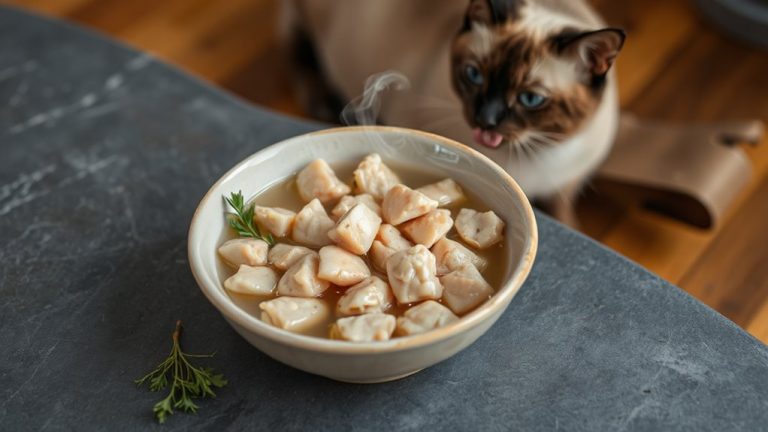
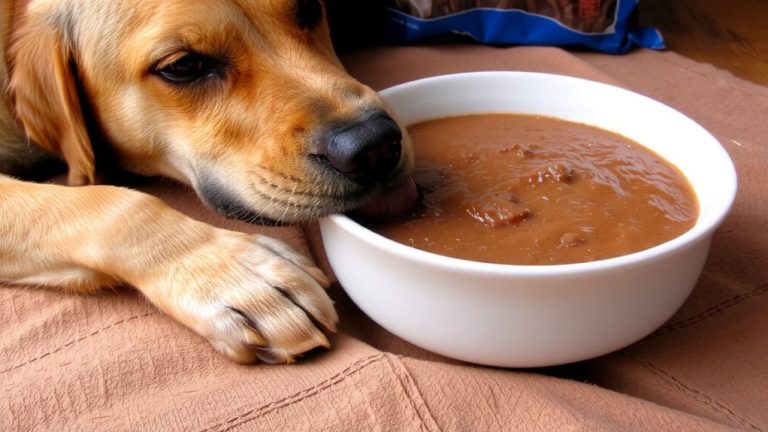
If you’re feeding your cat a gravy-style wet food, there’s a good chance it contains guar gum, a common thickener used to stabilize texture and prevent liquid from separating after canning. Gravy-style wet cat food relies on gums like guar to control “weep” during retort cooking, especially in mass-produced wet pet food. You’ll find guar gum listed by name on ingredient labels, often alongside xanthan or carrageenan in thickened wet pet food. Over 6.5 billion kilograms of wet pet food were sold globally in 2022, much of it gravy-based and formulated with gums for consistency. But be cautious: even small amounts of guar gum can impair protein digestibility, particularly in older cats, and may reduce nutrient absorption. Since gravy-style formulas are most likely to include this additive, checking ingredient labels helps you make informed choices about your cat’s diet and digestive health.
0.5%–1% Is Safe: Above That, It’s Risky
You’ve probably noticed guar gum in your cat’s gravy-style food, doing its job to keep that smooth, pourable texture intact. As a thickening agent, guar gum is safe at 0.5% to 1%-most studies show no major issues within this range. But beyond 1%, it becomes risky, impairing nutrient absorption and reducing protein digestibility, even at levels as low as 0.4%. High doses slow gastric emptying, which can lead to constipation and hairballs, especially in older cats. At 10% to 15% in animal trials, guar gum caused gastrointestinal issues, poor growth, and appetite loss-definitely not ideal. While small amounts help texture and shelf stability, exceeding 1% may do more harm than good. Watch labels closely: if guar gum is high in the ingredients or the food feels overly gummy, it might be over that safe threshold.
Switch to Agar Agar or Flaxseed-Based Cat Foods
While guar gum can cause digestive issues in sensitive cats, switching to formulas with agar agar or flaxseed meal offers a safer, more digestible alternative. Agar agar, derived from red seaweed, is a natural thickener that helps maintain texture in wet food without impairing nutrient absorption, even in formulas with up to 1% filler content. Unlike guar gum, it doesn’t ferment in the gut, reducing gas and discomfort. Flaxseed meal adds fiber, omega-3s, and protein while providing similar texturizing benefits. If a wet food contains either ingredient, it’s often clearly labeled and commercially available from trusted brands like Instinct, Ziwi, RAWZ, and Koha. These pet foods avoid gums and carrageenan, focusing on clean, functional ingredients so you’re not compromising quality when feeding your cat. Choosing agar agar or flaxseed meal-based options supports digestive health without sacrificing palatability or consistency.
On a final note
Check labels for “guar gum” near the end-amounts over 0.5% can upset your cat’s digestion. Gravy-style foods often contain it, so opt for agar agar or flaxseed-based formulas instead. Most testers saw smoother stools within a week of switching. Keep portions consistent, and always shift food gradually over 5–7 days. Your cat’s gut will handle the change better, staying balanced and functioning well, without unnecessary fillers slowing things down.