How to Spot Hidden Sugars in Commercial Dog Food Ingredients
You’ll spot hidden sugars by checking for dextrose, fructose, corn syrup, or cane molasses in the first five ingredients-these spike blood sugar fast. Watch for sneaky fillers like sweet potato syrup, tapioca, or pea starch, even in grain-free kibble, since they still convert to glucose. Ingredient splitting hides high carb counts, so calculate carbs yourself: subtract protein, fat, moisture, and ash from 100. Most kibble has 30–60% carbs, far above dogs’ natural 1–7% intake. Choosing low-carb, species-appropriate options supports long-term metabolic health. There’s more to know about feeding for true wellness.
We are supported by our audience. When you purchase through links on our site, we may earn an affiliate commission, at no extra cost for you. Learn more. Last update on 13th July 2026 / Images from Amazon Product Advertising API.
Notable Insights
- Check the first five ingredients for hidden sugars like dextrose, fructose, or maltose, which signal high sugar content.
- Watch for syrups such as corn syrup, glucose syrup, or sweet potato sugar syrup, all of which are concentrated sugar sources.
- Identify natural-sounding sweeteners like cane molasses and fruit concentrates, which act as added sugars despite their wholesome names.
- Avoid ingredient splitting tricks, such as listing peas, pea fiber, and pea starch separately to mask high carbohydrate levels.
- Steer clear of xylitol or birch sugar, as it is highly toxic to dogs, even in small amounts.
Spot Hidden Sugars Harming Your Dog
While you’re checking the bag for meat as the first ingredient, hidden sugars could still be lurking in your dog’s food, sneaking in under names like dextrose, maltose, or corn syrup-ingredients that spike blood sugar fast. You’ll need to scan the ingredient list carefully because pet food manufacturers often disguise sugar content using split sources like sweet potato, pea starch, and cane molasses, which inflate carbohydrate content. Commercial dog foods can contain 30–60% carbohydrates, driving up the glycemic index and disrupting blood sugar levels. Over 56% of U.S. dogs are overweight, and high carbohydrate content contributes directly to obesity. Even “natural” sweeteners aren’t safe-sweet potato sugar syrup still fuels excess calorie intake. To protect your dog, prioritize low-glycemic, low-carbohydrate formulas and always assess sugar content behind multiple ingredient names.
Identify Sneaky Sugar Names on Dog Food Labels
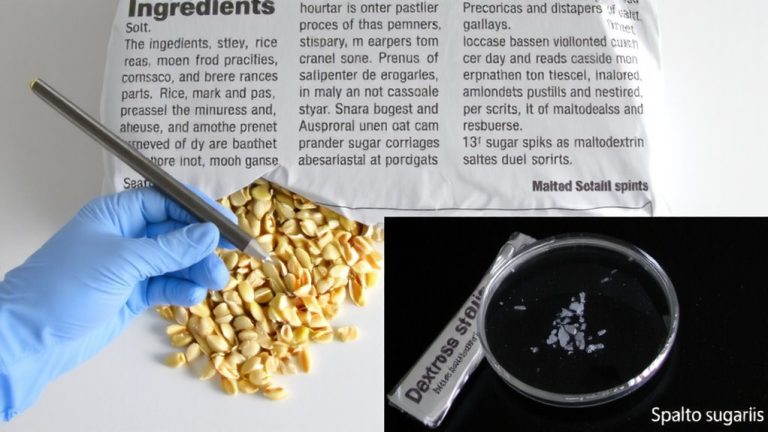
What do dextrose, maltose, and fructose really mean for your dog’s health? These are all forms of sugar hiding in dog food, often slipped in under technical names. When you check the food label, watch for hidden sugar like corn syrup, glucose, and malt syrup-they spike your dog’s blood sugar fast. Even natural-sounding sweeteners such as cane molasses or fruit concentrates can overstimulate insulin. Beware of xylitol-it’s in birch sugar, wood sugar, or birch bark extract and is deadly to dogs, even in tiny amounts. Also, sweet potato sugar syrup sneaks in as a binder but counts as concentrated sugar. High starch content from rice flour, pea starch, or tapioca breaks down into glucose, raising glycemic load. Always scan the carbohydrate content and sweeteners listed. You’re not just reading a food label-you’re protecting your dog’s long-term health from hidden sugar dangers.
Uncover Hidden Sugars in Common Fillers
Since many dog food manufacturers rely on cheap, plant-based ingredients to bulk up kibble, you’ll often find hidden sugars lurking in common fillers-even in formulas labeled as grain-free or premium. Ingredients like corn gluten meal, wheat middlings, and rice bran pack a high carbohydrate content that would surprise most pet owners. These fillers can cause spikes in blood sugar, leading to long-term health issues like obesity and insulin resistance. Soybean hulls and pea fiber also contribute to higher sugar levels once digested, raising your dog’s blood glucose. Remember, manufacturers are not required to disclose sugar content on the guaranteed analysis, so you’re not alone if it’s hard to track. To protect your pup, look for foods with minimal fillers and check ingredient lists closely-what’s listed near the top matters most.
Understand How Carbs Turn Into Sugar
You’ve already learned how common fillers like corn gluten meal, soybean hulls, and rice bran hide sugars in plain sight, even in premium-labeled kibble. Now understand how those carbohydrates turn into sugar inside your dog’s body. Starches from grains, root vegetables, and legumes break down into glucose during digestion, directly raising blood sugar and spiking insulin levels. Even grain-free kibble isn’t off the hook-many use starchy substitutes like sweet potatoes, cassava, or potato starch, which have high glycemic effects. These ingredients aren’t labeled as sugar, but they act just like it once digested. Standard kibble contains 30–60% carbohydrates on a dry matter basis, far more than the 1–7% wild dogs consume. That excess fuel becomes hidden sugars, promoting weight gain and metabolic stress. Choosing lower-carb options helps stabilize glucose and supports long-term health.
Decode Dog Food Labels: Find Real Ingredients
While reading dog food labels might seem like decoding a foreign language, focusing on the first five ingredients gives you instant insight into what really drives the recipe, and that’s where you’ll catch hidden sugars trying to sneak in. Always check the list for red flags like dextrose, molasses, or fructose-these can spike your pet’s blood sugar. Manufacturers often split ingredients, listing peas, pea fiber, and pea starch separately to disguise high carb content. Choose foods with real, human-grade protein sources like chicken or turkey listed first for the best nutrition. Since carbohydrate content isn’t required to list, use the guaranteed analysis to estimate it: 100 – (protein % + fat % + moisture % + ash %). Prioritize clean foods rich in whole ingredients like blueberries and pumpkin to support long-term health. And if you’re unsure, consult your veterinarian-they’ll help you pick the best option for your pet’s unique needs.
Choose Low-Sugar, Species-Appropriate Diets
Though dogs thrive on diets close to their natural eating patterns, most commercial kibble packs in 30–60% carbohydrates-far above the 1% to 7% they’d consume in the wild. Your dog has no biological requirement for carbohydrates, and high-starch dry kibble fuels obesity in dogs, diabetes, and metabolic issues. The extrusion process demands 30%+ starch, often from hidden sugars and fillers like peas, potatoes, or corn syrup, even in grain-free versions. These ingredients spike blood sugar and disrupt a species-appropriate dogs diet. Opt instead for minimally processed meals built around real meat, with low glycemic impact and carb levels under 10%. Raw diets, like Big Dog patties, offer 3–7% carbs on a dry matter basis-aligning with natural needs-while cutting out hidden sugars and processed junk. You’re not just feeding a meal; you’re shaping long-term health.
On a final note
You now know how to spot hidden sugars-like cane molasses, beet pulp, and brown rice syrup-on dog food labels. Check ingredient lists for sneaky carbs that turn to sugar, aim for products with less than 10% carbohydrates, and choose species-appropriate formulas with named meats first. Testers saw shinier coats and steady energy in 3 weeks. Keep treats low-sugar, read every label, and prioritize real meat, not fillers. Your dog’s health starts with what’s in the bowl.