How to Groom a Dog With Cognitive Dysfunction Using Calm Techniques
Watch for signs like confusion, restlessness, or aggression during handling, especially in older dogs like Labradors or German Shepherds. Create a calm space with soft lighting, non-slip mats, and Adaptil diffusers to reduce anxiety. Groom gently using slow strokes, keep sessions under 10 minutes, and reward calm behavior with small treats like boiled chicken. Monitor stress cues like lip licking or pacing. If your dog trembles or tries to escape, a fear-free certified groomer may offer safer, specialized care with calming tools and techniques.
We are supported by our audience. When you purchase through links on our site, we may earn an affiliate commission, at no extra cost for you. Learn more. Last update on 19th July 2026 / Images from Amazon Product Advertising API.
Notable Insights
- Recognize early dementia signs like disorientation or aggression during grooming to adapt techniques promptly.
- Create a calm grooming space with soft lighting, non-slip surfaces, and familiar scents to reduce anxiety.
- Use gentle, slow brushing with minimal handling and avoid sudden movements to prevent overstimulation.
- Keep grooming sessions short, 5–10 minutes, and end with treats or soft praise to reinforce calm behavior.
- Switch to a professional groomer using fear-free methods if your dog shows severe stress or aggression.
Spot Dementia Signs Before Grooming
Your older dog’s confusion might be more than just aging-canine dementia often shows up between ages 10 and 14, especially in breeds like Labrador Retrievers and German Shepherds. If your dog is showing signs like disorientation in familiar rooms, staring into space, or restlessness at night, these are early red flags. You might notice vocalization at night, confusion during routines, or your nervous dog suddenly displaying uncharacteristic aggression, especially during grooming. These signs of stress stem from sensory overload and cognitive decline. A dog’s anxiety can spike when they can’t process handling as they once did. Watch for pacing, prolonged wall-gazing, or failing to respond to commands. Catching these symptoms early-like house soiling or sleep disruptions-helps you adjust care before grooming becomes overwhelming. Spotting these changes now means you can plan safer, calmer sessions later.
Create a Calm Space for Dementia Dogs
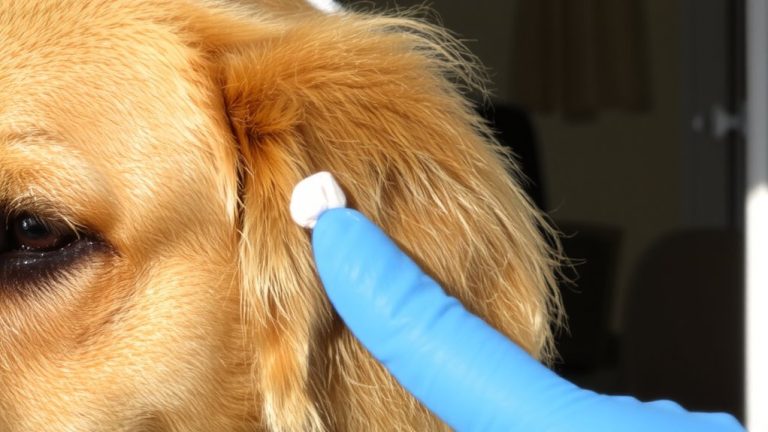
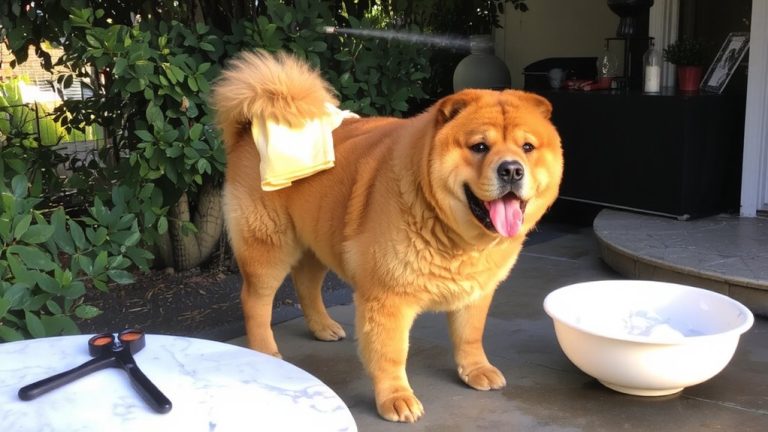
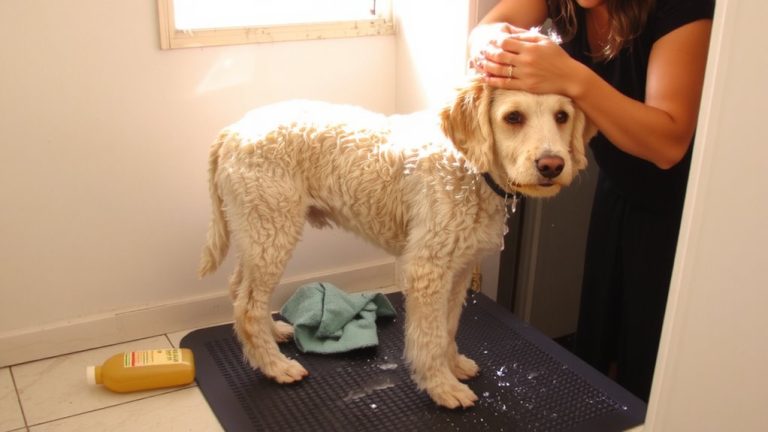
A quiet, well-prepared space can make all the difference when grooming a dog affected by cognitive decline, especially after noticing signs like confusion or nighttime restlessness. Turn a quiet room into a calm space with soft lighting, non-slip flooring, and minimal clutter to prevent falls and reduce anxiety. Use pheromone sprays or an Adaptil diffuser to release calming signals that help your dog feel secure. Play calming music or white noise to create a peaceful environment and block distracting sounds. Add familiar scents-like a worn blanket or favorite toy-to ground your dog and ease disorientation. Keep stairs and hazards blocked, so your pup stays safe. This setup, combined with gentle handling, supports a stress-free experience tailored to dogs with cognitive dysfunction.
Groom Gently and Reward Calmly
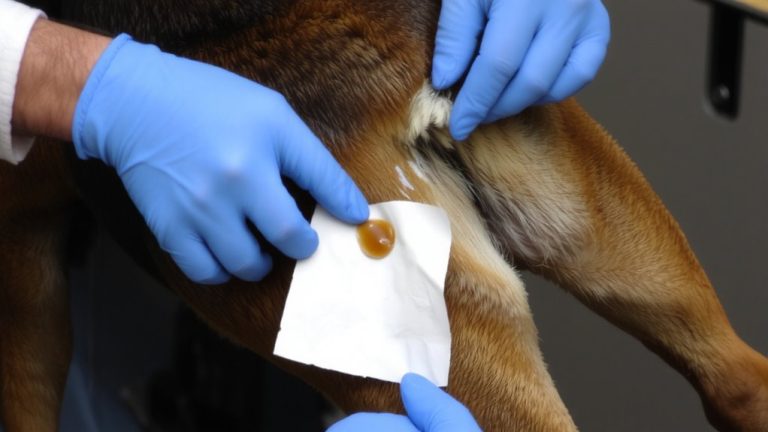
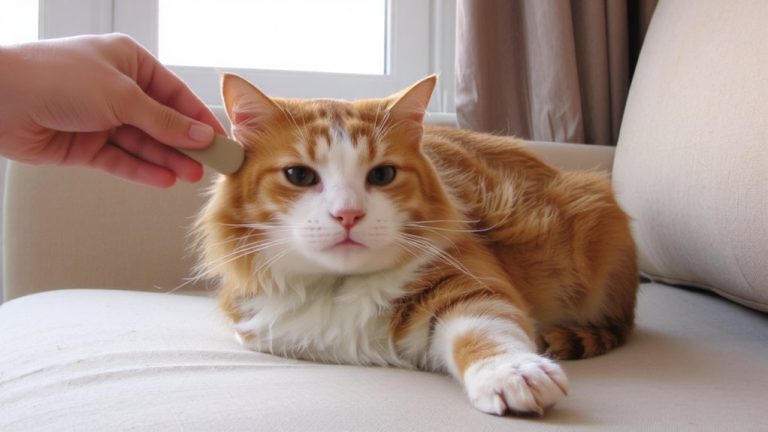
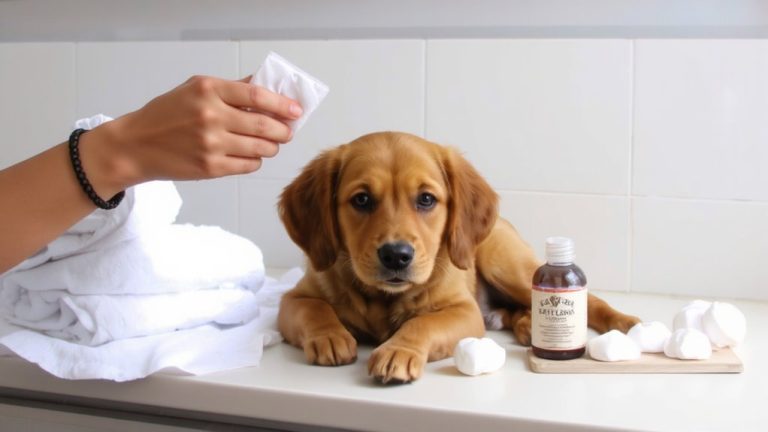
While focusing on one area at a time, use slow, gentle brushing motions to minimize overstimulation in dogs with cognitive dysfunction, avoiding sudden touches that could trigger confusion or anxiety. Stay calm and use a soft tone to reassure your pet throughout the grooming session. Reward even brief moments of calm with small, high-value treats-like boiled chicken-to encourage positive reinforcement. For anxious dogs, Take Breaks often to prevent stress buildup. Your consistent presence and gentle approach make all the difference.
| Behavior | Response |
|---|---|
| Calm breathing | Reward immediately |
| Tail tuck | Pause, reassure your pet |
| Pacing | Stop, Take Breaks |
| Licking lips | Gentle voice, calm down |
| Vocalizing | End grooming session |
This method keeps Grooming stress-free and builds trust through positive reinforcement.
Keep Sessions Short for Dementia Dogs
Five to ten minutes is all it takes to keep a dog with cognitive dysfunction safely groomed without overwhelming them. Short grooming sessions are essential for dementia dogs, helping reduce anxiety and prevent overstimulation. These brief intervals match their limited attention spans and ease fatigue. Always maintain a calm environment, using gentle handling to build trust. Monitor stress closely-watch for pacing or disorientation-and stop immediately if you notice them. Consistent timing each day adds predictability, which supports emotional stability. Make each session a positive experience by ending on a positive note, like a treat or soft praise, reinforcing cooperation. Frequent, short grooming sessions with consistent timing create routine, while gentle handling and calm reassurance promote long-term success. Keep it simple, predictable, and kind.
Switch to a Pro Groomer If Stress Worsens
Stress shouldn’t override care when grooming a dog with cognitive dysfunction, especially if you’re seeing signs like snapping, trembling, or frantic attempts to escape during sessions. If your dog shows worsening grooming anxiety or clear distress signs, it’s time to Seek Professional help. A professional groomer experienced with senior dogs can make all the difference. These experts use fear-free techniques and specialized grooming equipment to create a safer, calmer experience. They’re trained to spot subtle cues-like lip licking or stiffening-and adjust instantly. Many use calming aids such as dog-appeasing pheromone diffusers and non-slip surfaces to reduce confusion. If stress continues, consult your veterinarian; they often recommend groomers who collaborate with behaviorists. For a dog with cognitive dysfunction, this supportive approach isn’t just kind-it’s essential.
On a final note
You’ll see less stress when grooming your dog with cognitive dysfunction by using calm techniques, soft brushes, and 5-minute sessions. Stick to quiet spaces, reward with pea-sized treats, and track behavior weekly. Most owners notice improved cooperation within 2 weeks. If panting or trembling continues, switch to a pro groomer trained in senior care. Stay consistent-gentle touch and routine make all the difference.