How to Cycle a Betta Fish Tank Using the Fishless Method for a Safe Aquatic Environment
Set up your 6-gallon betta tank with a sponge filter, heater at 78–80°F, and inert substrate. Dose pure ammonium chloride to 2–3 mg/L, using 4 drops per gallon of DrTim’s Aquatics if needed. Add DrTim’s One & Only Live Nitrifying Bacteria after ammonia stabilizes-no nitrite spike expected. Test daily with an API Master Test Kit, and if ammonia exceeds 5 mg/L or pH drops below 7.0, do a water change. The cycle’s done when ammonia and nitrite drop to 0 within 24 hours of dosing-then you’re ready to add your betta safely.
We are supported by our audience. When you purchase through links on our site, we may earn an affiliate commission, at no extra cost for you. Learn more. Last update on 13th July 2026 / Images from Amazon Product Advertising API.
Notable Insights
- Set up a 6-gallon tank with a heater, filter, and inert substrate to support bacterial growth and future betta health.
- Dose pure ammonium chloride to maintain 2–3 mg/L ammonia, providing food for beneficial bacteria without harming fish.
- Use DrTim’s One & Only bacteria to rapidly establish colonies, potentially completing the cycle in under a week.
- Test water daily with an API Master Test Kit to monitor ammonia, nitrite, and nitrate levels throughout the cycle.
- Perform water changes if ammonia exceeds 5 mg/L or pH drops below 7.0 to maintain a stable cycling environment.
Start Fishless Cycling Without Fish
While you might be keen to add your betta right away, starting the fishless cycle without fish gives the tank time to develop the good bacteria it needs to stay healthy long-term, and it’s actually one of the kindest moves you can make for future tank life. Fishless cycling lets you build beneficial bacteria safely, without stressing or endangering fish. Begin by dosing your tank with an ammonia source like ammonium chloride to reach 2–3 mg/L, providing food for bacteria to grow in filter media and substrate. Use the API Master Test Kit to track levels: ammonia and nitrite should hit 0 mg/L within 24 hours of dosing, while nitrate appears. If using DrTim’s One & Only, the cycle is completed in under a week, with no nitrite spike. Cycling a new tank this way guarantees a safe, stable home before your betta arrives.
Set Up Your Betta Tank for Cycling
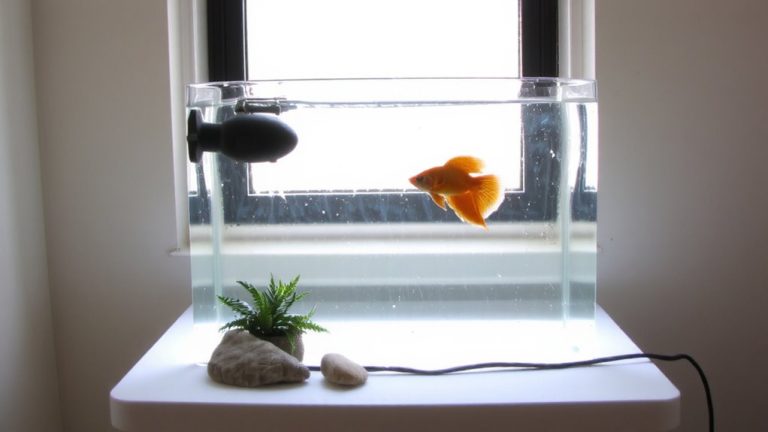
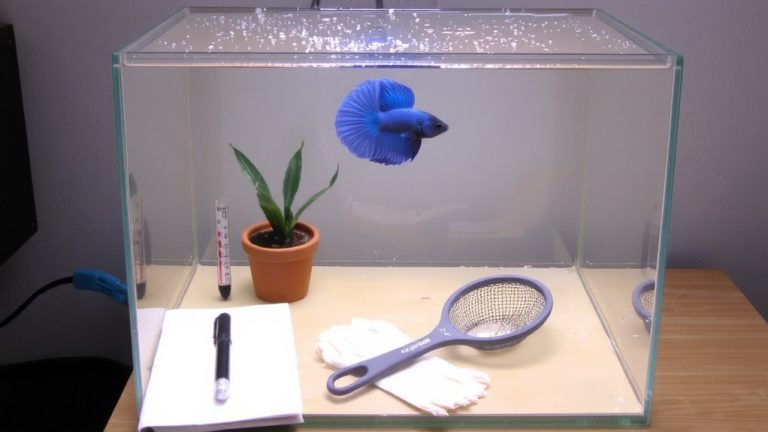
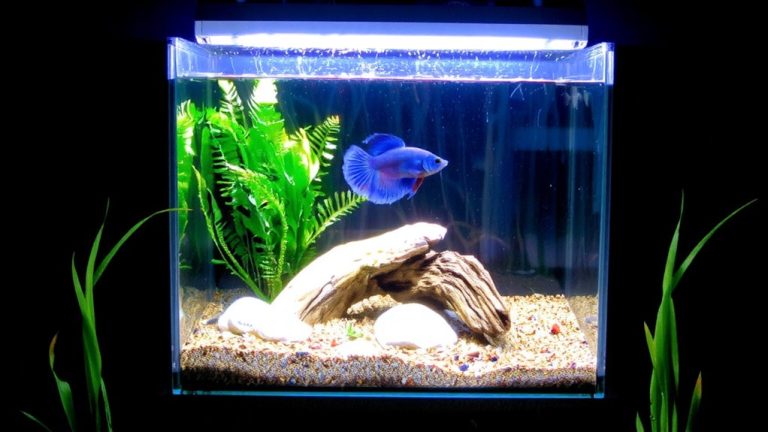
On February 21, set up your 6-gallon betta tank with a sponge or HOB filter to maximize surface area for beneficial bacteria, and include a heater to maintain a steady 78–80°F, essential for bacterial growth and future betta health. Add inert hardscape and live plants to boost surface area for colonization, supporting the cycling process. Use a sand substrate or inert soil, but avoid nutrient-rich soil that releases ammonia and prolongs the fishless cycle. Always treat tap water with water conditioner before adding it to the tank. If possible, include filter media from a cycled tank to seed beneficial bacteria and speed things up. Keep an API Master Test Kit on hand to monitor ammonia and nitrite levels throughout the cycling process. Your filter should run continuously, establishing a stable environment before adding your betta.
Add Ammonia to Feed Beneficial Bacteria
Once your tank is set up and running, it’s time to kickstart the cycle by adding a steady source of ammonia to feed the beneficial bacteria you’re cultivating. Using the fishless cycling method, you’ll add ammonia daily to maintain an ammonia concentration of 2–3 mg/L, ideally using 4 drops per gallon of DrTim’s Aquatics ammonium chloride. Never exceed 5 mg/L-N, as high levels can stall the process of establishing biological filtration. Always use pure ammonia-never household cleaners with additives. Test every 2–3 days using the API Master Test Kit to track measuring ammonia and nitrite levels accurately. Replenish ammonia every 24–48 hours to keep levels consistent, ensuring nitrifying bacteria have a constant food source. This precise, monitored approach supports robust beneficial bacteria colonies, laying the foundation for a healthy, stable tank.
Inoculate With Live Nitrifying Bacteria
You can speed up the cycling process considerably by adding DrTim’s Aquatics One & Only Live Nitrifying Bacteria, a powerful inoculant that jumpstarts your tank’s biological filtration. After you add ammonia to reach 2–3 mg/L-N, inoculate with this live product to establish beneficial bacteria colonies fast. The live nitrifying bacteria begin converting toxic ammonia to nitrate immediately, helping reduce cycling time to under a week when used properly. Shake the bottle well before dosing to guarantee even distribution of the active nitrifying bacteria. These beneficial bacteria colonies need a steady ammonia source to grow, so keep supplying ammonia. Avoid water treatments that remove ammonia, as they’ll starve the bacteria. With ideal conditions, you’ll see full bacterial activity within 24 hours, letting you establish bacteria colonies efficiently and safely.
Test Ammonia, Nitrite, and Nitrate Daily
Regularly testing your water parameters is key to tracking progress during fishless cycling, and you’ll want to check ammonia, nitrite, and nitrate levels daily using the API Freshwater Master Test Kit for reliable, lab-grade accuracy. Use the API Master Test to test your water each day, especially if you’re using organic ammonia sources like fish food or shrimp, since they release ammonia unpredictably. Continue measuring ammonia and nitrite every 24 hours to monitor the cycling process closely. As the cycle develops, you’ll see ammonia drop to 0 ppm within a day of dosing, followed by nitrite rising, then falling. The appearance of nitrate confirms nitrite-oxidizing bacteria are active. Daily testing helps catch spikes early-if ammonia or nitrite exceeds 5 mg/L-N, do a 25–50% water change and keep testing. Consistent measurements mean you won’t miss critical shifts.
Fix High Ammonia, Low pH, or Stalled Cycling
While cycling your betta tank, you might hit snags like high ammonia, dropping pH, or a cycle that seems stuck-so it’s important to act fast and accurately to get things back on track. For high ammonia above 5 mg/L-N, do a 50% water change to protect nitrifying bacteria. If you’re dealing with low pH, especially a pH below 7.0, perform a 20–25% water change to ease acid buildup that causes stalled cycling. Always use ammonium chloride for ammonia dosing to maintain 2–3 mg/L-N, never household ammonia. Skip ammonia-removing products-they block bacterial growth by removing food for nitrifying bacteria. Instead, add DrTim’s Aquatics One & Only to seed live nitrifying bacteria.
| Issue | Solution |
|---|---|
| High ammonia | 50% water changes |
| Low pH (below 7.0) | 20–25% water changes |
| Stalled cycling | Ammonia dosing + DrTim’s Aquatics One & Only |
Know When the Cycle Is Complete
How do you know when your betta’s tank is truly ready for its new tenant? You’ve got a cycled tank when your API Freshwater Master Test Kit shows 0 ppm ammonia and 0 ppm nitrite within 24 hours of adding 2–3 mg/L ammonia. This means beneficial bacteria are fully established. Confirm this consistently over at least 5 days, with nitrates rising as ammonia and nitrite vanish. Even in planted tanks, make certain you can detect 0 ppm nitrite-plants shouldn’t hide an incomplete cycle. Once you’ve passed the test, do a 25% water change to lower excess nitrates before introducing your betta. That final water change keeps conditions safe and stable. You’re not guessing-you’re testing, verifying, and protecting your fish with real data. Trust the process, trust your kit, and know exactly when your tank is ready. Your betta deserves that certainty.
On a final note
You’ve successfully cycled your betta tank-no fish harmed. Keep ammonia at 2–3 ppm until nitrites spike, then fall; nitrates should rise to 20–40 ppm. Test daily with a liquid kit like API Freshwater Master. Once ammonia and nitrite read 0 ppm, do a final 50% water change, check pH (ideal: 6.5–7.5), and add your betta. Acclimate slowly over 15 minutes. Your tank’s now a safe, healthy home.