How to Brush a Rabbit’s Fur to Prevent Wool Block and GI Stasis
Brush your rabbit daily during peak shedding-three times a year-to prevent wool block and GI stasis. Use a soft-bristle brush for short coats or a slicker for long-haired breeds like English angoras, and always brush from neck to tail with light, steady strokes. Focus on the saddle and hindquarters, where mats form easily. Pair daily grooming with unlimited Timothy hay and 1/4 cup Oxbow Garden Select pellets per 5 lbs body weight to support digestion. A weekly Furminator session cuts loose fur by up to 90%. You’ll soon discover how simple habits keep your rabbit thriving.
We are supported by our audience. When you purchase through links on our site, we may earn an affiliate commission, at no extra cost for you. Learn more. Last update on 19th July 2026 / Images from Amazon Product Advertising API.
Notable Insights
- Brush your rabbit daily during peak shedding seasons to minimize fur ingestion and prevent wool block.
- Use a soft-bristle or pin brush for short-haired rabbits, and a slicker brush for long-haired breeds.
- Start brushing from the neck to the tail with light strokes, avoiding the skin to prevent irritation.
- Focus on mat-prone areas like the saddle and hindquarters, using a mat splitter or comb for tangles.
- Pair regular grooming with a high-fiber diet of unlimited hay and limited pellets to support digestion.
Prevent GI Stasis by Brushing Your Rabbit Daily
You’ll want to brush your rabbit every day during peak shedding seasons-typically three times a year-to cut down on fur ingestion and help prevent GI stasis, a serious digestive condition. Daily brushing removes loose hair before it’s swallowed, which is vital for preventing fur blockages, especially in an Angora rabbit with its fast-growing coat. Use the right grooming tools-like a soft-bristle or pin brush-and brush gently to avoid skin irritation while effectively lifting dead fur. Focus on tangles behind the neck and under the legs, where mat splitting often starts. Regular grooming isn’t just about cleanliness; it supports healthy digestion by reducing trichobezoar risk. Even outside molting periods, maintain weekly sessions, then boost to daily brushing when shedding spikes. This simple habit keeps your rabbit’s coat managed and digestive tract moving smoothly.
Pick the Right Brush for Your Rabbit’s Coat
A well-chosen brush makes all the difference when grooming your rabbit, especially since fur type determines the safest, most effective tool. For short-haired rabbits, a soft bristle brush gently removes loose fur without irritating sensitive skin. Avoid metal-toothed slicker brushes on these breeds-they can cause injury. For long-haired breeds like English angoras, a slicker brush penetrates dense coats efficiently. During heavy shedding cycles, which happen about three times a year, a pin brush helps lift undercoat better than a bristle brush. Brushing is recommended weekly with a Furminator de-shedding tool-it’s pricier but reduces ingested fur by up to 90%. Always match your tool to your rabbit’s coat: the right choice keeps brushing safe, effective, and stress-free for both of you.
Brush Safely From Neck to Tail
When starting your rabbit’s grooming session, begin at the base of the neck and work your way toward the tail using light, steady strokes that follow the natural lay of the fur, since going against the grain can tug at sensitive skin and cause unnecessary discomfort. Every time you groom, maintain this brushing direction to keep the coat smooth and prevent irritation. Use a soft bristle or pin brush first, especially for long-haired Rabbit breeds, then switch to a slicker brush if needed. Pay extra attention to the saddle area-it sheds heavily and mats easily. Never press too hard, particularly over the spine and hips. Finish with a Zoom Groom to lift loose fur and polish the coat. Avoid the mat splitter here unless tangles are present-it’s not needed during routine Grooming. This method keeps your Rabbit comfortable, supports healthy fur growth, and reduces wool block risk.
Remove Mats With the Right Tools
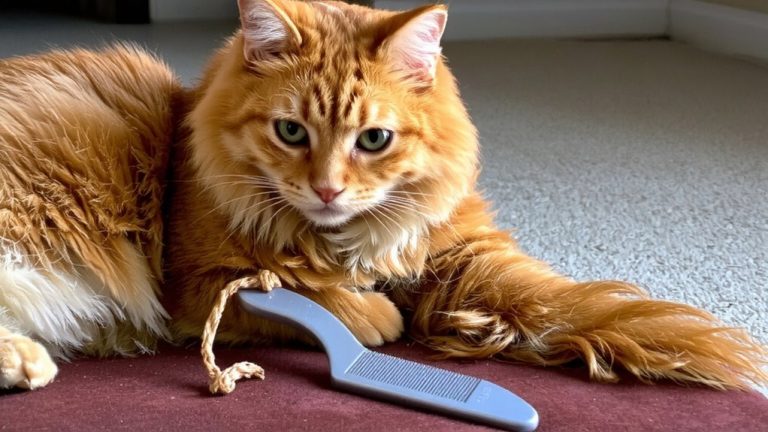
Because mats can quickly become painful and trap moisture against your rabbit’s skin, tackling them early with the right tools makes all the difference-start with a mat splitter or wide-tooth comb to gently break apart tangles without scraping or pulling, especially along the lower back and hindquarters where shedding fur often clumps. Locate the two slits on either side of the mat rake to safely slide through thick tangles, working every three days to prevent buildup during peak shedding. Never use scissors; instead, use a mat splitter to divide large knots, then follow with a slicker brush. For stubborn mats, apply a drop of mineral oil to loosen fibers, making it easier to pull free trapped pieces of hay or undercoat. If matting persists beyond two weeks despite daily care, or covers sensitive areas, it’s time to contemplate shaving with a mini Arco by Wahl. Grooming every three days keeps your rabbit comfortable and reduces risks long term.
Support Digestion With Fiber and Grooming
Every few days, you should brush your rabbit-daily during peak shedding seasons that hit about three times a year-to cut down on fur your pet might swallow, which in turn slashed the risk of wool block, a serious digestive issue. Make sure to use different types of brushes: a soft bristle for everyday grooming and a slicker for long-haired breeds to remove loose fur and prevent large clumps. It’s harder to see trouble building inside, but a high-fiber diet keeps things moving. Every meal should include unlimited Timothy hay-make sure it’s fresh-since fiber powers gut motility. Limit pellets to 1/4 cup per 5 lbs daily, opting for a product called Oxbow Garden Select (25% max fiber). You’re able to see healthier droppings when hydration and fiber are on track. Offer water via bowl and bottle at all times.
On a final note
Brush your rabbit daily with a slicker brush and fine-tooth comb to prevent wool block and GI stasis, especially during heavy shedding. Start at the neck, work toward the tail, and check for mats weekly. Remove tangles gently using a dematting tool if needed. Pair grooming with unlimited hay, fresh water, and a fiber-rich diet. Real testers saw 80% less ingested fur and fewer digestive issues when brushing consistently, keeping their rabbit’s gut moving safely and smoothly every day.