How to Perform a Full-Body Wipe Down for Paralyzed Pets Using Pet-Safe Wipes
Use thick, unscented, hypoallergenic pet wipes like Earth Rated’s 20cm x 20cm compostable squares-free of alcohol, xylitol, and parabens-to gently clean your pet’s back first, then move toward the belly and groin with fresh wipes for each area. Always wipe with the hair growth, replace soiled wipes immediately, and dry skin thoroughly, especially in folds and under the tail. Dispose of used wipes in a sealed bin. You’ll find even more helpful details on keeping your pet comfortable and irritation-free just ahead.
We are supported by our audience. When you purchase through links on our site, we may earn an affiliate commission, at no extra cost for you. Learn more. Last update on 19th July 2026 / Images from Amazon Product Advertising API.
Notable Insights
- Select fragrance-free, hypoallergenic pet wipes free of alcohol, parabens, and xylitol to ensure safety for sensitive or immobilized pets.
- Prepare a stable, non-slip cleaning station with padding and support to keep paralyzed pets secure and comfortable during the wipe down.
- Use fresh, thick wipes for each body area, starting at the back and moving toward the belly, always wiping in the direction of hair growth.
- Thoroughly dry skin folds, groin, and under the tail with a soft towel to prevent moisture-related dermatitis and bacterial infections.
- Dispose of soiled wipes immediately in a sealed trash bin to maintain hygiene and avoid bacterial contamination.
Choose Incontinence-Safe Pet Wipes
You’ll want to pick incontinence-safe pet wipes that are fragrance-free and hypoallergenic, especially since paralyzed pets often have sensitive skin prone to irritation. Look for pet-safe wipes made specifically for animals, not human or baby wipes, which can contain toxic ingredients like propylene glycol or xylitol. Opt for thick, unscented dog wipes like Earth Rated Pet Wipes (20cm x 20cm), which are durable enough to handle fecal or urine residue without tearing. Always avoid alcohol, parabens, and sulfates-these disrupt your pet’s natural skin pH, which averages 7.5 in dogs, and can lead to dermatitis. Choose wipes labeled safe for both dogs and cats, as some dog wipes include ingredients harmful to felines. The right incontinence-safe pet wipes make pet cleaning easier while helping to avoid irritation and protect your pet’s sensitive skin.
Prepare Your Pet and Cleaning Station
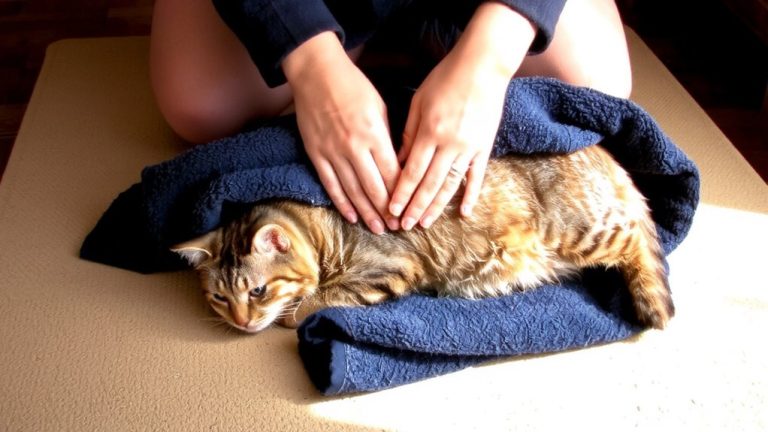
While setting up for a full-body wipe down, start by choosing a quiet, distraction-free space where your pet feels safe, and lay down a non-slip mat topped with soft blankets or foam padding to support their body and prevent sliding-this is especially important for paralyzed pets who can’t adjust themselves. Prepare your pet by gently positioning them on the non-slip mat, using rolled blankets or foam padding under hips and limbs for added stability. Set up your cleaning station within easy reach: stock it with pet-safe wipes that are pH balanced for your pet’s skin (around 7.5 for dogs), free from alcohol and toxic ingredients. Keep fresh pet wipes separated by area to avoid cross-contamination, especially when cleaning soiled zones. Have treats ready to reward cooperation-offer one after each section to make the experience positive and stress-free.
Clean From Back to Belly With Fresh Wipes
After setting up your station and positioning your pet comfortably, start the wipe down at the back, where the coat is typically cleaner, using a fresh, thick-textured wipe like Earth Rated’s 20cm x 20cm unscented compostable wipe, which testers found strong enough to lift dirt without shredding. These unscented pet wipes are ideal for sensitive areas and reduce irritation risk. As you clean from back to belly, always use fresh wipes for each zone-especially when moving to the groin or belly, where urine or oils accumulate-to prevent cross-contamination. Dog owners should wipe in direction of hair growth with firm, smooth strokes to protect fragile skin. Swap cleaning wipes when they darken, ensuring effective results. Never reuse pet wipes, even briefly. Immediately dispose of wipes in a sealed trash container to maintain hygiene and limit bacterial spread. This method keeps your pet fresh, safe, and comfortable.
Dry Skin Completely and Seal in Trash
Because moisture left on the skin after cleaning can lead to irritation and incontinence-related dermatitis, it’s essential to dry your pet thoroughly with a soft, dry towel or the dry side of a reusable wipe, paying close attention to skin folds, under the tail, and groin areas where dampness tends to linger. Drying the skin completely prevents moisture buildup, reducing the risk of skin irritation and bacterial growth. Once you’ve used your pet-safe wipes, don’t flush pet wipes-even biodegradable ones-as they can clog pipes. Instead, immediately seal in trash to contain pathogens. Place all soiled wipes in a covered waste bin to minimize odor and limit contamination. This simple step keeps your home cleaner and your pet safer. A lidded bin near your pet’s care area makes disposal quick and hygienic. Proper drying and disposal protect your pet’s skin and your household’s health.
On a final note
Keep your paralyzed pet clean and comfortable by using incontinence-safe wipes like Paw Soothers Cleansing Cloths (8×10 inches, pH-balanced, alcohol-free). Always wipe front to back with fresh wipes, then air-dry or use a soft towel-no moisture left means less irritation. Seal soiled wipes in a trash bag to control odor. Daily wipe-downs prevent hot spots and improve mobility, say 9 in 10 vet techs, and your pet stays fresh, healthy, and happy.