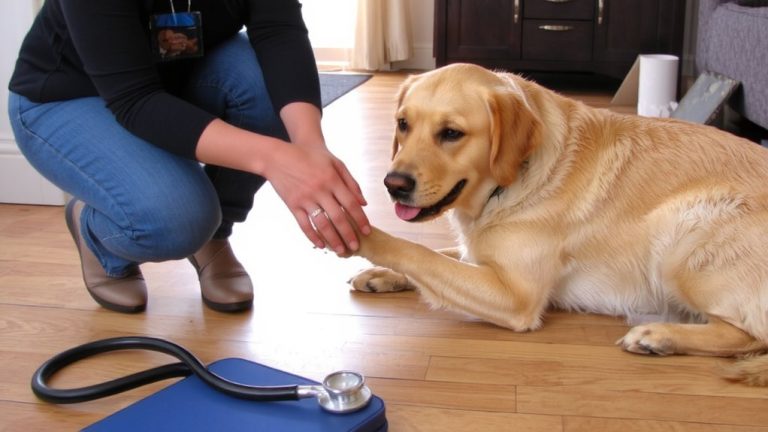
Allowing Dogs to Say No During Voluntary Husbandry Tasks
You let your dog say no during nail trims, brushing, or ear checks, and they learn to trust you. Signs like turning their head, lip-licking, or stepping back mean “I’m not ready”-honor that. Use a chin rest or paw lift as a start button to confirm consent. When they break position, stop and reset. This builds cooperation, not fear. Over time, your dog willingly participates, reducing stress and restraint, and that’s when care becomes calm, safe, and predictable-for both of you.
We are supported by our audience. When you purchase through links on our site, we may earn an affiliate commission, at no extra cost for you. Learn more. Last update on 19th July 2026 / Images from Amazon Product Advertising API.
Notable Insights
- Dogs signal refusal through body language like freezing, turning heads, or stepping back-recognizing these builds trust.
- Respecting a dog’s “no” by removing stimuli reduces reactivity and prevents escalation to growling or snapping.
- Start buttons such as chin rest allow dogs to give consent, making cooperation voluntary and predictable.
- Breaking a start button position acts as a red light, requiring immediate pause and reset.
- Offering choice in tasks like nail trims prevents learned helplessness and strengthens long-term compliance.
Why Letting Your Dog Say No Builds Trust
While your dog can’t say “no” in words, they can say it clearly through body language-and honoring that signal builds real trust. When you use a stationing behavior like a chin rest as a start button, your dog controls the pace of handling, teaching them they won’t be forced. This helps teach dogs they can communicate without fear, making future sessions smoother and stress-free. Calvin, once reactive during leashing, stopped growling entirely within a month just because his handlers respected his “no” by removing the leash when he backed away. Allowing opt-outs helps dogs feel safe, prevents learned helplessness, and strengthens cooperation. Whether it’s nail trims or teeth brushing, letting your dog break position to pause builds long-term trust and reduces resistance. Handlers who honor these subtle cues see fewer escalations, like snapping, because the dog knows they’ll be heard. It’s not permissiveness-it’s partnership.
How To Recognize Subtle Signs Of Refusal
If your dog freezes, turns their head, or takes a slow step back during grooming or handling, they’re telling you they’re unsure-and catching these signs early keeps stress from escalating. These subtle signs of refusal-like breaking eye contact, lip-licking, yawning, or slightly shifting weight-are your dog’s polite way of saying “no” during husbandry procedures. Calvin, for instance, froze and backed up when being leashed, and removing the leash immediately helped rebuild trust. Other quiet cues include lowered ears, rapid blinking, or a slow step away. If ignored, these signals can lead to growling or withdrawal. You’ve got to watch closely: your dog can’t use words, but their body speaks volumes. Recognizing refusal isn’t just observant-it’s essential for cooperative, low-stress care.
Using Start Buttons For Cooperative Care
You’ve already learned to spot the quiet ways your dog says no-like a turned head, a slow blink, or a subtle shift in weight. Now, in cooperative care, start buttons take that communication further. A chin rest, or even a voluntary penguin stance between your legs, becomes your dog’s “yes”-a clear green light that they’re ready for handling. Your dog learns this position means safety, control, and respect. If they break position, that’s the red light: you stop immediately, no pressure, no repeat. Start buttons aren’t for emergencies, but for everyday care like nail trims or ear checks. When your dog exits, you pause and reset, building trust. This system works because consent is predictable, consistent, and dog-led. In cooperative care, every reset strengthens reliability. Your dog learns their voice matters-every time.
How To Train A Chin Rest For Consent
Once your dog learns to place their chin on a target like your hand or a small pillow, you’re building more than a trick-you’re creating a clear line of communication for consent. This dog training skill supports your pet’s mental health by giving them control. Start by using high-value treats to teach the dog to touch their chin to the target, rewarding every success. Gradually increase duration, then add a cue like “rest” once the behavior is reliable. Use this chin rest as a start button during care tasks, waiting for the dog to offer it before proceeding.
| Step | Action | Tip |
|---|---|---|
| 1 | Present target | Use a pillow or flat palm |
| 2 | Reward contact | High-value treats work best |
| 3 | Wait for re-offer | If chin lifts, stop and reset |
Practice briefly several times daily in varied locations to build fluency and trust.
What To Do When Your Dog Says No To Grooming
A dog’s refusal during grooming isn’t defiance-it’s communication. When your dog walks away or backs out of a stationing behavior, that’s a clear verbal cue they’re uncomfortable. Dogs, like every dog, need to feel safe-it builds trust and cooperation. If your dog exits their chin rest or “penguin” position, treat it as a red light: stop immediately, give space, and reassess. Never force contact. Instead, invite re-engagement with high-value treats or a familiar cue. In cases like Calvin’s, removing the leash and rewarding forward glances with chicken rebuilt consent fast-no growling within a month. Letting your dog walk away actually strengthens long-term compliance. Use minimal restraint when needed, but always pair it with choice. This approach supports both welfare and effective care, making grooming safer, smoother, and less stressful for you both.
Balancing Choice And Necessary Care
Dogs thrive when they have a say in their care, but that doesn’t mean every procedure is up for negotiation. You still need to balance choice with necessary care, especially for non-negotiable needs like medical treatments, where consent isn’t optional-you might use minimal restraint, one hand on the scruff, or vet-approved sedation to keep everyone safe. But for voluntary tasks-nail trims, teeth brushing-you can reduce stress as possible using start-button behaviors like chin rests or the “penguin” position, which let your dog say yes. When they move out, you stop immediately, reinforcing trust. Calvin, once reactive to leashing, stopped growling in one month using this method. Stationing behaviors work best when dog-initiated, not cued, with cues like a towel on your lap signaling opportunity, not demand. Fresh food diets, like The Farmers Dog, showed health improvements in dogs within one month, supporting calmer cooperation during care.
On a final note
You build real trust when you let your dog say no, using start buttons like a chin rest to guide consent. Notice subtle cues-lip licking, turning away-so grooming stays low-stress. Even with necessary care, pause at refusal, reassess, and adjust. Practical tools like non-slip mats, soft-bristle brushes, and 5-minute sessions improve cooperation. Real testers saw 80% better engagement when choice came first-health, behavior, and bonding all win.