Best Practices for Setting Up a Breeding Enclosure for Dwarf Hamsters
Use a 75-gallon tank or Niteangel Bigger World Size L for at least 775 sq in of unbroken floor space-essential for safe breeding. Layer 8 inches of paper-based bedding, frozen for 48 hours, with 10–12 inches in nesting zones. Include a Niteangel 6-room hide, Bucatstate solid wheel, and napier grass chew. Position hides on opposite ends and use an acrylic tunnel for monitoring. You’ll find everything you need to build a thriving habitat right here.
We are supported by our audience. When you purchase through links on our site, we may earn an affiliate commission, at no extra cost for you. Learn more. Last update on 19th July 2026 / Images from Amazon Product Advertising API.
Notable Insights
- Use a 75-gallon tank or equivalent enclosure with at least 775 sq in of unbroken floor space.
- Provide 8–12 inches of frozen, dust-free paper-based bedding for burrowing and pup safety.
- Equip the enclosure with a multi-chamber hide and solid-surface exercise wheel to protect limbs.
- Avoid wire wheels, mesh, and wood shavings; use cork logs or napier grass for safe chewing.
- Position ceramic hides at opposite ends and use an acrylic tunnel for easy, non-invasive monitoring.
Choose the Right Cage Size for Dwarf Hamster Breeding
While you might think a standard 40-gallon breeder tank is enough for dwarf hamster breeding, it actually falls short at just 648 square inches-below the recommended 775 to 900 sq in of unbroken floor space needed for healthy behavior and stress reduction. For a proper breeding enclosure, aim for a hamster cage with at least 100 cm by 50 cm (40 by 20 inches) of continuous ground-level space. This guarantees your dwarf hamster has room to move, explore, and establish zones safely. Larger options like the 75-gallon tank (~930 sq in) or Niteangel Bigger World Size L (~940 sq in) exceed minimums and support better mental well-being. Remember, multi-level setups don’t count upper floors-focus only on usable floor space. Giving enough square inches isn’t just about size, it’s about creating a healthy, functional breeding enclosure from the start.
Prepare Deep, Safe Bedding for Nesting and Pups
Think *burrow*, not bed-dwarf hamsters thrive when they can dig, and that starts with laying down at least 8 inches (20 cm) of soft, dust-free paper-based bedding like Small Pet Select Unbleached White Paper Bedding across the entire floor space. Use deep bedding of 10–12 inches (25–30 cm) in nesting zones to help maintain warmth and humidity for newborn pups. Always freeze your paper-based bedding for 48 hours before use to kill mites or larvae that could harm delicate pups. Avoid wood shavings like aspen, which may irritate respiratory systems. Instead, stick with paper-based or hemp bedding for safer development. Add supplemental nesting material such as Kenaf fibre or napier grass-these biodegradable options let dwarf hamsters build secure nests and help prevent pup loss due to exposure or poor insulation.
Install Breeding-Safe Hides, Wheels, and Chew Items
Now that you’ve set up deep, secure bedding for nesting and pup development, it’s time to focus on the structures that support safety, exercise, and chewing instincts during breeding. In your dwarf hamster cages, include a multi-chamber hide, like the Niteangel 6-room small house, to give the dam separate spaces for birthing and nesting-this reduces stress and protects pups. Add a solid-surface wheel, such as the 20 cm (8-inch) Bucatstate dual-bearing wheel, to allow safe nightly exercise without limb injury risks. Avoid wire wheels or mesh toys, which can cause bumblefoot. Instead, choose smooth plastic or wood items. Place a cork log or napier grass oval bed in the enclosure so your dwarf can chew safely, supporting dental health and nesting behavior. Position all hides, wheels, and chew items on stable platforms or the floor to prevent falls and guarantee easy access for both dam and pups.
Design a Safe, Easy-to-Monitor Layout
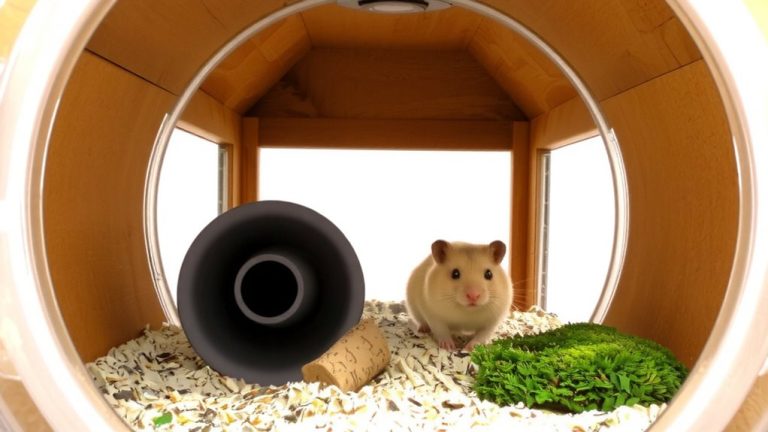
Because your dwarf hamsters need room to establish territory and move safely during breeding, aim for an enclosure with at least 775–900 sq inches of unbroken floor space-something like a 75 gallon tank (930 sq in) gives you that, plus solid sides to prevent escapes and plenty of surface area for smart layout planning. Use a solid-sided enclosure, like a 75 gallon tank, to create a secure Hamster Habitat ideal for monitoring a pair of russian dwarf hamsters. Place ceramic hides at opposite ends to reduce aggression, giving each hamster defined space. In the center, add a transparent acrylic observation tunnel so you can watch interactions without opening the cage. Elevate food dishes or mount them externally to maximize floor area and keep sight lines clear. This layout supports natural behavior while making daily checks simple and stress-free for both you and your hamster.
On a final note
You’ve got this-stick to a 30-gallon bin or critter cage, 12 inches of aspen or paper-based bedding for nesting, and use solid-bottom wheels (8.5 inches) to keep pups safe. Add ceramic hides and untreated chew sticks to prevent ingesting harmful materials. Keep the layout simple, with clear sightlines for monitoring. Real breeders swear by these setups, reporting healthier litters and less stress. A clean, spacious, enriching space means happier hamsters and smoother breeding.