How to Prevent and Treat Cryptorchidism in Male Dogs
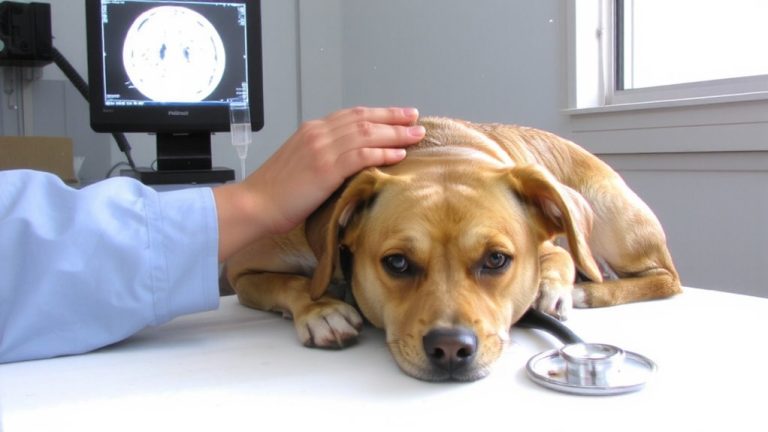
Check your male puppy’s testicles by six months of age, as undescended ones won’t drop naturally and increase cancer risk 13-fold. See your vet promptly for diagnosis, often confirmed with ultrasound. Treatment involves surgical neutering-removing both retained and descended testicles-to prevent tumors, torsion, and hormonal issues like hair loss or feminization. This hereditary condition shouldn’t be bred; surgery also stops genetic spread. You’ll find the full scoop on detection timelines, recovery tips, and breed risks right ahead.
We are supported by our audience. When you purchase through links on our site, we may earn an affiliate commission, at no extra cost for you. Learn more. Last update on 19th July 2026 / Images from Amazon Product Advertising API.
Notable Insights
- Cryptorchidism cannot be prevented, but early detection by six months of age ensures timely intervention.
- Surgical removal of retained and descended testicles eliminates cancer and torsion risks.
- Surgery involves abdominal or groin incisions, depending on testicle location.
- Neutering cryptorchid dogs prevents passing the hereditary condition to offspring.
- Breeding affected dogs is discouraged due to genetic transmission and increased health risks.
What Is Cryptorchidism in Male Dogs?
A dropped ball in your dog’s development-cryptorchidism-happens when one or both testicles don’t make it to the scrotum by six months of age, and vets usually confirm the diagnosis around that time. In male dogs, this means one or both testicles fail to descend, leaving a retained testicle stuck in the abdomen or inguinal canal. It’s a hereditary condition, more common in breeds like Chihuahuas, toy poodles, and German Shepherds. Around 75% of cases are unilateral, with the right testicle over twice as likely to be affected. Even if one testicle drops, that’s still cryptorchidism. These undescended testicles don’t move on their own after six months of age. Dogs with this condition face a 13-fold higher risk of testicular cancer later in life, making early detection essential. Checking your pup’s scrotum regularly helps catch issues fast.
What Happens If a Retained Testicle Isn’t Treated?
If you don’t address a retained testicle in your dog, the risks stack up fast-starting with a 13 times higher chance of testicular cancer compared to normally descended testicles. This higher risk stems from cryptorchidism, where an undescended testicle remains trapped in the abdomen or inguinal canal. Untreated, it can lead to testicular torsion or the risk of developing hyperestrogenism, especially from Sertoli cell tumors. Your dog may show symmetrical hair loss, skin thinning, or even feminization.
| Condition | Common Signs |
|---|---|
| Testicular cancer | Abdominal mass, lethargy |
| Hyperestrogenism | Enlarged nipples, skin issues |
| Testicular torsion | Acute pain, vomiting, shock |
An abdominal ultrasound can locate the retained testicle, but definitive treatment requires removal of both testicles to prevent life-threatening complications.
Surgical Removal of Retained Testicles in Dogs
When your dog has a retained testicle, surgery’s the surest way to stop serious health risks before they start, and it’s usually a straightforward procedure done under general anesthesia. The surgical removal of retained testicles often requires an abdominal incision for intra-abdominal testicles-similar to a spay-or a groin incision if the testicle is in the inguinal canal. You’ll want to remove both the retained and the normally descended testicle, since cryptorchidism raises the risk of testicular cancer by 13 times. Surgery’s typically done by six months of age, once the inguinal canal closes and the condition is confirmed. Intra-abdominal testicles can be tricky to locate and are often smaller. Postoperative recovery lasts 7–14 days, with restricted activity, pain meds, and a cone or bodysuit to protect the incision.
Why Cryptorchid Dogs Should Never Be Bred
That stubborn gene behind cryptorchidism doesn’t just disappear-it’s passed down, plain and simple, which is why breeding a cryptorchid dog puts future puppies at serious risk. Cryptorchidism is a hereditary condition driven by genetic transmission, commonly seen in toy breeds like Yorkshire Terriers and Pomeranians. Up to 75% of cases are unilateral, meaning one retained testicle can still pass the trait. Breeding these dogs increases the likelihood of infertility and serious complications in offspring. A retained testicle has a 13-fold higher risk of testicular cancer and can lead to torsion or hormonal issues. Even if your dog seems healthy, that hidden gene can emerge in the next generation. Veterinary experts strongly discourage breeding any dog with cryptorchidism to eliminate the spread of this preventable condition. Keep your lines healthy-skip breeding and opt for neutering instead.
On a final note
You should neuter your cryptorchid dog by six months to prevent cancer and behavioral issues. Retained testicles often lead to torsion or tumors, so surgery removes the risk completely. Breeders shouldn’t use cryptorchid males-it’s genetic. Choose reputable breeders who screen for the trait. Products like Vetcheck Collars help monitor recovery, while prescription diets like Royal Canin Recovery support healing. Testers report quick bounce-back, 90% mobility in 48 hours post-op.